
How to Use Instagram Story Highlights on a Brand Account

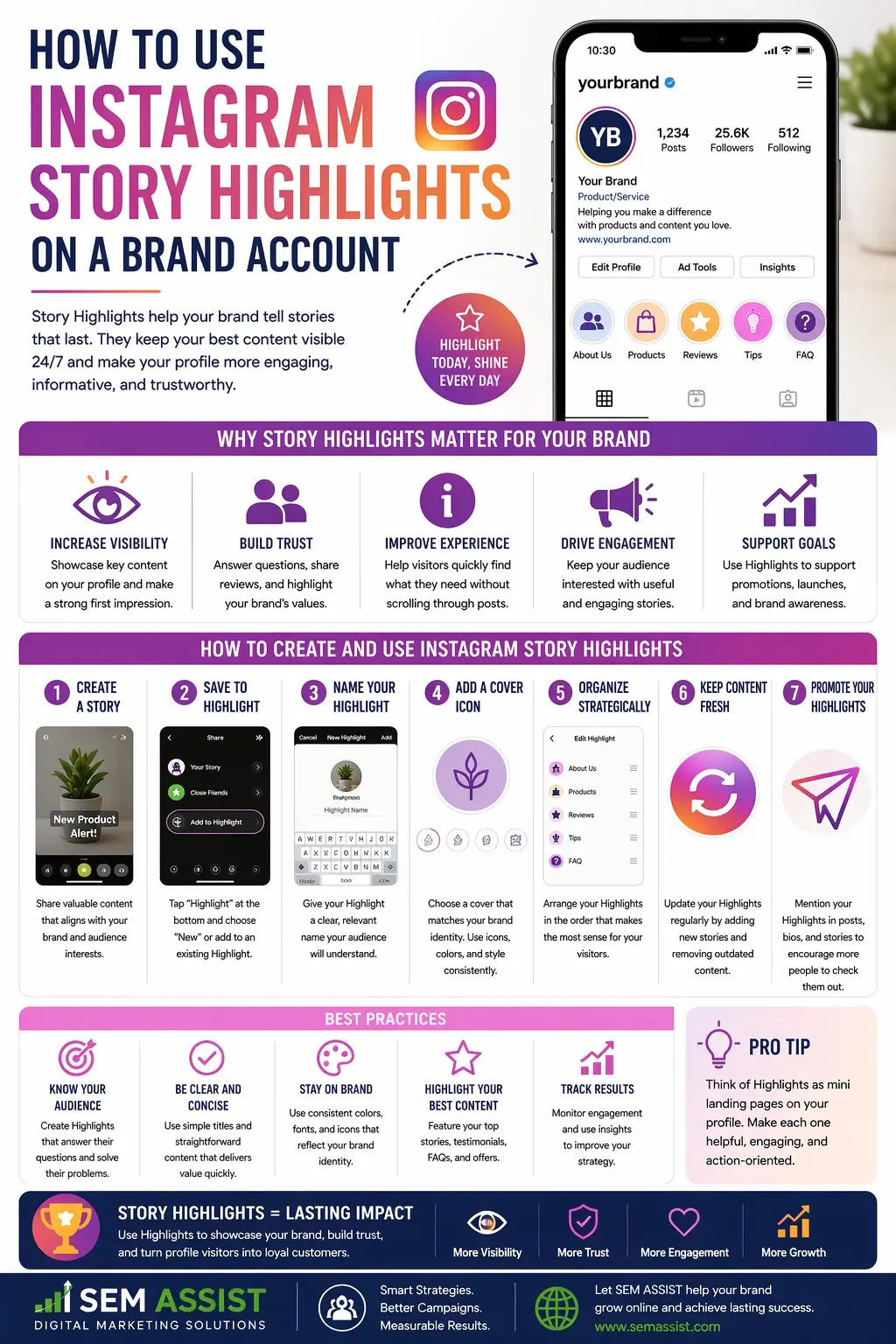
How To Use Instagram Story Highlights on a Brand Account

How to Use Instagram Story Highlights on a Brand Account

Instagram Story Highlights are one of the most underused tools on a brand account, yet they play a powerful role in building trust, showcasing services, and guiding potential customers toward taking action.

While Stories disappear after twenty four hours, Highlights allow you to keep your best content visible on your profile permanently. When used correctly, they can act as a mini website that helps visitors quickly understand your brand.

Here is how to use Instagram Story Highlights effectively for your business.


What Are Instagram Story Highlights

Instagram Story Highlights are curated collections of your past Stories that appear directly below your profile bio on Instagram. They give you the ability to organize important content into categories that your audience can access at any time.

Instead of letting valuable content disappear, Highlights allow you to keep key information front and center for new visitors.


Why Highlights Matter for Brand Accounts

When someone visits your profile, you only have a few seconds to make a strong impression. Your Highlights help you control that first impression by guiding users to the most important parts of your brand.

Highlights can help you:

  • Build credibility
  • Showcase services or products
  • Answer common questions
  • Display real customer results
  • Encourage conversions

Think of them as a visual extension of your website that lives directly on your profile.


Choose the Right Highlight Categories

The first step is organizing your content into clear and useful categories. Your Highlights should make it easy for someone to quickly understand what you offer.

Some effective categories include:

About Us

Introduce your brand, your story, and what makes you different

Services

Break down your core services so users know exactly what you provide

Results

Showcase before and after examples, case studies, or measurable success

Reviews

Share testimonials and customer feedback to build trust

FAQ

Answer common questions that potential customers often ask

Process

Explain how your service works from start to finish

Each category should serve a purpose and help move the user closer to taking action.


Design Clean and Consistent Covers

Your Highlight covers are the first thing people notice. A clean and consistent design makes your profile look more professional and easier to navigate.

Use simple icons, consistent colors, and branding that matches your overall identity. Avoid clutter and keep text minimal or nonexistent.

Consistency across all covers helps reinforce your brand and creates a polished look.


Keep Content Short and Valuable

Just like regular Stories, Highlight content should be quick and easy to consume.

Focus on:

  • Short video clips
  • Clear messaging
  • Strong visuals
  • Simple explanations

Each Story should deliver value quickly. Avoid overwhelming users with too much information in a single slide.


Use Highlights to Build Trust

Trust is one of the biggest factors in converting visitors into customers.

Use your Highlights to show real proof of your work.

This can include:

  • Client testimonials
  • Behind the scenes content
  • Completed projects
  • Real results and data

The more authentic your content feels, the more likely users are to trust your brand.


Guide Users Toward Action

Your Highlights should not just inform, they should guide users toward taking the next step.

Include clear calls to action within your Stories such as:

  • Visit our website
  • Send us a message
  • Request a quote
  • Book a consultation

Make it easy for users to know what to do next after viewing your content.


Update Highlights Regularly

Outdated content can hurt your brand image.

Make it a habit to review and update your Highlights regularly. Remove anything that no longer reflects your current services or results and replace it with fresh content.

Keeping your Highlights updated shows that your business is active and relevant.


Final Thoughts

Instagram Story Highlights are more than just saved Stories. They are a powerful tool that can help you communicate your brand, build trust, and convert profile visitors into customers.

When organized properly and filled with valuable content, your Highlights become a key part of your digital marketing strategy.

At SEM ASSIST, we help businesses turn social media profiles into high performing assets that drive real growth.


Ready to Elevate Your Brand on Instagram

If your Instagram profile is not converting visitors into leads, it may be time to optimize your strategy. SEM ASSIST can help you build a strong presence that attracts attention and drives results.
How to Use LinkedIn Insights in an Actionable Way

How To Use LinkedIn Insights in An Actionable Way

How to Use LinkedIn Insights in an Actionable Way

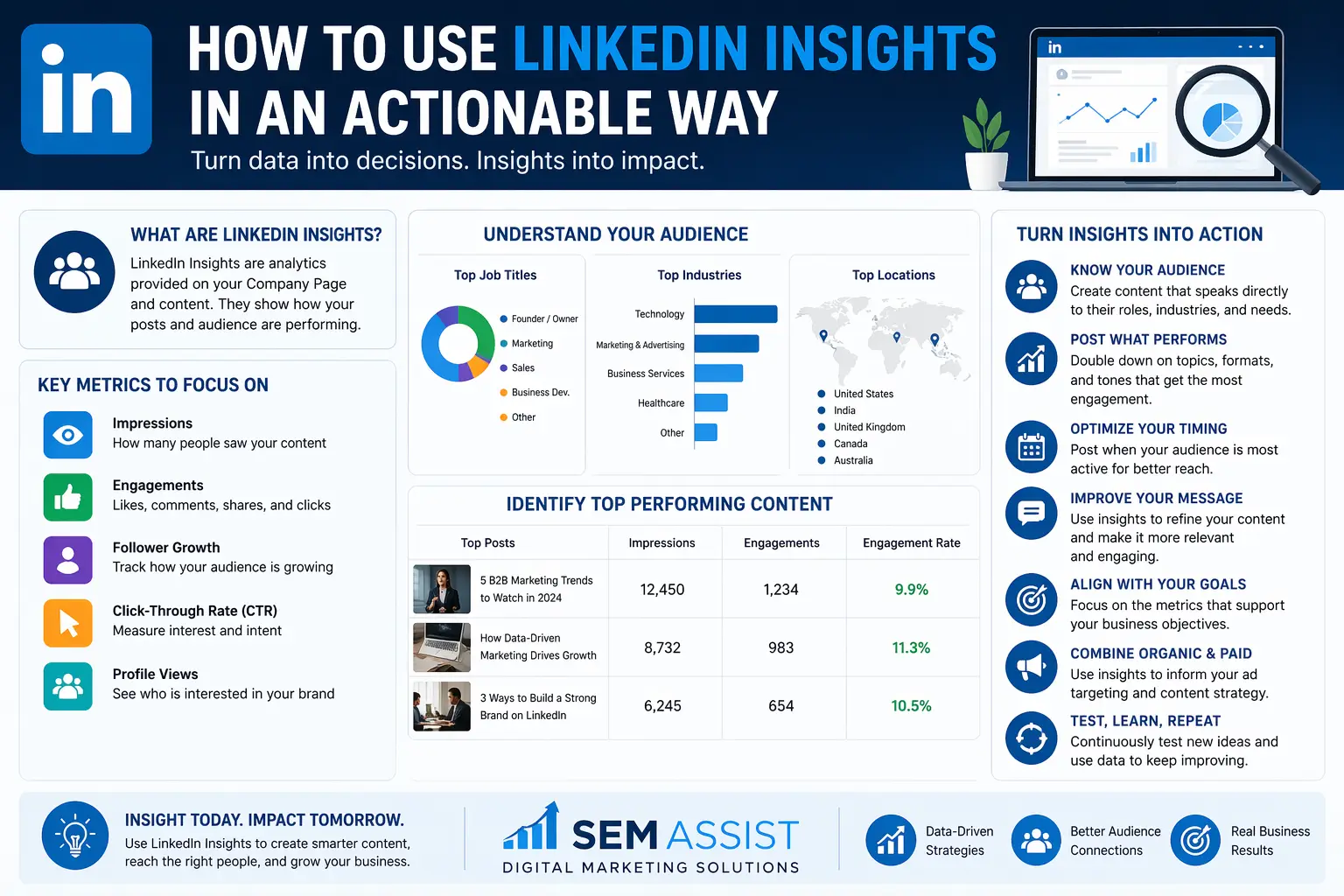
LinkedIn has become one of the most powerful platforms for B2B marketing, networking, and brand positioning. While many businesses focus on posting content, far fewer take full advantage of the insights available to guide smarter decisions.

Understanding and using LinkedIn insights in an actionable way can help you refine your strategy, reach the right audience, and generate higher quality leads.

Here is how to turn LinkedIn data into real results.


What Are LinkedIn Insights

LinkedIn insights are data points provided within LinkedIn that show how your content, profile, and company page are performing.

These insights include information about your audience, engagement levels, content performance, and follower growth.

Instead of guessing what works, you can use this data to make informed marketing decisions.


Focus on the Metrics That Matter

Not all metrics carry the same value. To use LinkedIn insights effectively, you need to focus on the data that directly impacts your goals.

Pay close attention to engagement metrics such as likes, comments, and shares. These indicate how well your content resonates with your audience.

Follower growth shows whether your brand is attracting new attention. Click through rates and profile views can help you understand interest and intent.

By focusing on meaningful metrics, you avoid getting distracted by vanity numbers.


Understand Your Audience

One of the most valuable features of LinkedIn insights is audience data.

You can see information such as job titles, industries, company sizes, and locations of your followers and viewers.

This allows you to answer important questions. Are you reaching decision makers or entry level employees. Are your posts attracting the right industries. Is your messaging aligned with your ideal client.

When you understand your audience, you can create content that speaks directly to their needs.


Identify Top Performing Content

Your past content provides a roadmap for future success.

Review your posts to identify which ones generated the most engagement. Look for patterns in topics, formats, and messaging.

For example, you may find that educational posts perform better than promotional ones, or that certain industries respond more actively to your insights.

Once you identify what works, you can double down on similar content.


Optimize Your Posting Strategy

LinkedIn insights can help you determine when and how often to post.

Analyze when your audience is most active and which days generate the highest engagement. This allows you to schedule content at times when it is more likely to be seen.

Consistency also plays a key role. Posting regularly keeps your brand visible and helps build momentum over time.


Use Insights to Improve Your Messaging

If your content is not performing as expected, your insights can help you understand why.

Low engagement may indicate that your message is unclear or not relevant to your audience. High impressions with low interaction may suggest that your content is not compelling enough to drive action.

Use this feedback to refine your messaging and make it more engaging and valuable.


Align Insights With Business Goals

Data becomes truly actionable when it is tied to your business objectives.

If your goal is lead generation, focus on metrics that show interest and conversion such as clicks and inquiries. If your goal is brand awareness, impressions and reach may be more important.

By aligning your insights with your goals, you can measure success more accurately and adjust your strategy accordingly.


Combine Organic and Paid Strategies

LinkedIn insights are not just useful for organic content. They can also improve your paid advertising strategy.

Use data from your best performing posts to inform your ad campaigns. Target audiences that have already shown interest in your content.

This approach increases the likelihood of engagement and improves the return on your advertising investment.


Continuously Test and Improve

Marketing on LinkedIn is not a one time effort.

Use your insights to test different types of content, formats, and messaging. Track the results and refine your approach over time.

Small improvements can lead to significant gains when applied consistently.


Final Thoughts

LinkedIn insights provide a powerful advantage for businesses that know how to use them. Instead of relying on guesswork, you can make data driven decisions that improve your content, reach, and results.

By focusing on the right metrics, understanding your audience, and continuously refining your strategy, you can turn LinkedIn into a valuable growth channel.

At SEM ASSIST, we help businesses turn data into actionable strategies that drive real outcomes.


Ready to Turn Insights Into Growth

If you want to get more from your LinkedIn marketing, SEM ASSIST can help you develop a strategy that uses real data to attract the right audience and generate meaningful results.

10 Title Tag Tweaks That’ll Boost Your SEO Traffic

10 Title Tag Tweaks To Boost Your SEO Traffic.

10 Title Tag Tweaks That Will Boost Your SEO Traffic

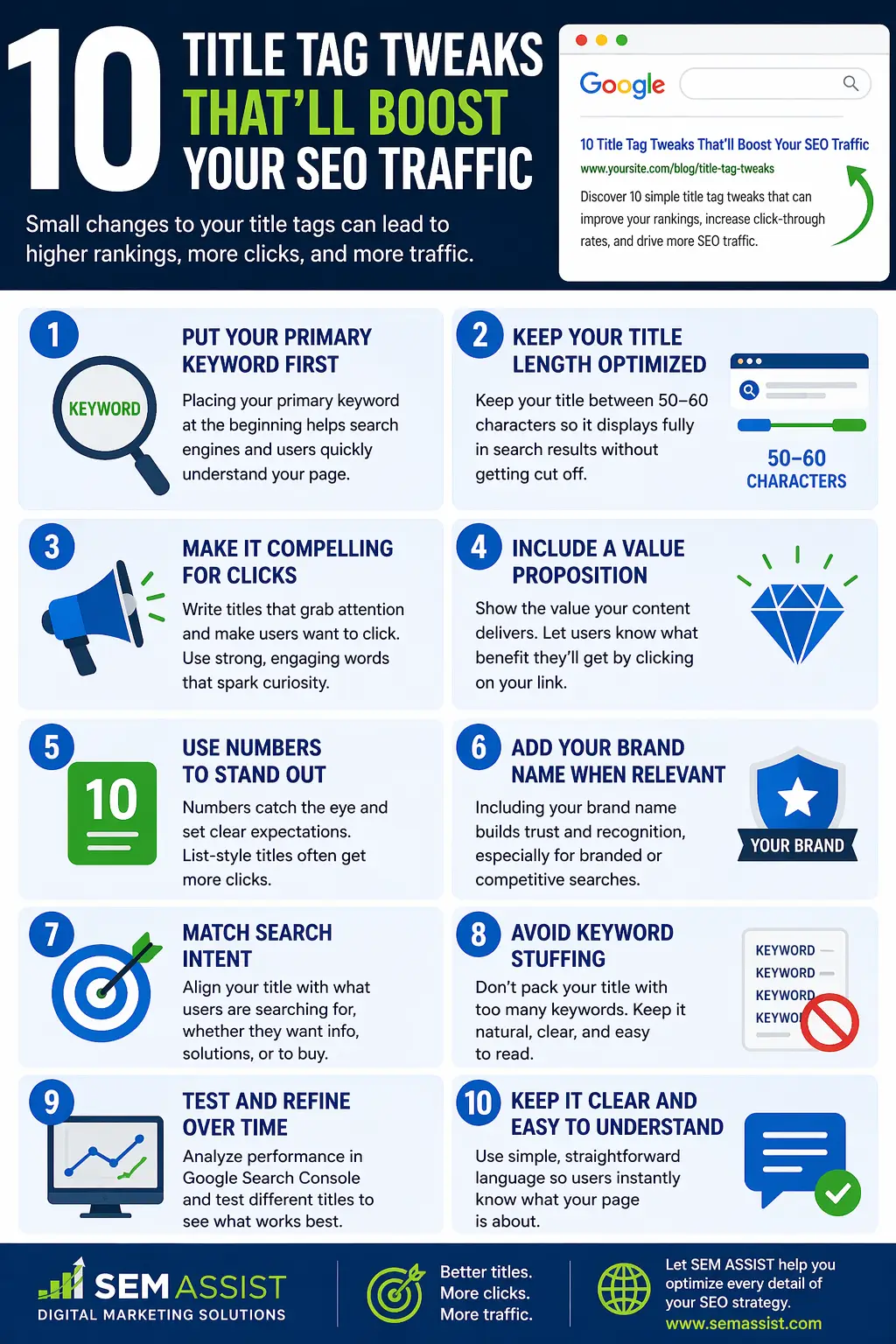
Your title tag is one of the most important elements of on page SEO. It is often the first thing users see in search results, and it plays a major role in how search engines understand your page.

A well written title tag can improve your rankings, increase your click through rate, and drive more qualified traffic to your website.

Here are ten powerful title tag tweaks that can help boost your SEO performance.


1. Put Your Primary Keyword First

Search engines place more weight on keywords that appear at the beginning of your title tag.

Placing your primary keyword early helps both users and search engines quickly understand what your page is about. It also improves visibility when users scan search results.


2. Keep Your Title Length Optimized

Title tags that are too long may get cut off in search results.

Aim to keep your titles within an optimal range so the full message is visible. Clear and complete titles are more likely to attract clicks.


3. Make It Compelling for Clicks

Ranking on the first page is only part of the goal. You also need users to click on your result.

Use language that creates curiosity or highlights value. Focus on what the user will gain by visiting your page.


4. Include a Value Proposition

Your title should clearly communicate why your content is worth clicking.

Think about what makes your page different or better. Whether it is expert advice, proven strategies, or real results, make that value clear.


5. Use Numbers to Stand Out

Numbers naturally draw attention in search results.

Titles that include numbers such as lists or steps often perform better because they set clear expectations for the reader.


6. Add Your Brand Name When Relevant

Including your brand name can build trust and recognition.

This is especially useful if your brand is already known or if you are targeting branded search traffic. It can also help improve credibility in competitive search results.


7. Match Search Intent

Your title tag should align with what the user is actually searching for.

If someone is looking for information, your title should reflect that. If they are ready to take action, your title should guide them toward that next step.

Matching intent improves both rankings and user satisfaction.


8. Avoid Keyword Stuffing

Adding too many keywords to your title can make it look unnatural and reduce its effectiveness.

Focus on one primary keyword and keep the wording clear and readable. Search engines are advanced enough to understand context without repetition.


9. Test and Refine Over Time

SEO is not a one time task.

Monitor how your title tags perform and make adjustments based on the results. Small changes can lead to noticeable improvements in traffic and engagement.


10. Keep It Clear and Easy to Understand

Clarity is key when it comes to title tags.

Avoid vague or confusing language. Your title should immediately tell users what they can expect from your page.

Simple and direct titles often perform better than overly complex ones.


Final Thoughts

Your title tag is a small element that can have a big impact on your SEO results. By making thoughtful adjustments, you can improve your visibility, attract more clicks, and drive higher quality traffic to your website.

At SEM ASSIST, we focus on optimizing every detail that contributes to search performance. From title tags to full content strategies, we help businesses grow through smarter SEO.


Ready to Increase Your SEO Traffic

If you want to improve your search rankings and drive more traffic to your website, SEM ASSIST can help you build a strategy that delivers measurable results.

Blog SEO: How to Search Engine Optimize Your Blog Content

Blog SEO: How to Search Engine Optimize Your Blog Content

Blog SEO How to Search Engine Optimize Your Blog Content

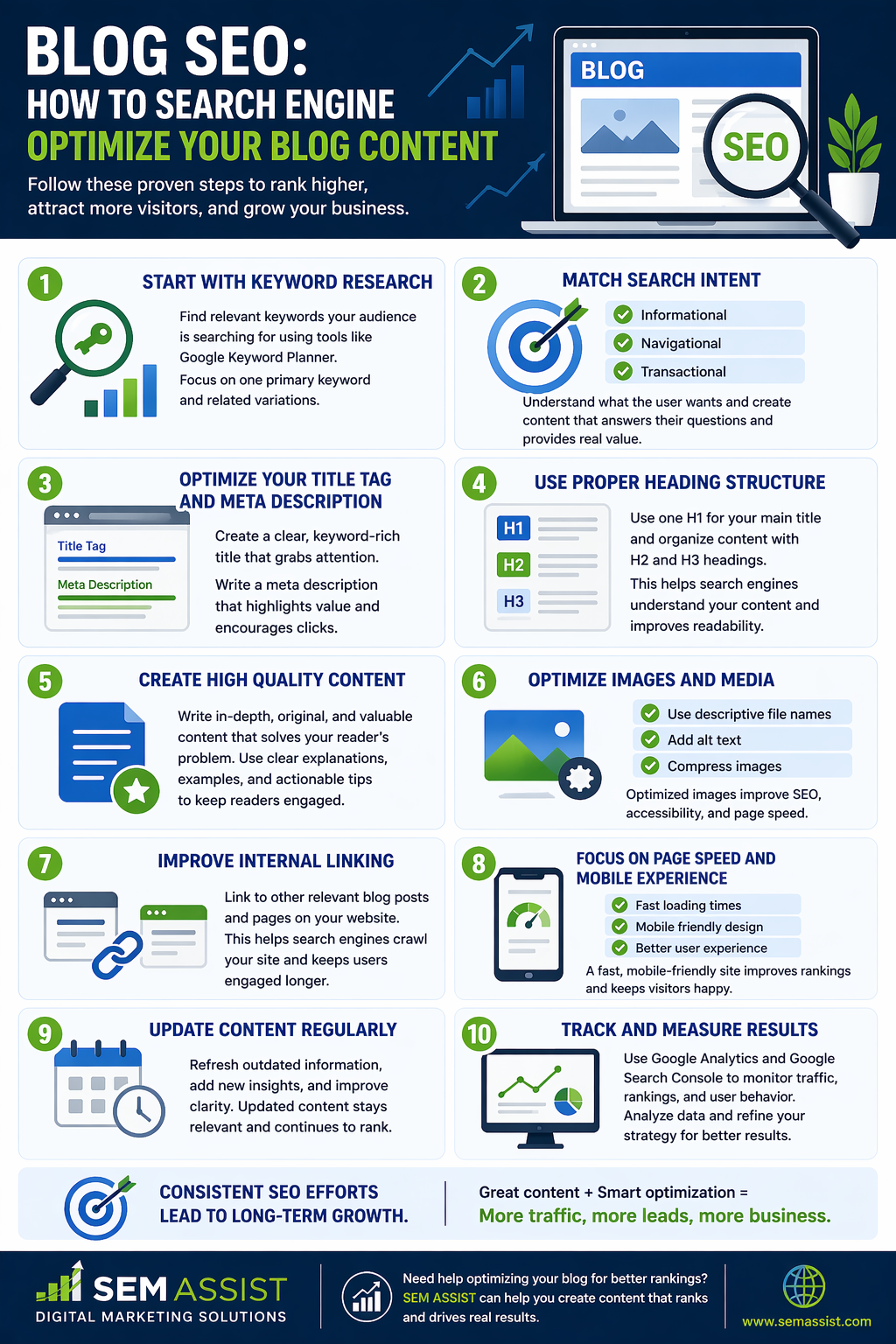
Creating blog content is only half the battle. If your content is not optimized for search engines, it may never reach the audience it was created for.

Blog SEO is the process of improving your content so it ranks higher in search results, attracts the right visitors, and drives meaningful engagement. When done correctly, it can turn your blog into a powerful traffic and lead generation tool.

Here is how to search engine optimize your blog content effectively.


Start With Keyword Research

Every successful blog post begins with understanding what your audience is searching for.

Keyword research helps you identify the terms and phrases people use when looking for information. Tools like Google Keyword Planner can help you discover relevant keywords with strong search volume and realistic competition.

Focus on one primary keyword and a few related variations. This keeps your content focused and aligned with user intent.


Match Search Intent

Ranking on search engines requires more than just targeting keywords. Your content must match the intent behind the search.

Ask yourself what the user wants to learn or accomplish. Are they looking for information, solutions, or guidance.

Create content that directly answers their questions and provides real value. When your content aligns with intent, it performs better in search results.


Optimize Your Title Tag and Meta Description

Your title tag and meta description are the first things users see in search results.

Your title should include your primary keyword and clearly describe what your content offers. It should also be compelling enough to encourage clicks.

Your meta description should provide a brief summary that highlights the value of your content and motivates users to visit your page.


Use Proper Heading Structure

Organizing your content with clear headings improves both readability and SEO.

Use one H1 tag for your main title and structure the rest of your content with H2 and H3 headings. This helps search engines understand your content and makes it easier for users to scan.

A well structured blog keeps readers engaged and improves overall performance.


Create High Quality Content

Search engines prioritize content that is helpful, relevant, and informative.

Focus on delivering value by fully covering your topic. Provide clear explanations, actionable insights, and useful information that solves the reader’s problem.

Avoid thin or repetitive content. Depth and quality make a significant difference in rankings.


Optimize Images and Media

Images can enhance your content, but they also need to be optimized.

Use descriptive file names and include alt text that explains what the image represents. This helps search engines understand your visuals and improves accessibility.

Compress images to ensure fast loading times, which is important for both user experience and SEO.


Improve Internal Linking

Internal links connect your blog posts to other pages on your website.

Linking to related content helps search engines crawl your site more effectively and keeps users engaged longer. It also distributes authority across your pages.

Make sure your links are relevant and add value to the reader.


Focus on Page Speed and Mobile Experience

Website performance plays a major role in SEO.

A slow or poorly optimized site can lead to higher bounce rates and lower rankings. Ensure your blog loads quickly and works well on all devices.

A smooth user experience encourages visitors to stay longer and interact with your content.


Update Content Regularly

SEO is not a one time effort.

Refreshing your blog content keeps it relevant and improves its performance over time. Update outdated information, add new insights, and improve clarity where needed.

Regular updates signal to search engines that your content is still valuable.


Track and Measure Results

To improve your blog SEO, you need to understand what is working.

Use tools like Google Analytics and Google Search Console to monitor traffic, rankings, and user behavior.

Analyze your data to identify opportunities for improvement and refine your strategy.


Final Thoughts

Blog SEO is essential for turning your content into a consistent source of traffic and leads. By focusing on keywords, intent, structure, and user experience, you can create content that performs well in search results and delivers real value.

At SEM ASSIST, we help businesses build content strategies that drive visibility, engagement, and growth.


Ready to Grow Your Blog Traffic

If you want to improve your blog performance and attract more qualified visitors, SEM ASSIST can help you develop a strategy that turns your content into a powerful marketing asset.

10 Key Strategies That You Must Learn From Apple’s Marketing

10 Key Strategies That You Must Learn From Apple's Marketing.

10 Key Strategies That You Must Learn From Apple’s Marketing

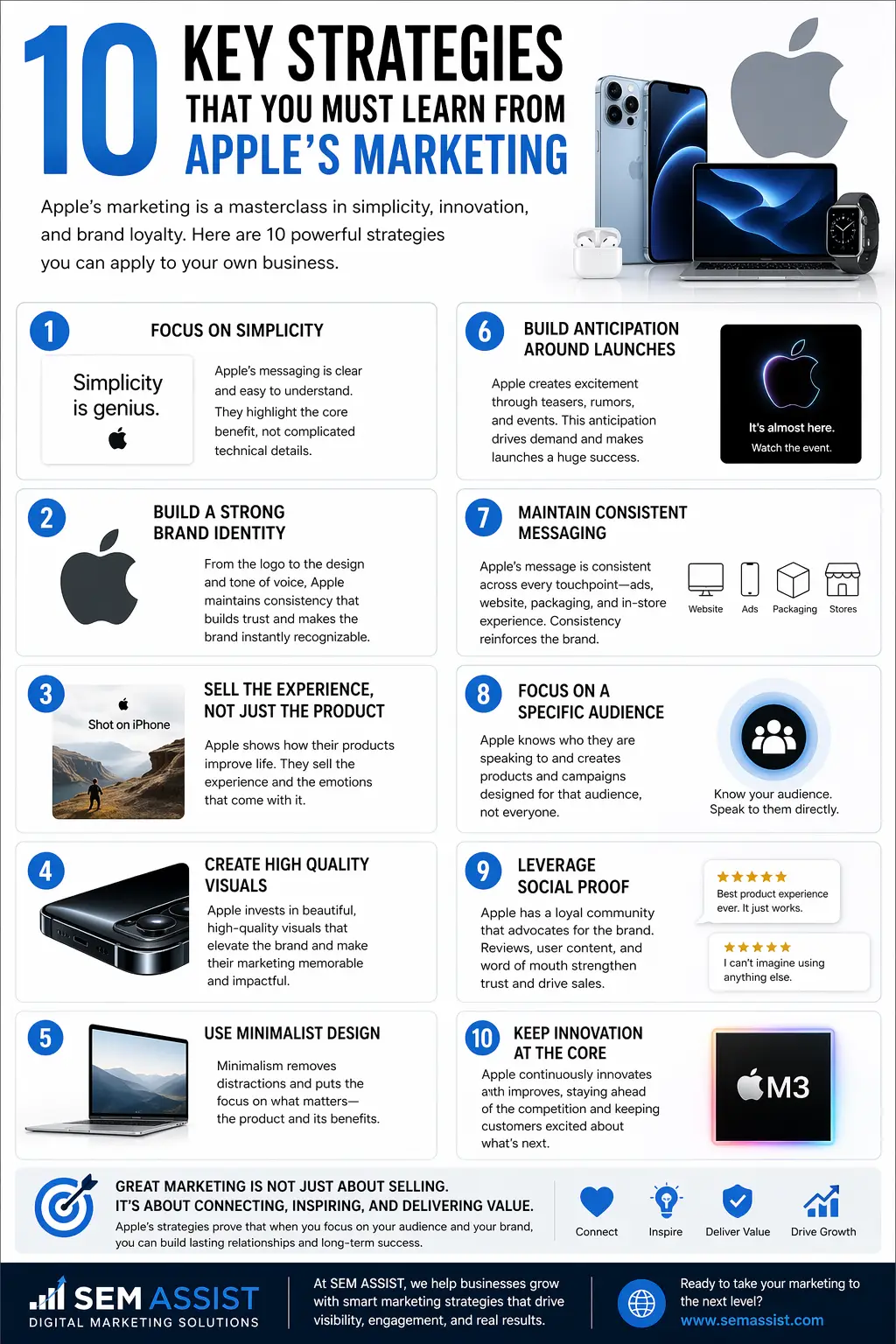
Few brands have influenced modern marketing as much as Apple. Known for its simplicity, innovation, and strong brand identity, Apple has built a loyal customer base and consistently sets the standard for how products are marketed.

What makes Apple’s approach so effective is not just the quality of its products, but how those products are positioned, presented, and communicated.

Here are ten key strategies you can learn from Apple’s marketing success.


1. Focus on Simplicity

Apple’s messaging is clear and easy to understand.

Instead of overwhelming customers with technical details, Apple highlights the core benefit of each product. This makes their marketing more accessible and easier to connect with.

Simple messaging cuts through noise and keeps the audience focused on what matters most.


2. Build a Strong Brand Identity

Apple has created a brand that is instantly recognizable.

From its logo to its product design and marketing visuals, everything feels consistent. This level of consistency builds trust and makes the brand memorable.

A strong identity helps your business stand out in a crowded market.


3. Sell the Experience, Not Just the Product

Apple does not just sell devices. It sells an experience.

Instead of focusing only on features, Apple shows how its products improve everyday life. This emotional connection makes customers more likely to choose the brand.

People buy based on how something makes them feel, not just what it does.


4. Create High Quality Visuals

Apple invests heavily in visuals.

Its ads, website, and product imagery are clean, modern, and visually appealing. This reinforces the perception of quality and innovation.

Strong visuals can elevate your brand and make your marketing more impactful.


5. Use Minimalist Design

Apple embraces minimalism in both product design and marketing.

By removing unnecessary elements, the focus stays on the product and its benefits. This creates a premium and uncluttered experience.

Less distraction leads to clearer communication.


6. Build Anticipation Around Launches

Apple has mastered the art of product launches.

Before releasing a new product, the company builds excitement through teasers and announcements. This creates anticipation and drives demand.

Creating hype before a launch can significantly increase engagement and sales.


7. Maintain Consistent Messaging

Consistency is a key part of Apple’s strategy.

Whether you see an ad, visit the website, or walk into a store, the messaging feels aligned. This reinforces the brand and builds credibility.

Consistency across all channels strengthens your marketing efforts.


8. Focus on a Specific Audience

Apple understands its audience and speaks directly to them.

Instead of trying to appeal to everyone, the brand targets users who value design, innovation, and simplicity. This focused approach makes its messaging more effective.

Knowing your audience allows you to create more relevant content.


9. Leverage Social Proof

Apple benefits from a strong community of loyal customers.

User generated content, reviews, and word of mouth all contribute to its success. Seeing others use and recommend Apple products builds trust.

Social proof can influence purchasing decisions and strengthen your reputation.


10. Keep Innovation at the Core

Innovation is central to Apple’s brand.

Each new product or update reinforces the idea that Apple is pushing boundaries. This keeps customers engaged and excited about what comes next.

Continuous improvement helps maintain relevance in a competitive market.


Final Thoughts

Apple’s marketing success is built on clarity, consistency, and a deep understanding of its audience. By focusing on simplicity, strong branding, and meaningful experiences, the company has created a powerful and lasting impact.

You do not need Apple’s budget to apply these strategies. By incorporating these principles into your own marketing, you can create stronger connections with your audience and drive better results.

At SEM ASSIST, we help businesses develop strategies that combine creativity and performance to achieve measurable growth.


Ready to Strengthen Your Marketing Strategy

If you want to apply proven strategies to your business and stand out in your market, SEM ASSIST can help you build a marketing approach that delivers real results.

YouTube SEO: 25 Tactics for Getting More Views, Subscribers, and Traffic

YouTube SEO: 25 Tactics for Getting More Views, Subscribers, and Traffic

YouTube SEO 25 Tactics for Getting More Views Subscribers and Traffic

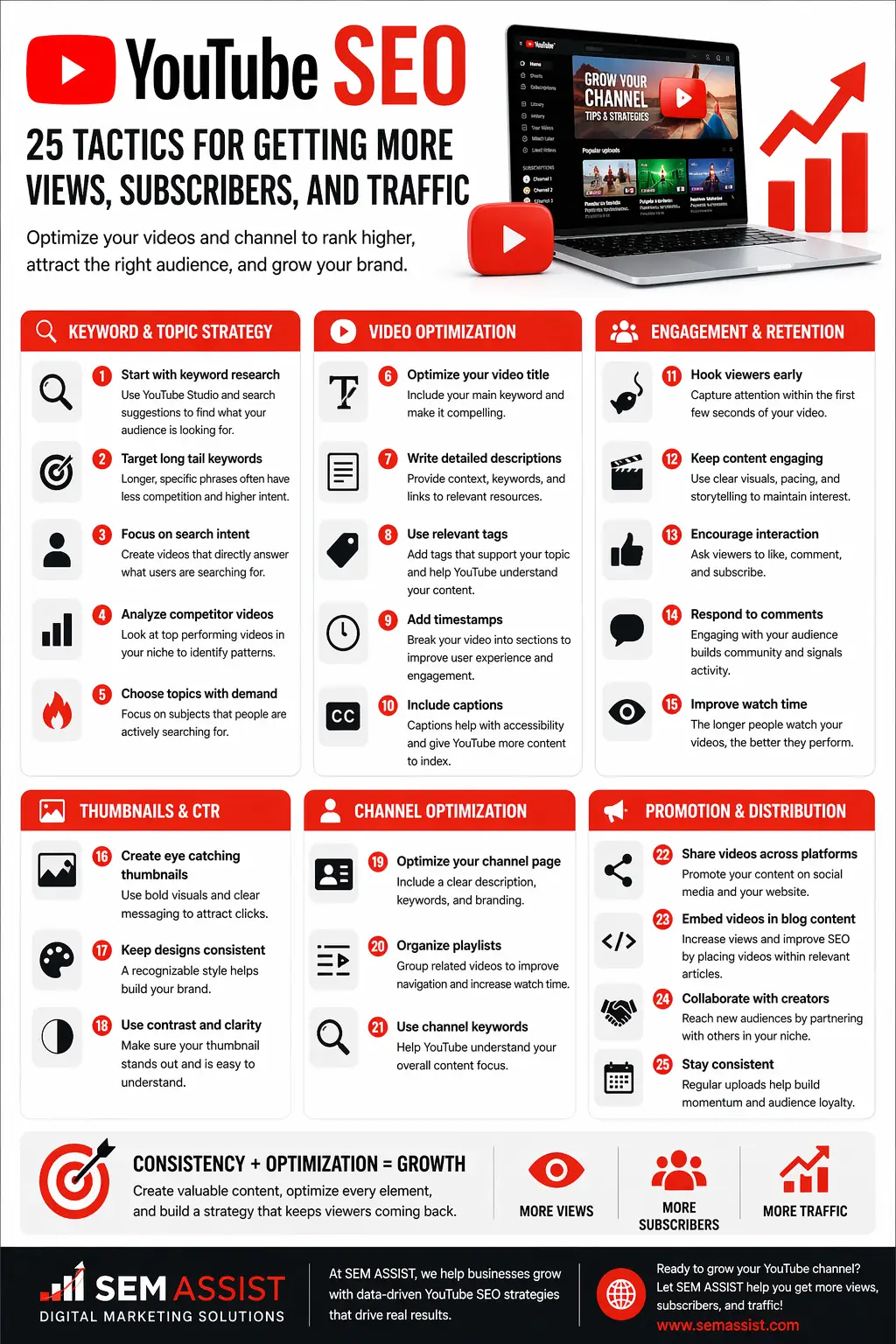
YouTube is one of the most powerful search engines in the world and a major driver of traffic, brand awareness, and lead generation. Simply uploading videos is not enough. To succeed, your content needs to be optimized so it can be discovered by the right audience.

YouTube SEO is the process of improving your videos, channel, and content strategy to increase visibility and performance on YouTube.

Here are 25 proven tactics to help you get more views, subscribers, and traffic.


Keyword and Topic Strategy

  1. Start with keyword research
    Use tools like YouTube Studio and search suggestions to find what your audience is looking for.

  2. Target long tail keywords
    Longer and more specific phrases often have less competition and higher intent.

  3. Focus on search intentCreate videos that directly answer what users are searching for.

  4. Analyze competitor videos
    Look at top performing videos in your niche to identify patterns.

  5. Choose topics with demand
    Focus on subjects that people are actively searching for.


Video Optimization

  1. Optimize your video title
    Include your main keyword and make it compelling.

  2. Write detailed descriptions
    Provide context, keywords, and links to relevant resources.

  3. Use relevant tags
    Add tags that support your topic and help YouTube understand your content.

  4. Add timestamps
    Break your video into sections to improve user experience and engagement.

  5. Include captions
    Captions help with accessibility and give YouTube more content to index.


Engagement and Retention

  1. Hook viewers early
    Capture attention within the first few seconds of your video.

  2. Keep content engaging
    Use clear visuals, pacing, and storytelling to maintain interest.

  3. Encourage interaction
    Ask viewers to like, comment, and subscribe.

  4. Respond to comments
    Engaging with your audience builds community and signals activity.

  5. Improve watch time
    The longer people watch your videos, the better they perform.


Thumbnails and Click Through Rate

  1. Create eye catching thumbnails
    Use bold visuals and clear messaging to attract clicks.

  2. Keep designs consistent
    A recognizable style helps build your brand.

  3. Use contrast and clarity
    Make sure your thumbnail stands out and is easy to understand.


Channel Optimization

  1. Optimize your channel page
    Include a clear description, keywords, and branding.

  2. Organize playlists
    Group related videos to improve navigation and increase watch time.

  3. Use channel keywords
    Help YouTube understand your overall content focus.


Promotion and Distribution

  1. Share videos across platforms
    Promote your content on social media and your website.

  2. Embed videos in blog content
    Increase views and improve SEO by placing videos within relevant articles.

  3. Collaborate with other creators
    Reach new audiences by partnering with others in your niche.

  4. Stay consistent
    Regular uploads help build momentum and audience loyalty.


Final Thoughts

YouTube SEO is about more than just ranking videos. It is about creating valuable content, optimizing every element, and building a strategy that keeps viewers engaged.

By applying these tactics consistently, you can increase your visibility, grow your audience, and drive meaningful traffic to your business.

At SEM ASSIST, we help businesses develop video marketing strategies that turn content into real growth.


Ready to Grow Your YouTube Channel

If you want to increase your views, subscribers, and traffic, SEM ASSIST can help you build a strategy that delivers measurable results.


What Are Influencer Engagement Marketplaces (and How to Use)

What Are Influencer Engagement Marketplaces and How to Use Them

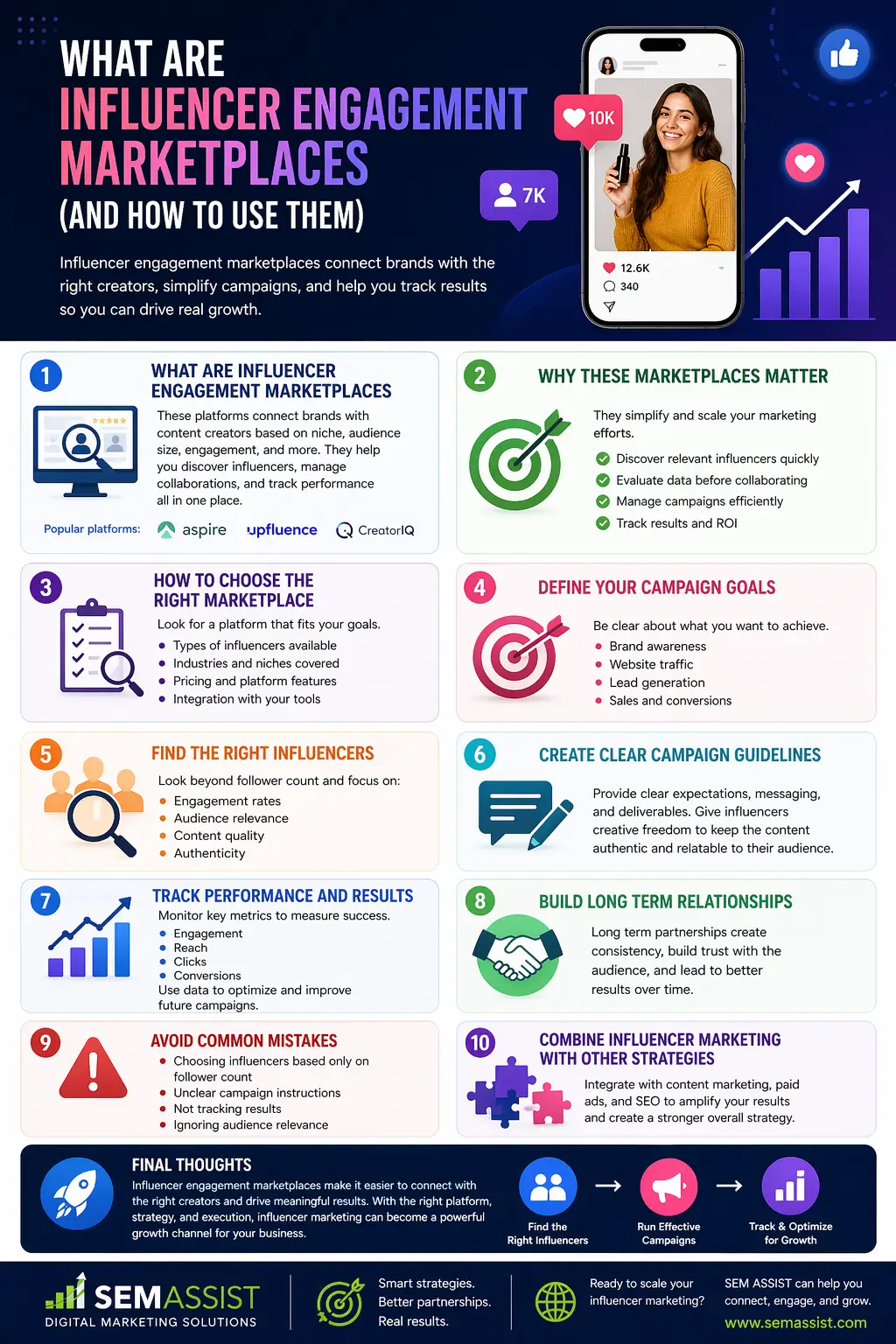
Influencer marketing has become a powerful way for brands to reach new audiences and build trust quickly. However, finding the right influencers and managing campaigns can be time consuming and difficult to scale.

This is where influencer engagement marketplaces come in. These platforms connect brands with influencers, making it easier to discover talent, manage collaborations, and track results.

Here is what you need to know and how to use them effectively.


What Are Influencer Engagement Marketplaces

Influencer engagement marketplaces are platforms that connect businesses with content creators who have established audiences on social media.

These marketplaces allow brands to search for influencers based on niche, audience size, engagement rates, and location. Instead of manually reaching out to creators, you can manage the entire process in one place.

Popular platforms in this space include Aspire, Upfluence, and CreatorIQ.


Why These Marketplaces Matter

Influencer engagement marketplaces simplify and scale your marketing efforts.

They help you:

  • Discover relevant influencers quickly
  • Evaluate performance data before collaborating
  • Manage campaigns more efficiently
  • Track results and return on investment

Instead of guessing which influencers will perform well, you can use data to make informed decisions.


How to Choose the Right Marketplace

Not all platforms are the same, so it is important to choose one that fits your goals.

Consider factors such as:

  • The types of influencers available
  • The industries and niches covered
  • Pricing and platform features
  • Integration with your existing marketing tools

The right platform should align with your target audience and campaign objectives.


Define Your Campaign Goals

Before using a marketplace, you need to be clear about what you want to achieve.

Your goals may include increasing brand awareness, driving website traffic, generating leads, or boosting sales.

Having a clear objective will guide your influencer selection and campaign strategy.


Find the Right Influencers

Choosing the right influencers is one of the most important steps.

Look beyond follower count and focus on:

  • Engagement rates
  • Audience relevance
  • Content quality
  • Authenticity

An influencer with a smaller but highly engaged audience can often deliver better results than one with a large but inactive following.


Create Clear Campaign Guidelines

Once you have selected your influencers, provide clear direction.

Outline your expectations, messaging, and deliverables. At the same time, allow influencers the creative freedom to present your brand in a way that feels natural to their audience.

Authenticity is key to successful influencer marketing.


Track Performance and Results

Most influencer marketplaces provide built in analytics tools.

Monitor metrics such as engagement, reach, clicks, and conversions. This data helps you understand what is working and where improvements can be made.

Tracking performance ensures your campaigns are aligned with your goals.


Build Long Term Relationships

Instead of working with influencers on a one time basis, focus on building long term partnerships.

Ongoing collaborations create consistency and strengthen trust with the audience. Over time, this can lead to better results and stronger brand recognition.


Avoid Common Mistakes

While influencer marketplaces are powerful, there are some common mistakes to avoid.

Do not choose influencers based solely on follower count. Avoid unclear campaign instructions that can lead to inconsistent messaging. Make sure to track results and adjust your strategy as needed.

Avoiding these pitfalls will help you maximize your success.


Combine Influencer Marketing With Other Strategies

Influencer marketing works best when it is part of a broader digital strategy.

Combine it with content marketing, paid advertising, and SEO to amplify your results. This creates a more cohesive approach that drives stronger outcomes.


Final Thoughts

Influencer engagement marketplaces have transformed how brands connect with creators. They provide a scalable and efficient way to run influencer campaigns while using data to guide decisions.

By choosing the right platform, selecting the right influencers, and tracking your results, you can turn influencer marketing into a powerful growth channel.

At SEM ASSIST, we help businesses build integrated marketing strategies that combine influencer marketing with proven digital tactics to drive real results.


Ready to Scale Your Influencer Marketing

If you want to leverage influencer engagement marketplaces to grow your brand, SEM ASSIST can help you develop a strategy that connects you with the right audience and delivers measurable success.

The 10-Step Guide to Creating a Profitable AdWords Campaign

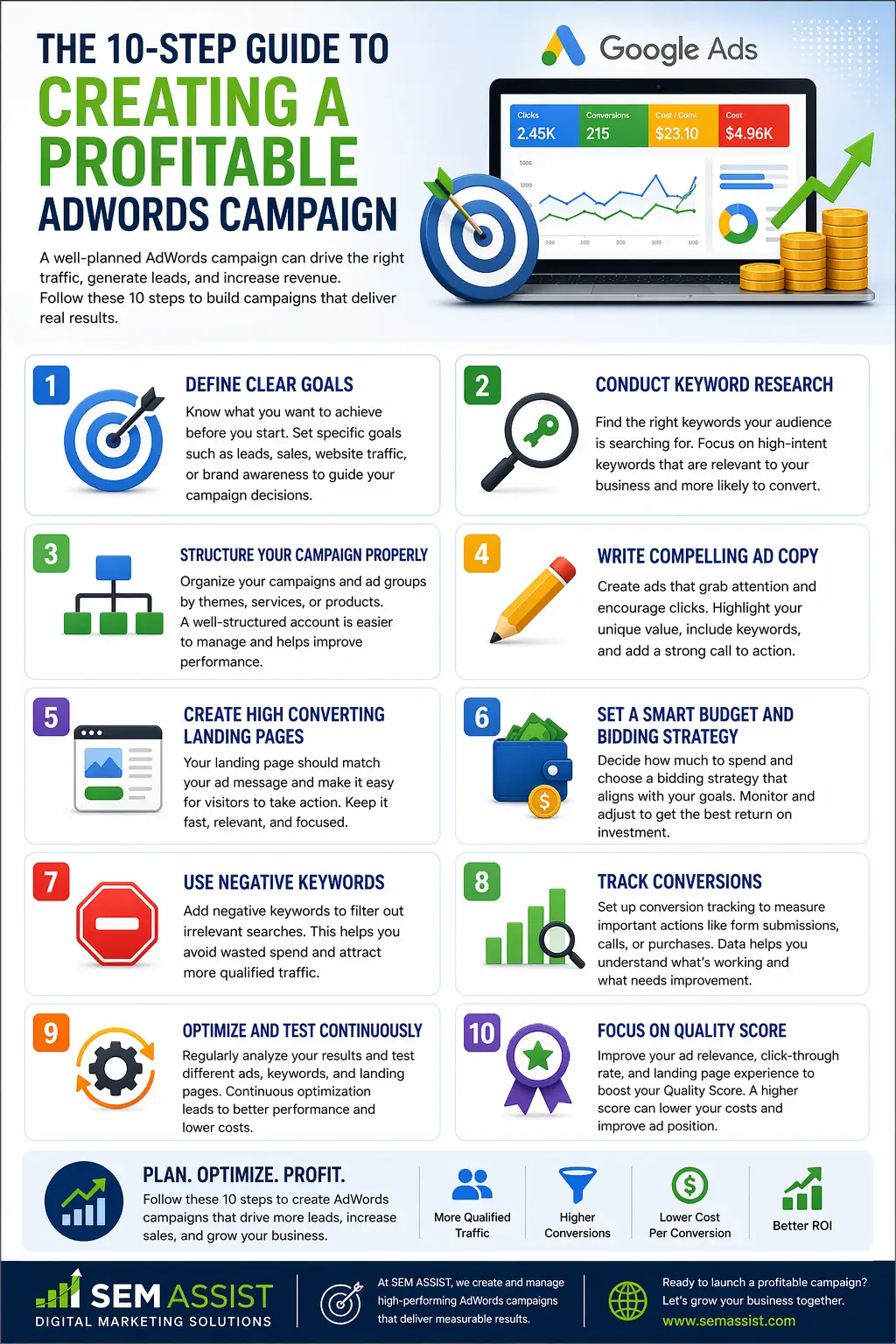
The 10 Step Guide to Creating a Profitable AdWords Campaign

Running a profitable advertising campaign requires more than just setting up ads and hoping for results. Success comes from strategy, structure, and continuous optimization.

With the right approach, businesses can turn paid advertising into a consistent source of leads and revenue. Platforms like Google Ads provide powerful tools, but knowing how to use them effectively is what makes the difference.

Here is a complete ten step guide to building a profitable AdWords campaign.


Step 1 Define Clear Goals

Before launching any campaign, you need to know what you want to achieve.

Your goals may include generating leads, increasing sales, driving website traffic, or building brand awareness. Clear objectives will guide every decision you make throughout your campaign.


Step 2 Conduct Keyword Research

Keywords are the foundation of your campaign.

Identify the search terms your audience is using and focus on those with strong intent. Target keywords that align with your services and are likely to convert.

A well researched keyword list helps ensure your ads reach the right people.


Step 3 Structure Your Campaign Properly

Campaign structure plays a major role in performance.

Organize your account into campaigns and ad groups based on themes, services, or products. Each ad group should focus on a specific set of keywords.

A clean structure makes it easier to manage and optimize your campaigns.


Step 4 Write Compelling Ad Copy

Your ad copy needs to capture attention and encourage action.

Highlight your value, include relevant keywords, and make your message clear. Focus on what makes your business different and why users should choose you.

Strong ad copy improves click through rates and overall performance.


Step 5 Create High Converting Landing Pages

Your landing page is where conversions happen.

Make sure it aligns with your ad message and provides a clear path for users to take action. The page should be fast, easy to navigate, and focused on one goal.

A well optimized landing page can significantly improve your conversion rate.


Step 6 Set a Smart Budget and Bidding Strategy

Budgeting is critical for profitability.

Determine how much you are willing to spend and choose a bidding strategy that aligns with your goals. Monitor your spending and adjust as needed to maximize return on investment.

Smart budgeting helps you control costs while driving results.


Step 7 Use Negative Keywords

Not every search is relevant to your business.

Negative keywords help you filter out unwanted traffic and prevent wasted spend. By excluding irrelevant searches, you can improve the quality of your traffic and increase conversions.


Step 8 Track Conversions

Without tracking, you cannot measure success.

Set up conversion tracking to monitor actions such as form submissions, calls, or purchases. This data helps you understand what is working and where improvements are needed.

Accurate tracking is essential for optimization.


Step 9 Optimize and Test Continuously

Successful campaigns are never set and forgotten.

Regularly review your performance and test different elements such as ad copy, keywords, and landing pages. Small improvements over time can lead to significant gains.

Continuous optimization keeps your campaign competitive.


Step 10 Focus on Quality Score

Quality Score is a key factor in your campaign performance.

It is influenced by your ad relevance, click through rate, and landing page experience. A higher Quality Score can lower your costs and improve your ad position.

Focusing on quality helps you get more value from your budget.


Final Thoughts

Creating a profitable AdWords campaign requires a combination of planning, execution, and ongoing improvement. By following these ten steps, you can build a strong foundation and turn your advertising into a reliable growth channel.

At SEM ASSIST, we help businesses develop and manage campaigns that deliver measurable results and long term success.


Ready to Launch a Profitable Campaign

If you want to maximize your advertising performance and drive real revenue, SEM ASSIST can help you create a strategy that turns clicks into customers.

How to Use Amazon Attribution For Ad Campaigns

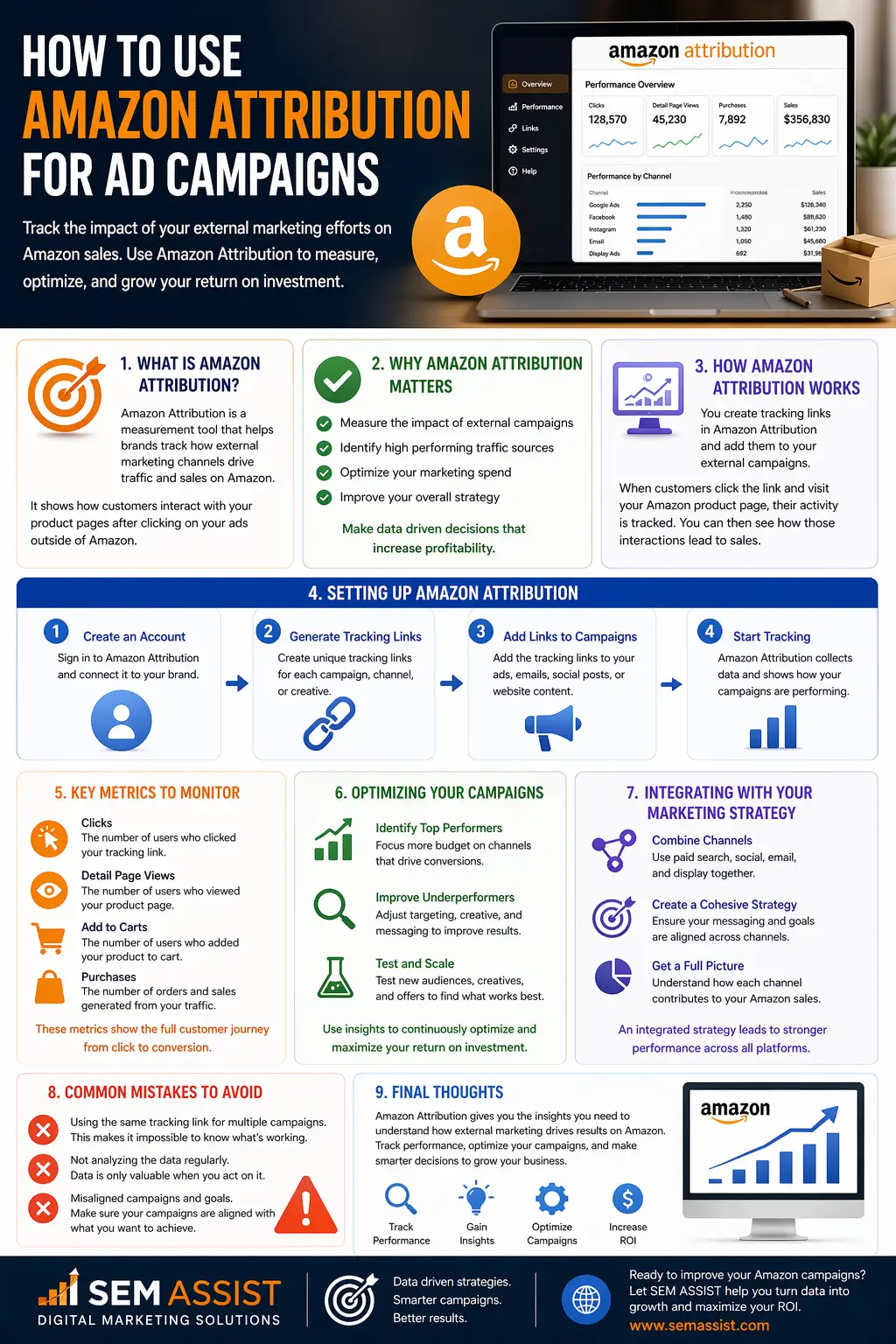
How to Use Amazon Attribution For Ad Campaigns

Measuring the true impact of your advertising efforts is essential for making smarter marketing decisions. For brands selling on Amazon, understanding what happens outside the platform is just as important as what happens within it.

Amazon Attribution gives advertisers the ability to track how external marketing channels contribute to sales and performance on Amazon. When used correctly, it can unlock valuable insights that improve your return on investment.

Here is how to use Amazon Attribution effectively for your ad campaigns.


What Is Amazon Attribution

Amazon Attribution is a measurement tool that allows brands to track the performance of external traffic sources that lead to Amazon product pages.

It provides data on how campaigns from platforms like social media, search engines, email marketing, and display advertising influence customer behavior on Amazon.

Instead of guessing which channels are driving results, you can use real data to guide your strategy.


Why Amazon Attribution Matters

Without proper tracking, it is difficult to understand which marketing efforts are actually driving sales.

Amazon Attribution helps you:

  • Measure the impact of external campaigns
  • Identify high performing traffic sources
  • Optimize your marketing spend
  • Improve your overall strategy

This level of visibility allows you to make data driven decisions that increase profitability.


How Amazon Attribution Works

Amazon Attribution uses tracking links that you generate within the platform.

These links are added to your external campaigns. When users click on them and visit your Amazon product page, their activity is tracked and recorded.

You can then view metrics such as clicks, page views, add to carts, and purchases.


Setting Up Amazon Attribution

Getting started involves a few key steps.

First, create an Amazon Attribution account and connect it to your brand.

Next, generate tracking links for each campaign you want to measure. Be sure to create unique links for different channels and campaigns so you can track performance accurately.

Finally, add these links to your ads, emails, or social media posts.


Key Metrics to Monitor

To get the most value from Amazon Attribution, focus on the metrics that matter most.

Clicks show how many users are visiting your product page. Detail page views indicate interest in your product. Add to carts show intent to purchase. Conversions reveal actual sales.

By analyzing these metrics, you can understand how users move through the buying process.


Optimizing Your Campaigns

Amazon Attribution is not just about tracking. It is about improving performance.

Identify which channels are driving the most conversions and allocate more budget to those areas. Adjust campaigns that are underperforming and test new strategies.

Continuous optimization helps you maximize your return on investment.


Integrating With Your Marketing Strategy

Amazon Attribution works best when it is part of a broader marketing approach.

Combine it with paid search, social media advertising, and email campaigns to create a cohesive strategy. This allows you to see how different channels work together to drive results.

A well integrated strategy leads to stronger performance across all platforms.


Common Mistakes to Avoid

Some brands fail to use Amazon Attribution effectively due to simple mistakes.

Avoid using the same tracking link across multiple campaigns. This makes it difficult to identify what is working. Do not ignore the data once it is collected. Regular analysis is essential for improvement.

Also, ensure your campaigns are aligned with your goals so the data you collect is meaningful.


Final Thoughts

Amazon Attribution provides valuable insight into how your external marketing efforts impact your Amazon sales. By tracking performance and optimizing your campaigns, you can make smarter decisions and improve your results.

At SEM ASSIST, we help businesses use data driven strategies to maximize their advertising performance and drive measurable growth.


Ready to Improve Your Amazon Campaigns

If you want to better understand your marketing performance and increase your return on investment, SEM ASSIST can help you implement strategies that turn data into real results.

How to Create the Perfect H1 Tag for SEO

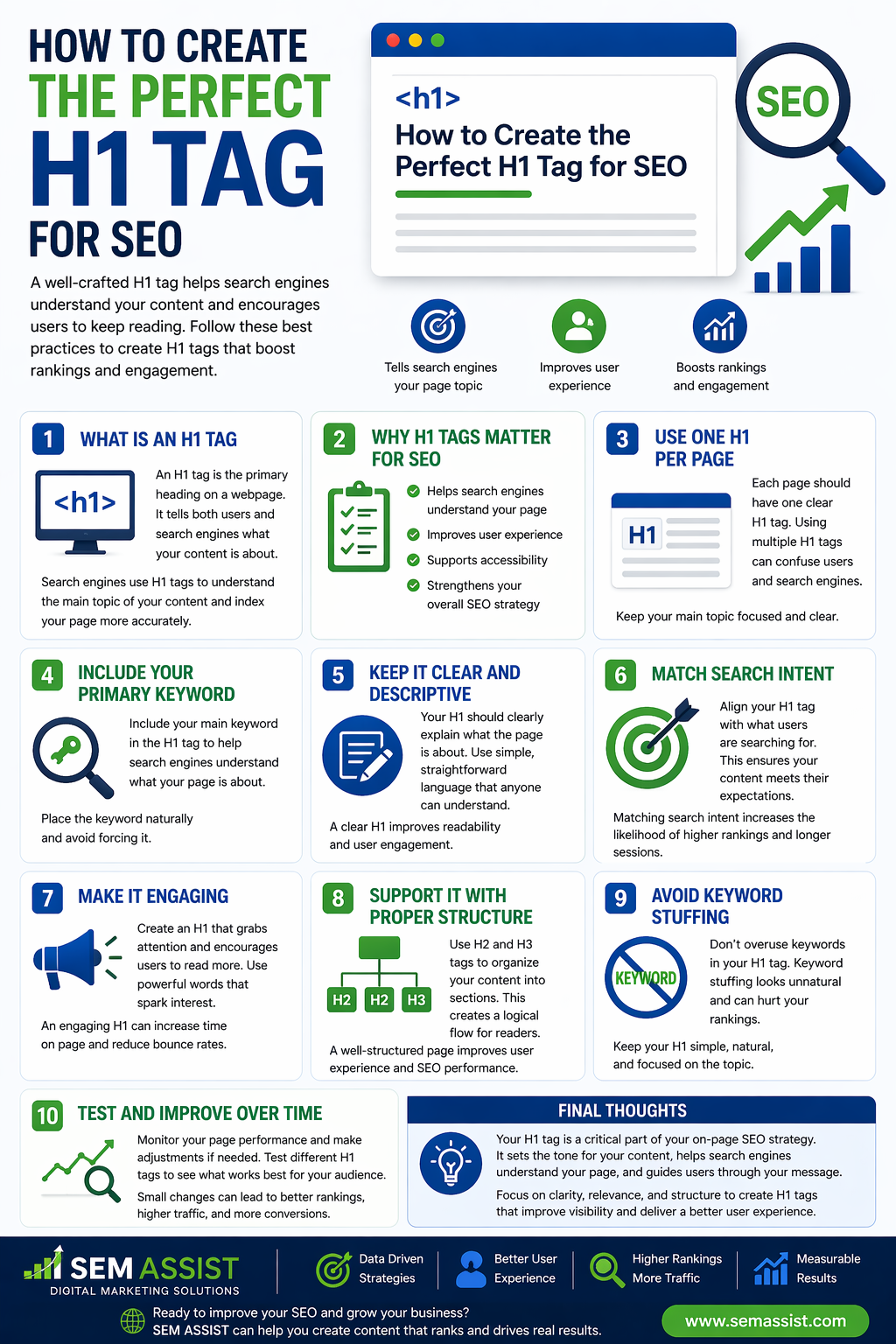
How to Create the Perfect H1 Tag for SEO

How to Create the Perfect H1 Tag for SEO

When it comes to search engine optimization, small details often make a big difference. One of the most important yet commonly overlooked elements is the H1 tag.

Your H1 tag is the main heading of your page. It tells both users and search engines what your content is about. When crafted correctly, it can improve rankings, increase engagement, and help guide visitors through your page.

Here is how to create the perfect H1 tag for SEO.


What Is an H1 Tag

An H1 tag is the primary heading on a webpage. It is typically the first thing users see when they land on your page and it plays a key role in content structure.

Search engines like Google use H1 tags to understand the main topic of your content. A clear and relevant H1 helps search engines index your page more accurately.


Why H1 Tags Matter for SEO

Your H1 tag serves multiple purposes.

It helps search engines determine the focus of your page. It improves user experience by clearly introducing the topic. It also supports accessibility by helping screen readers understand the structure of your content.

A well optimized H1 can strengthen your overall SEO strategy.


Use One H1 Per Page

Each page should have one clear H1 tag.

Using multiple H1 tags can create confusion for both users and search engines. A single, focused heading ensures that your main topic is clearly defined.

Think of your H1 as the title of your page. It should represent the core idea of your content.


Include Your Primary Keyword

Your H1 tag should include your main keyword.

This helps search engines understand what your page is about and improves your chances of ranking for that term. Place the keyword naturally within the heading rather than forcing it.

A keyword focused H1 strengthens your relevance in search results.


Keep It Clear and Descriptive

Clarity is essential when writing your H1 tag.

Your heading should immediately tell users what they can expect from your page. Avoid vague or overly complex wording.

A clear and descriptive H1 improves both readability and engagement.


Match Search Intent

Your H1 tag should align with what users are searching for.

If someone is looking for information, your H1 should reflect that. If they are looking for a solution, your heading should guide them in that direction.

Matching search intent increases the likelihood that users will stay on your page.


Make It Engaging

While your H1 should be optimized for SEO, it should also capture attention.

Use language that encourages users to continue reading. A compelling heading can increase time on page and reduce bounce rates.

Balance optimization with creativity to create a strong first impression.


Support It With Proper Structure

Your H1 tag should work alongside other headings on your page.

Use H2 and H3 tags to break down your content into sections. This creates a logical flow that is easy for users to follow.

A well structured page improves both user experience and SEO performance.


Avoid Keyword Stuffing

Including your keyword is important, but overusing it can hurt your results.

Keyword stuffing makes your content look unnatural and can reduce readability. Keep your H1 simple and focused.

Search engines understand context, so there is no need to repeat keywords excessively.


Test and Improve Over Time

Like other SEO elements, your H1 tag can be optimized over time.

Monitor your performance and make adjustments if needed. Small changes can lead to better rankings and higher engagement.

Continuous improvement helps you stay competitive.


Final Thoughts

Your H1 tag is a critical part of your on page SEO strategy. It sets the tone for your content, helps search engines understand your page, and guides users through your message.

By focusing on clarity, relevance, and structure, you can create H1 tags that improve both visibility and user experience.

At SEM ASSIST, we help businesses optimize every element of their content to drive better results and long term growth.


Ready to Improve Your SEO Strategy

If you want to enhance your website performance and create content that ranks, SEM ASSIST can help you build a strategy that delivers measurable results.