
How to Write Content For People and Optimize For Google

How To Write Content For People and Optimize For Google

How to Write Content for People and Optimize for Google

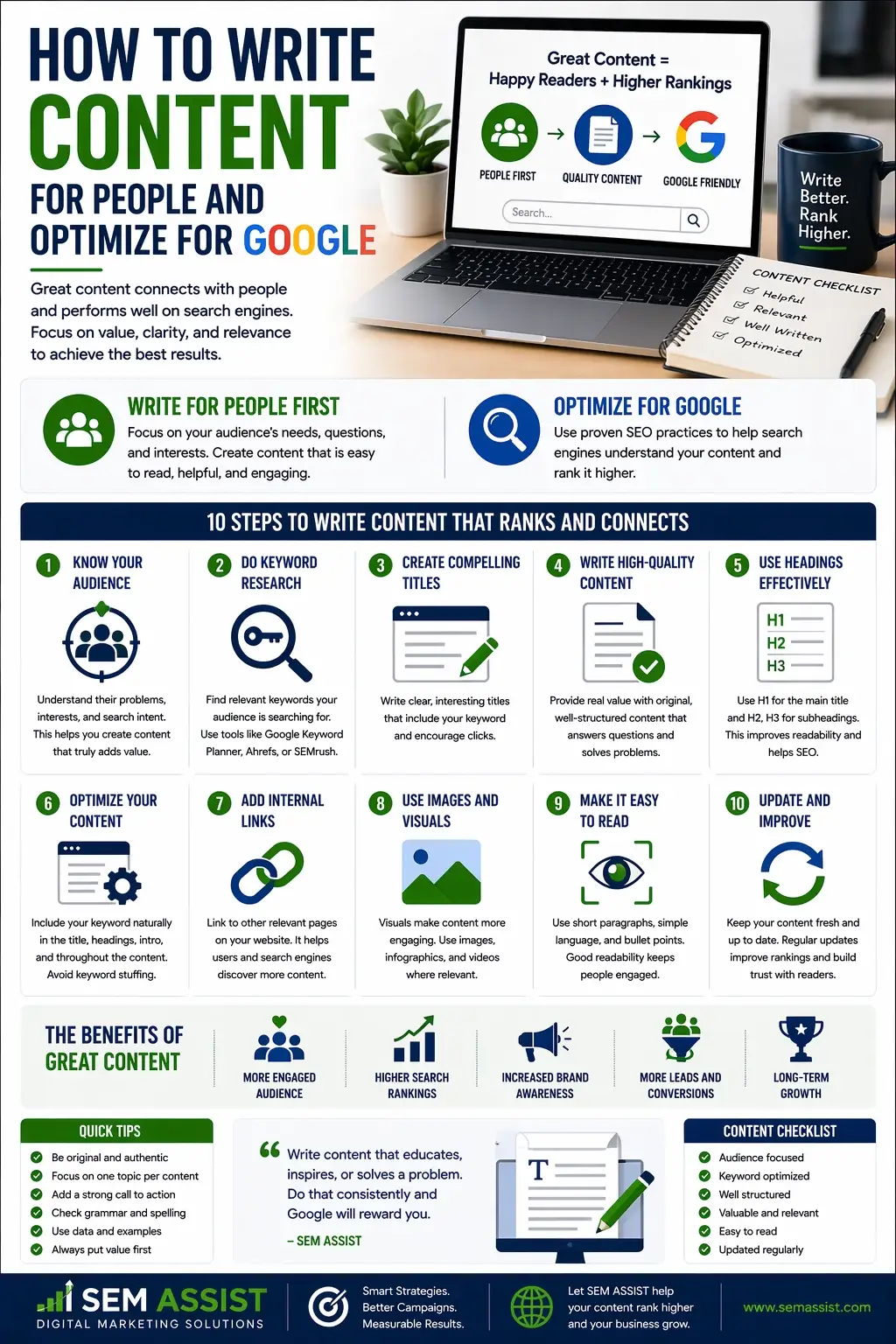
Creating content that ranks on Google and connects with real people is one of the biggest challenges businesses face today. Many websites either focus too heavily on keywords and lose readability, or they write engaging content that never gets found in search.

The good news is that you do not have to choose between the two.

When done correctly, your content can rank well, engage your audience, and turn visitors into customers. Here is how to do it the right way.


Start With Search Intent, Not Just Keywords

Before you begin writing, you need to understand why someone is searching.

Every search typically falls into one of three categories. Informational searches are for learning. Navigational searches are for finding a specific website. Transactional searches are for taking action or making a purchase.

Instead of focusing only on phrases like HVAC repair near me, think about the problem behind the search. Ask yourself what the user is trying to solve and what type of answer they expect.

When your content aligns with that intent, it becomes far more valuable to both the reader and Google.


Write Like a Human First

Search engines have become much smarter. Google now prioritizes content that is helpful, natural, and easy to read.

This means using clear language, writing conversationally, and avoiding robotic phrasing. Your content should feel like a real conversation with your audience.

Keep paragraphs short and make your points easy to understand. If it sounds unnatural when you read it out loud, it likely needs improvement.


Use Keywords Strategically

Keywords still play an important role, but they should be used with intention.

Focus on one primary keyword that represents your main topic. Then include supporting keywords that naturally relate to it.

Place these keywords in important areas such as your title, headings, opening paragraph, and meta description. You can also include them in image descriptions.

The key is to keep everything natural. Google understands context better than ever, so there is no need to force keywords into every sentence.


Structure Your Content for Readability

Even strong content can fail if it is difficult to read.

Use clear headings to organize your ideas. Break up text into short sections. Include bullet points when appropriate and highlight important ideas to guide the reader.

Most people scan content before they fully read it. A clean structure makes it easier for them to find what they need quickly.


Answer Questions Clearly

One of the most effective ways to rank higher is by answering common questions in your industry.

Think about what your customers ask most often. Provide direct and helpful answers early in your content.

Clear answers improve user experience and increase your chances of appearing in featured results on Google.


Optimize On Page Elements

In addition to writing great content, you need to help search engines understand it.

Make sure your page includes a strong title and description, proper heading structure, internal links to related pages, and links to trusted sources when relevant.

Images should be optimized with descriptive text and fast loading speeds.

These elements work together to improve both search visibility and user experience.


Focus on Value Instead of Length

Longer content is not always better.

Your goal should be to fully answer the topic without adding unnecessary filler. If you can provide value in fewer words, that is often more effective.

Quality content that solves a problem will always outperform content that is long but unfocused.


Keep Your Content Updated

Search engine optimization is not a one time effort.

Updating your content regularly keeps it relevant. This can include refreshing statistics, adding new insights, improving clarity, and expanding on useful sections.

Fresh content signals to Google that your page is still valuable.


Balance SEO With Conversion

Getting traffic is only part of the goal. Your content should also guide visitors toward taking action.

Include clear calls to action that encourage readers to contact you, request a quote, or learn more about your services.

Build trust through real results, testimonials, or case studies. Make it easy for users to move forward with confidence.


Final Thoughts

Writing content for people and optimizing for Google is about creating alignment. When your content is helpful, easy to read, and structured properly, it naturally performs better in search.

Focusing on real value will always lead to stronger results over time.

At SEM ASSIST, we create content strategies that not only rank but also drive measurable growth for your business.


Ready to Improve Your Content Strategy

If your current content is not delivering results, it may be time for a better approach. SEM ASSIST helps businesses create content that attracts the right audience and turns traffic into real revenue.
How to Use Instagram Story Highlights on a Brand Account

How To Use Instagram Story Highlights on a Brand Account

How to Use Instagram Story Highlights on a Brand Account

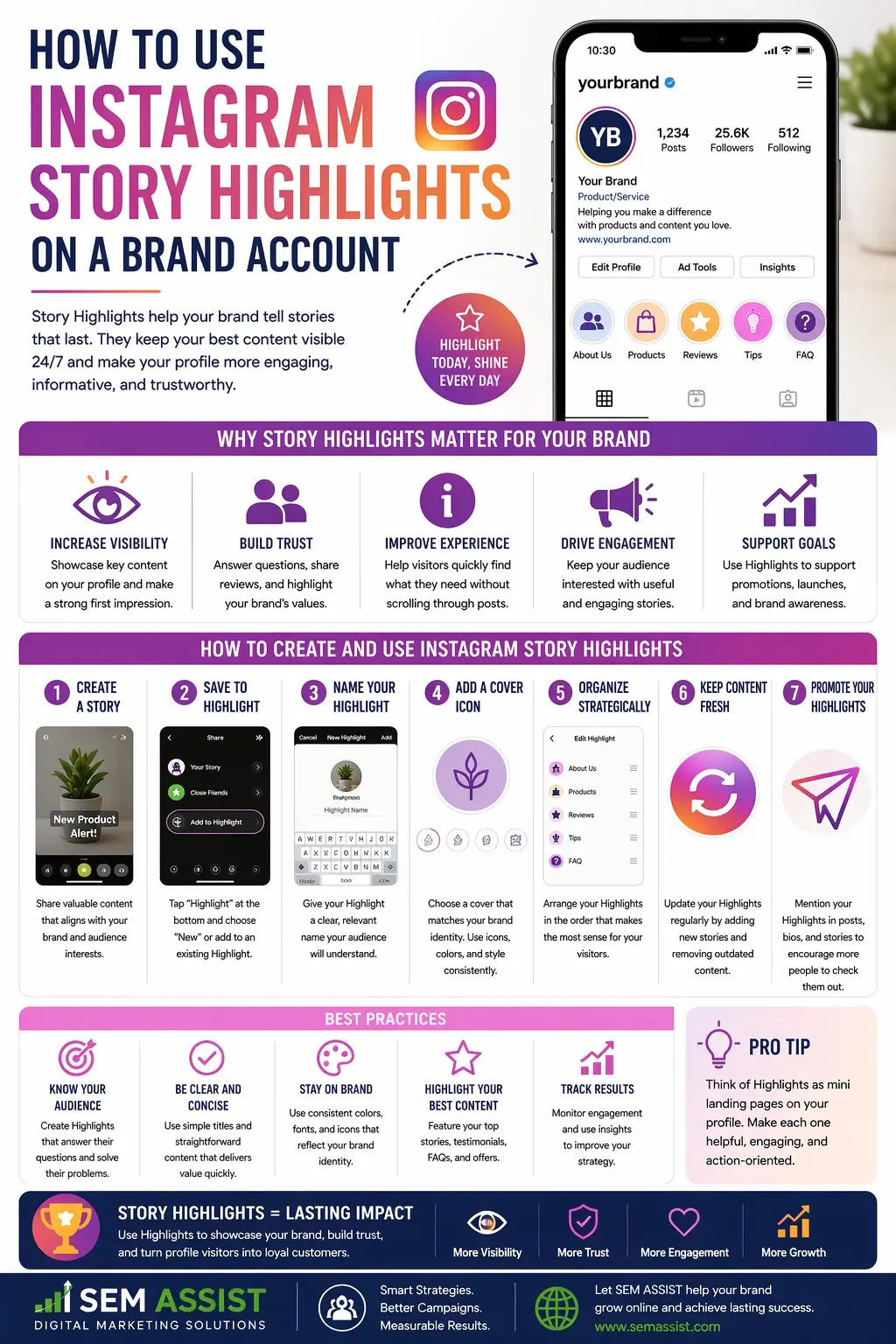
Instagram Story Highlights are one of the most underused tools on a brand account, yet they play a powerful role in building trust, showcasing services, and guiding potential customers toward taking action.

While Stories disappear after twenty four hours, Highlights allow you to keep your best content visible on your profile permanently. When used correctly, they can act as a mini website that helps visitors quickly understand your brand.

Here is how to use Instagram Story Highlights effectively for your business.


What Are Instagram Story Highlights

Instagram Story Highlights are curated collections of your past Stories that appear directly below your profile bio on Instagram. They give you the ability to organize important content into categories that your audience can access at any time.

Instead of letting valuable content disappear, Highlights allow you to keep key information front and center for new visitors.


Why Highlights Matter for Brand Accounts

When someone visits your profile, you only have a few seconds to make a strong impression. Your Highlights help you control that first impression by guiding users to the most important parts of your brand.

Highlights can help you:

  • Build credibility
  • Showcase services or products
  • Answer common questions
  • Display real customer results
  • Encourage conversions

Think of them as a visual extension of your website that lives directly on your profile.


Choose the Right Highlight Categories

The first step is organizing your content into clear and useful categories. Your Highlights should make it easy for someone to quickly understand what you offer.

Some effective categories include:

About Us

Introduce your brand, your story, and what makes you different

Services

Break down your core services so users know exactly what you provide

Results

Showcase before and after examples, case studies, or measurable success

Reviews

Share testimonials and customer feedback to build trust

FAQ

Answer common questions that potential customers often ask

Process

Explain how your service works from start to finish

Each category should serve a purpose and help move the user closer to taking action.


Design Clean and Consistent Covers

Your Highlight covers are the first thing people notice. A clean and consistent design makes your profile look more professional and easier to navigate.

Use simple icons, consistent colors, and branding that matches your overall identity. Avoid clutter and keep text minimal or nonexistent.

Consistency across all covers helps reinforce your brand and creates a polished look.


Keep Content Short and Valuable

Just like regular Stories, Highlight content should be quick and easy to consume.

Focus on:

  • Short video clips
  • Clear messaging
  • Strong visuals
  • Simple explanations

Each Story should deliver value quickly. Avoid overwhelming users with too much information in a single slide.


Use Highlights to Build Trust

Trust is one of the biggest factors in converting visitors into customers.

Use your Highlights to show real proof of your work.

This can include:

  • Client testimonials
  • Behind the scenes content
  • Completed projects
  • Real results and data

The more authentic your content feels, the more likely users are to trust your brand.


Guide Users Toward Action

Your Highlights should not just inform, they should guide users toward taking the next step.

Include clear calls to action within your Stories such as:

  • Visit our website
  • Send us a message
  • Request a quote
  • Book a consultation

Make it easy for users to know what to do next after viewing your content.


Update Highlights Regularly

Outdated content can hurt your brand image.

Make it a habit to review and update your Highlights regularly. Remove anything that no longer reflects your current services or results and replace it with fresh content.

Keeping your Highlights updated shows that your business is active and relevant.


Final Thoughts

Instagram Story Highlights are more than just saved Stories. They are a powerful tool that can help you communicate your brand, build trust, and convert profile visitors into customers.

When organized properly and filled with valuable content, your Highlights become a key part of your digital marketing strategy.

At SEM ASSIST, we help businesses turn social media profiles into high performing assets that drive real growth.


Ready to Elevate Your Brand on Instagram

If your Instagram profile is not converting visitors into leads, it may be time to optimize your strategy. SEM ASSIST can help you build a strong presence that attracts attention and drives results.

A Starter Guide to Google Ads Manager Accounts

A Starter Guide to Google Ads Manager Accounts

A Starter Guide to Google Ads Manager Accounts

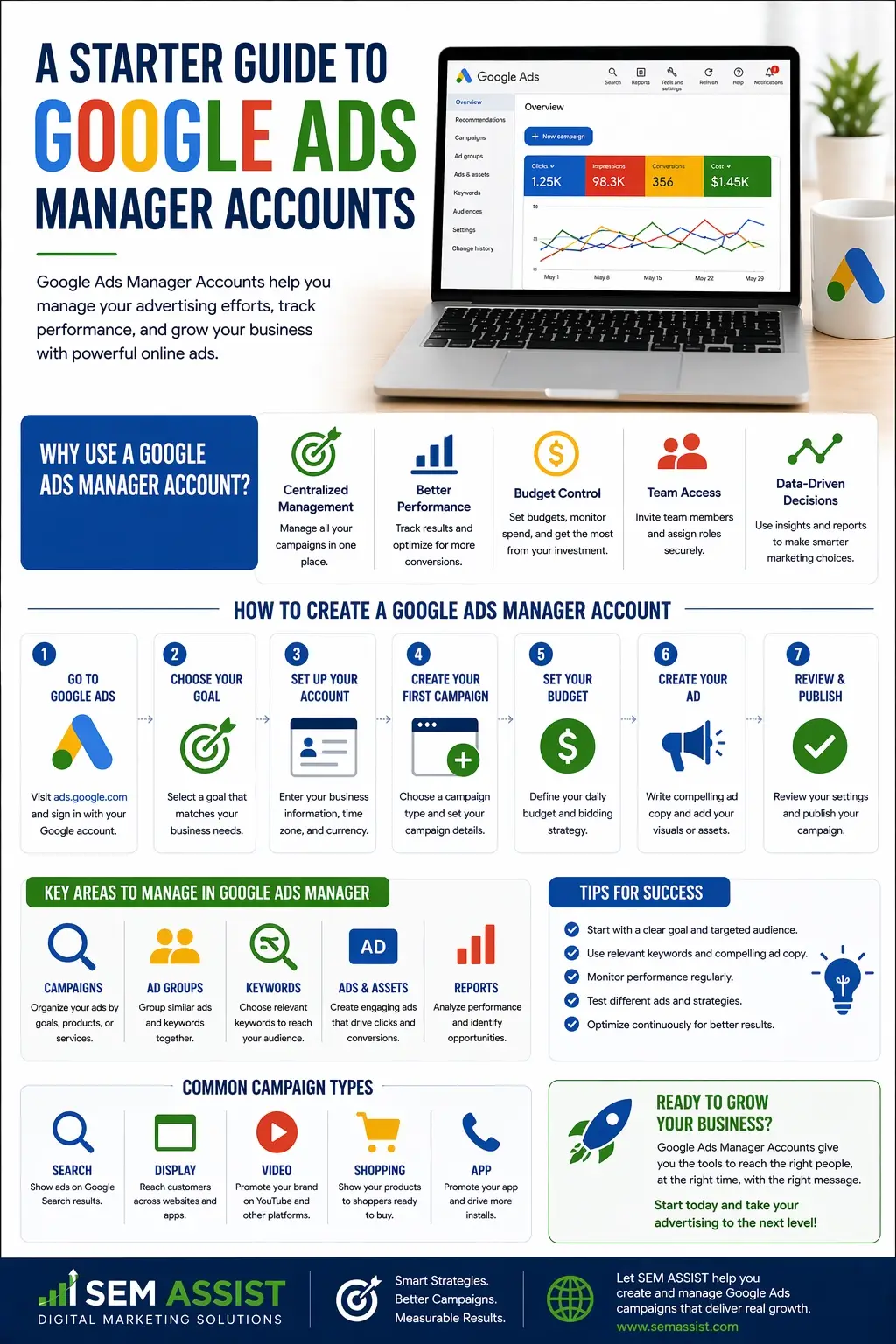
Managing multiple advertising accounts can quickly become overwhelming, especially for agencies or businesses handling several brands. That is where Google Ads Manager Accounts come in.

Also known as MCC accounts, Manager Accounts allow you to manage multiple Google Ads accounts from a single dashboard. Whether you are running campaigns for clients or overseeing multiple locations, this tool simplifies your workflow and gives you better control.

Here is everything you need to know to get started.


What Is a Google Ads Manager Account

A Google Ads Manager Account is a central hub that allows you to access and manage multiple individual Google Ads accounts in one place. Instead of logging in and out of different accounts, you can view performance, make updates, and monitor campaigns from a single interface.

Manager Accounts are commonly used by marketing agencies, franchises, and businesses with multiple locations.

You can explore the platform through Google Ads, where Manager Accounts provide a higher level view of all linked accounts.


Who Should Use a Manager Account

Manager Accounts are ideal for anyone managing more than one advertising account.

This includes:

  • Marketing agencies handling multiple clients
  • Businesses with several locations or departments
  • Franchises that need centralized control
  • Teams that collaborate on advertising campaigns

If you are switching between accounts frequently, a Manager Account can save time and reduce errors.


Key Benefits of Using a Manager Account

Using a Manager Account offers several advantages that improve efficiency and performance.

Centralized Management

You can view and manage all accounts from one dashboard, which eliminates the need to log in separately.

Simplified Reporting

Performance data across multiple accounts can be analyzed in one place, making it easier to compare results and identify trends.

Access Control

You can grant different levels of access to team members without sharing individual account credentials.

Scalability

As your business grows, you can add more accounts without changing your workflow.

These benefits make Manager Accounts essential for scaling advertising efforts effectively.


How to Set Up a Manager Account

Getting started is a straightforward process.

First, create a Manager Account through Google Ads using a dedicated email address. This account will act as your main control center.

Next, link existing Google Ads accounts by sending access requests. Once approved, those accounts will appear in your dashboard.

You can also create new accounts directly within your Manager Account if needed.

Organizing your accounts into groups can help keep everything structured and easy to manage.


Navigating the Dashboard

The Manager Account dashboard provides a high level overview of all linked accounts.

From this interface, you can:

  • View performance metrics such as clicks, impressions, and conversions
  • Access individual accounts for detailed campaign management
  • Monitor account health and activity
  • Adjust settings across multiple accounts

Learning how to navigate this dashboard efficiently will save time and improve your overall campaign management.


Best Practices for Managing Multiple Accounts

To get the most out of your Manager Account, it is important to follow a few key practices.

Stay Organized

Group accounts by client, location, or service type to keep your dashboard clean and easy to navigate.

Standardize Naming Conventions

Use consistent naming for campaigns and accounts so you can quickly identify what each one represents.

Monitor Performance Regularly

Review performance data across all accounts to spot trends and opportunities for improvement.

Set Clear Permissions

Assign roles carefully to ensure team members have the right level of access without compromising security.

Keeping your accounts organized and structured will make management much more efficient.


Common Mistakes to Avoid

While Manager Accounts are powerful, there are a few common mistakes to watch out for.

One mistake is failing to organize accounts properly, which can lead to confusion as you scale. Another is giving too much access to users who do not need it, which can create security risks.

Some users also overlook performance tracking at the account level, focusing too much on individual campaigns instead of the bigger picture.

Avoiding these mistakes will help you maintain control and maximize results.


How Manager Accounts Support Growth

As your advertising efforts expand, managing everything manually becomes more difficult.

Manager Accounts allow you to scale efficiently by providing a structured system for handling multiple campaigns and accounts. They give you better visibility into performance and help you make data driven decisions.

For agencies, this means managing more clients without sacrificing quality. For businesses, it means maintaining consistency across locations and campaigns.


Final Thoughts

A Google Ads Manager Account is an essential tool for anyone managing multiple advertising accounts. It simplifies workflows, improves organization, and provides valuable insights across all campaigns.

By setting up your Manager Account correctly and following best practices, you can create a strong foundation for scalable and effective advertising.

At SEM ASSIST, we help businesses and agencies streamline their advertising strategies and maximize performance across every account.


Ready to Take Control of Your Google Ads

If managing multiple accounts feels overwhelming, SEM ASSIST can help you simplify your strategy and improve results. From account setup to ongoing optimization, we provide the support you need to grow with confidence.

What Are Influencer Engagement Marketplaces (and How to Use)

What Are Influencer Engagement Marketplaces and How to Use Them

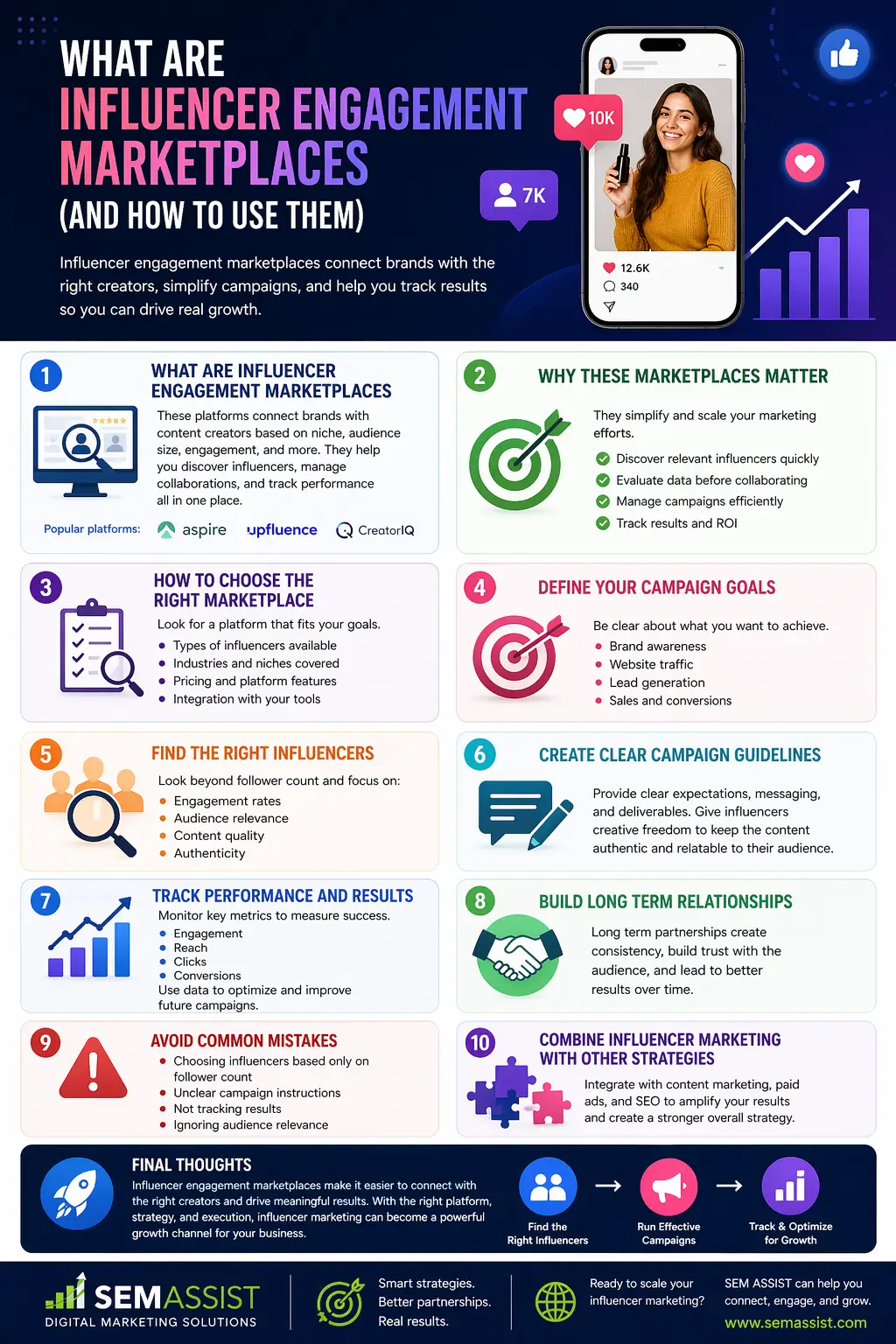
Influencer marketing has become a powerful way for brands to reach new audiences and build trust quickly. However, finding the right influencers and managing campaigns can be time consuming and difficult to scale.

This is where influencer engagement marketplaces come in. These platforms connect brands with influencers, making it easier to discover talent, manage collaborations, and track results.

Here is what you need to know and how to use them effectively.


What Are Influencer Engagement Marketplaces

Influencer engagement marketplaces are platforms that connect businesses with content creators who have established audiences on social media.

These marketplaces allow brands to search for influencers based on niche, audience size, engagement rates, and location. Instead of manually reaching out to creators, you can manage the entire process in one place.

Popular platforms in this space include Aspire, Upfluence, and CreatorIQ.


Why These Marketplaces Matter

Influencer engagement marketplaces simplify and scale your marketing efforts.

They help you:

  • Discover relevant influencers quickly
  • Evaluate performance data before collaborating
  • Manage campaigns more efficiently
  • Track results and return on investment

Instead of guessing which influencers will perform well, you can use data to make informed decisions.


How to Choose the Right Marketplace

Not all platforms are the same, so it is important to choose one that fits your goals.

Consider factors such as:

  • The types of influencers available
  • The industries and niches covered
  • Pricing and platform features
  • Integration with your existing marketing tools

The right platform should align with your target audience and campaign objectives.


Define Your Campaign Goals

Before using a marketplace, you need to be clear about what you want to achieve.

Your goals may include increasing brand awareness, driving website traffic, generating leads, or boosting sales.

Having a clear objective will guide your influencer selection and campaign strategy.


Find the Right Influencers

Choosing the right influencers is one of the most important steps.

Look beyond follower count and focus on:

  • Engagement rates
  • Audience relevance
  • Content quality
  • Authenticity

An influencer with a smaller but highly engaged audience can often deliver better results than one with a large but inactive following.


Create Clear Campaign Guidelines

Once you have selected your influencers, provide clear direction.

Outline your expectations, messaging, and deliverables. At the same time, allow influencers the creative freedom to present your brand in a way that feels natural to their audience.

Authenticity is key to successful influencer marketing.


Track Performance and Results

Most influencer marketplaces provide built in analytics tools.

Monitor metrics such as engagement, reach, clicks, and conversions. This data helps you understand what is working and where improvements can be made.

Tracking performance ensures your campaigns are aligned with your goals.


Build Long Term Relationships

Instead of working with influencers on a one time basis, focus on building long term partnerships.

Ongoing collaborations create consistency and strengthen trust with the audience. Over time, this can lead to better results and stronger brand recognition.


Avoid Common Mistakes

While influencer marketplaces are powerful, there are some common mistakes to avoid.

Do not choose influencers based solely on follower count. Avoid unclear campaign instructions that can lead to inconsistent messaging. Make sure to track results and adjust your strategy as needed.

Avoiding these pitfalls will help you maximize your success.


Combine Influencer Marketing With Other Strategies

Influencer marketing works best when it is part of a broader digital strategy.

Combine it with content marketing, paid advertising, and SEO to amplify your results. This creates a more cohesive approach that drives stronger outcomes.


Final Thoughts

Influencer engagement marketplaces have transformed how brands connect with creators. They provide a scalable and efficient way to run influencer campaigns while using data to guide decisions.

By choosing the right platform, selecting the right influencers, and tracking your results, you can turn influencer marketing into a powerful growth channel.

At SEM ASSIST, we help businesses build integrated marketing strategies that combine influencer marketing with proven digital tactics to drive real results.


Ready to Scale Your Influencer Marketing

If you want to leverage influencer engagement marketplaces to grow your brand, SEM ASSIST can help you develop a strategy that connects you with the right audience and delivers measurable success.

The 10-Step Guide to Creating a Profitable AdWords Campaign

The 10 Step Guide to Creating a Profitable AdWords Campaign

Running a profitable advertising campaign requires more than just setting up ads and hoping for results. Success comes from strategy, structure, and continuous optimization.

With the right approach, businesses can turn paid advertising into a consistent source of leads and revenue. Platforms like Google Ads provide powerful tools, but knowing how to use them effectively is what makes the difference.

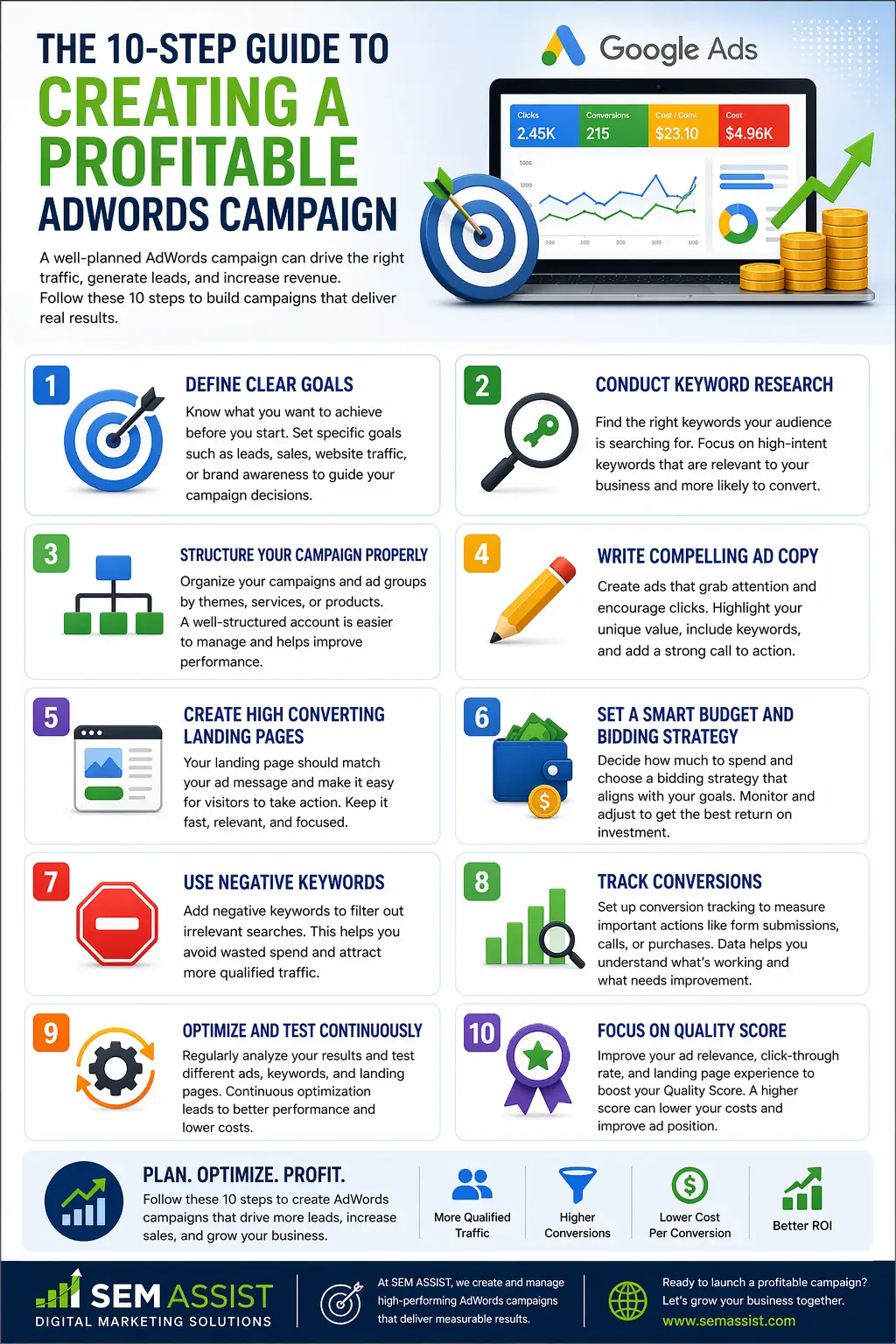
Here is a complete ten step guide to building a profitable AdWords campaign.


Step 1 Define Clear Goals

Before launching any campaign, you need to know what you want to achieve.

Your goals may include generating leads, increasing sales, driving website traffic, or building brand awareness. Clear objectives will guide every decision you make throughout your campaign.


Step 2 Conduct Keyword Research

Keywords are the foundation of your campaign.

Identify the search terms your audience is using and focus on those with strong intent. Target keywords that align with your services and are likely to convert.

A well researched keyword list helps ensure your ads reach the right people.


Step 3 Structure Your Campaign Properly

Campaign structure plays a major role in performance.

Organize your account into campaigns and ad groups based on themes, services, or products. Each ad group should focus on a specific set of keywords.

A clean structure makes it easier to manage and optimize your campaigns.


Step 4 Write Compelling Ad Copy

Your ad copy needs to capture attention and encourage action.

Highlight your value, include relevant keywords, and make your message clear. Focus on what makes your business different and why users should choose you.

Strong ad copy improves click through rates and overall performance.


Step 5 Create High Converting Landing Pages

Your landing page is where conversions happen.

Make sure it aligns with your ad message and provides a clear path for users to take action. The page should be fast, easy to navigate, and focused on one goal.

A well optimized landing page can significantly improve your conversion rate.


Step 6 Set a Smart Budget and Bidding Strategy

Budgeting is critical for profitability.

Determine how much you are willing to spend and choose a bidding strategy that aligns with your goals. Monitor your spending and adjust as needed to maximize return on investment.

Smart budgeting helps you control costs while driving results.


Step 7 Use Negative Keywords

Not every search is relevant to your business.

Negative keywords help you filter out unwanted traffic and prevent wasted spend. By excluding irrelevant searches, you can improve the quality of your traffic and increase conversions.


Step 8 Track Conversions

Without tracking, you cannot measure success.

Set up conversion tracking to monitor actions such as form submissions, calls, or purchases. This data helps you understand what is working and where improvements are needed.

Accurate tracking is essential for optimization.


Step 9 Optimize and Test Continuously

Successful campaigns are never set and forgotten.

Regularly review your performance and test different elements such as ad copy, keywords, and landing pages. Small improvements over time can lead to significant gains.

Continuous optimization keeps your campaign competitive.


Step 10 Focus on Quality Score

Quality Score is a key factor in your campaign performance.

It is influenced by your ad relevance, click through rate, and landing page experience. A higher Quality Score can lower your costs and improve your ad position.

Focusing on quality helps you get more value from your budget.


Final Thoughts

Creating a profitable AdWords campaign requires a combination of planning, execution, and ongoing improvement. By following these ten steps, you can build a strong foundation and turn your advertising into a reliable growth channel.

At SEM ASSIST, we help businesses develop and manage campaigns that deliver measurable results and long term success.


Ready to Launch a Profitable Campaign

If you want to maximize your advertising performance and drive real revenue, SEM ASSIST can help you create a strategy that turns clicks into customers.

How to Use Amazon Attribution For Ad Campaigns

How to Use Amazon Attribution For Ad Campaigns

Measuring the true impact of your advertising efforts is essential for making smarter marketing decisions. For brands selling on Amazon, understanding what happens outside the platform is just as important as what happens within it.

Amazon Attribution gives advertisers the ability to track how external marketing channels contribute to sales and performance on Amazon. When used correctly, it can unlock valuable insights that improve your return on investment.

Here is how to use Amazon Attribution effectively for your ad campaigns.


What Is Amazon Attribution

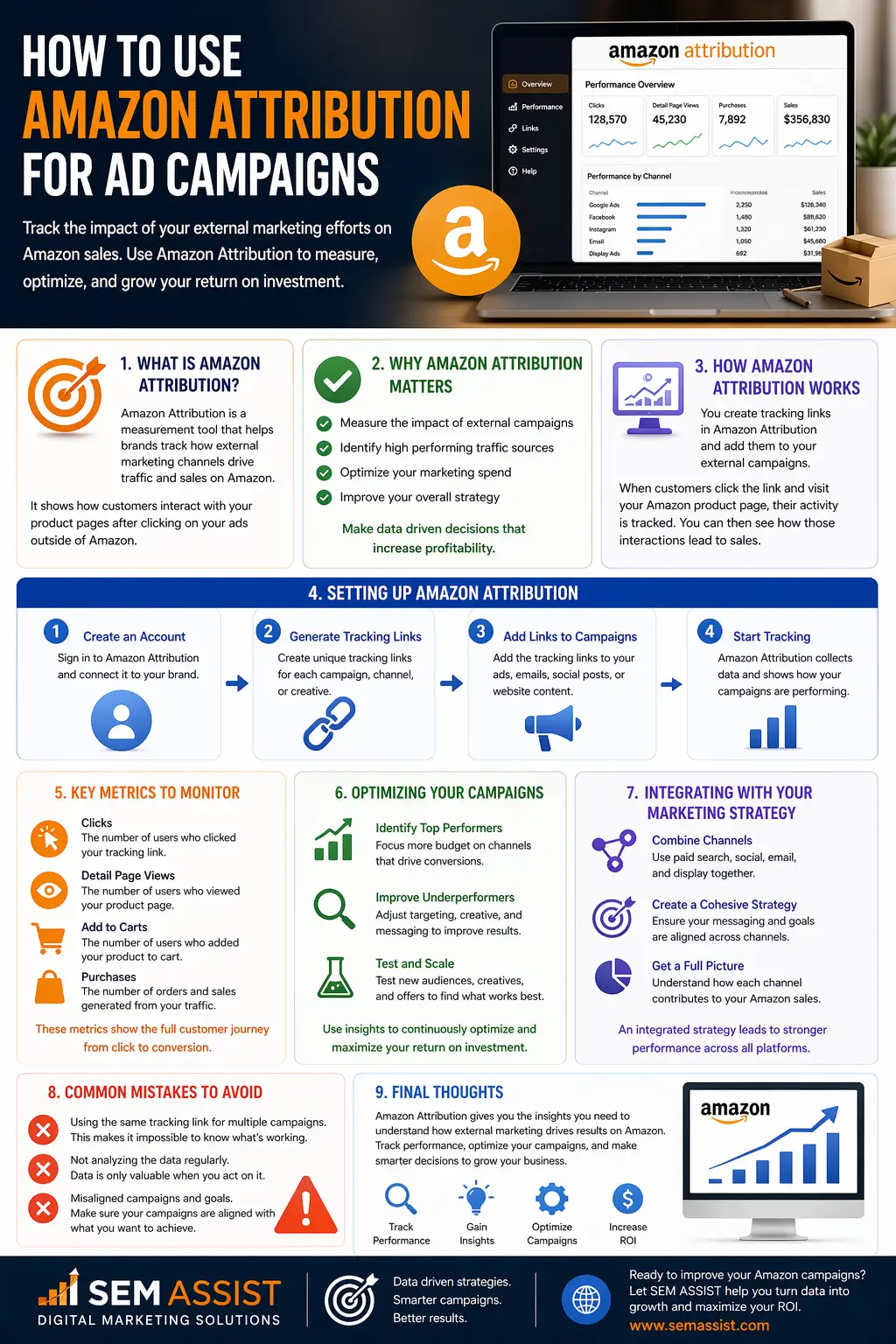
Amazon Attribution is a measurement tool that allows brands to track the performance of external traffic sources that lead to Amazon product pages.

It provides data on how campaigns from platforms like social media, search engines, email marketing, and display advertising influence customer behavior on Amazon.

Instead of guessing which channels are driving results, you can use real data to guide your strategy.


Why Amazon Attribution Matters

Without proper tracking, it is difficult to understand which marketing efforts are actually driving sales.

Amazon Attribution helps you:

  • Measure the impact of external campaigns
  • Identify high performing traffic sources
  • Optimize your marketing spend
  • Improve your overall strategy

This level of visibility allows you to make data driven decisions that increase profitability.


How Amazon Attribution Works

Amazon Attribution uses tracking links that you generate within the platform.

These links are added to your external campaigns. When users click on them and visit your Amazon product page, their activity is tracked and recorded.

You can then view metrics such as clicks, page views, add to carts, and purchases.


Setting Up Amazon Attribution

Getting started involves a few key steps.

First, create an Amazon Attribution account and connect it to your brand.

Next, generate tracking links for each campaign you want to measure. Be sure to create unique links for different channels and campaigns so you can track performance accurately.

Finally, add these links to your ads, emails, or social media posts.


Key Metrics to Monitor

To get the most value from Amazon Attribution, focus on the metrics that matter most.

Clicks show how many users are visiting your product page. Detail page views indicate interest in your product. Add to carts show intent to purchase. Conversions reveal actual sales.

By analyzing these metrics, you can understand how users move through the buying process.


Optimizing Your Campaigns

Amazon Attribution is not just about tracking. It is about improving performance.

Identify which channels are driving the most conversions and allocate more budget to those areas. Adjust campaigns that are underperforming and test new strategies.

Continuous optimization helps you maximize your return on investment.


Integrating With Your Marketing Strategy

Amazon Attribution works best when it is part of a broader marketing approach.

Combine it with paid search, social media advertising, and email campaigns to create a cohesive strategy. This allows you to see how different channels work together to drive results.

A well integrated strategy leads to stronger performance across all platforms.


Common Mistakes to Avoid

Some brands fail to use Amazon Attribution effectively due to simple mistakes.

Avoid using the same tracking link across multiple campaigns. This makes it difficult to identify what is working. Do not ignore the data once it is collected. Regular analysis is essential for improvement.

Also, ensure your campaigns are aligned with your goals so the data you collect is meaningful.


Final Thoughts

Amazon Attribution provides valuable insight into how your external marketing efforts impact your Amazon sales. By tracking performance and optimizing your campaigns, you can make smarter decisions and improve your results.

At SEM ASSIST, we help businesses use data driven strategies to maximize their advertising performance and drive measurable growth.


Ready to Improve Your Amazon Campaigns

If you want to better understand your marketing performance and increase your return on investment, SEM ASSIST can help you implement strategies that turn data into real results.

Digital Marketing Guide

Digital Marketing - A Complete Guide For Business Growth

Digital Marketing A Complete Guide for Business Growth

Digital marketing has become the foundation of modern business growth. As consumers spend more time online, companies must adapt their strategies to meet customers where they are.

From search engines to social media, digital marketing allows businesses to reach targeted audiences, build relationships, and drive measurable results.

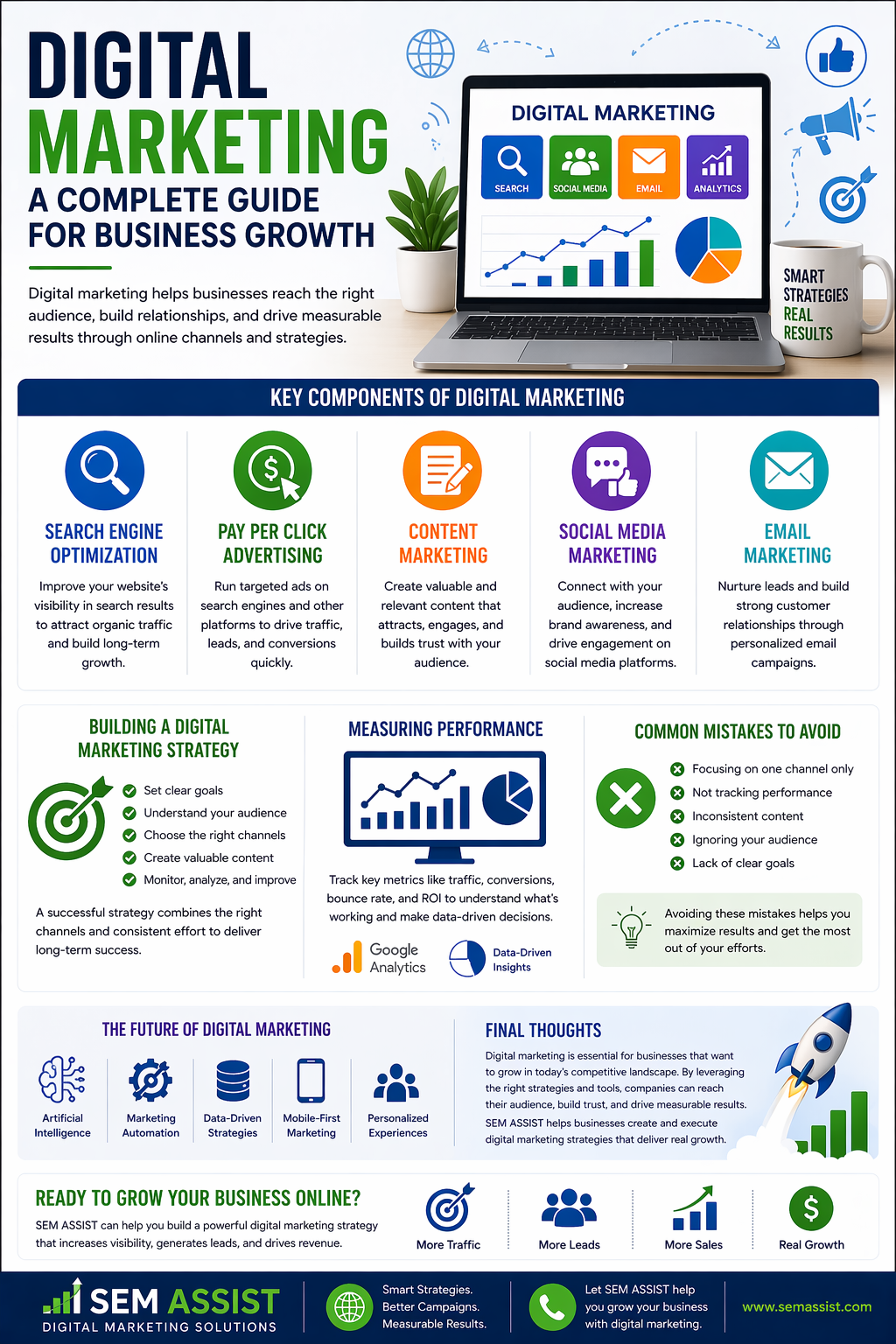
Here is a complete guide to understanding digital marketing and how it can help your business grow.


What Is Digital Marketing

Digital marketing refers to all marketing efforts that use online channels to promote products or services.

This includes search engines, social media platforms, email marketing, content marketing, and paid advertising. Platforms like Google and Facebook play a major role in connecting businesses with their audiences.

Digital marketing focuses on reaching the right people at the right time with the right message.


Why Digital Marketing Matters

Traditional marketing methods still have value, but digital marketing offers advantages that are difficult to match.

It allows for precise targeting, real time tracking, and measurable performance. Businesses can see exactly what is working and make adjustments quickly.

Digital marketing also provides opportunities for businesses of all sizes to compete in the same space.


Key Components of Digital Marketing

Search Engine Optimization

Search engine optimization focuses on improving your website’s visibility in search results.

By optimizing your content and technical structure, you can attract organic traffic from search engines. This is one of the most cost effective ways to generate long term results.


Pay Per Click Advertising

Paid advertising allows you to appear at the top of search results and across various platforms.

Using tools like Google Ads, businesses can target specific keywords and audiences to drive traffic and conversions.

Paid campaigns can deliver fast results when managed effectively.


Content Marketing

Content marketing involves creating valuable and relevant content to attract and engage your audience.

Blog posts, videos, and guides help establish authority and build trust. High quality content also supports SEO and improves overall marketing performance.


Social Media Marketing

Social media platforms allow businesses to connect directly with their audience.

By sharing content, engaging with followers, and running targeted campaigns, brands can build relationships and increase visibility.

Platforms like Instagram and LinkedIn play a key role in modern marketing strategies.


Email Marketing

Email marketing is one of the most effective ways to nurture leads and maintain customer relationships.

By delivering personalized and relevant messages, businesses can guide users through the buying journey and encourage repeat engagement.


Building a Digital Marketing Strategy

A successful digital marketing strategy starts with clear goals.

Identify what you want to achieve, whether it is increasing traffic, generating leads, or boosting sales. Understand your target audience and create content that meets their needs.

Choose the right channels based on where your audience spends time. Combine multiple strategies to create a cohesive approach.

Consistency and continuous improvement are key to long term success.


Measuring Performance

One of the biggest advantages of digital marketing is the ability to track results.

Tools like Google Analytics provide insights into traffic, user behavior, and conversions.

By analyzing data, you can identify what is working and refine your strategy to improve performance.


Common Mistakes to Avoid

Many businesses make the mistake of focusing on one channel while ignoring others.

Digital marketing works best when multiple strategies are combined. Another common mistake is failing to track performance, which makes it difficult to improve results.

Inconsistent content and lack of clear goals can also limit success.


The Future of Digital Marketing

Digital marketing continues to evolve as technology and consumer behavior change.

Artificial intelligence, automation, and data driven strategies are shaping the future of marketing. Businesses that stay adaptable and continue learning will have a competitive advantage.


Final Thoughts

Digital marketing is essential for businesses that want to grow in today’s competitive landscape. By leveraging the right strategies and tools, companies can reach their audience, build trust, and drive measurable results.

At SEM ASSIST, we help businesses create and execute digital marketing strategies that deliver real growth.


Ready to Grow Your Business Online

If you want to improve your online presence and generate more leads, SEM ASSIST can help you build a strategy that turns your digital marketing into a powerful growth engine.

Marketing Ideas

Marketing Ideas That Drive Growth And Engagement

Marketing Ideas That Drive Growth and Engagement

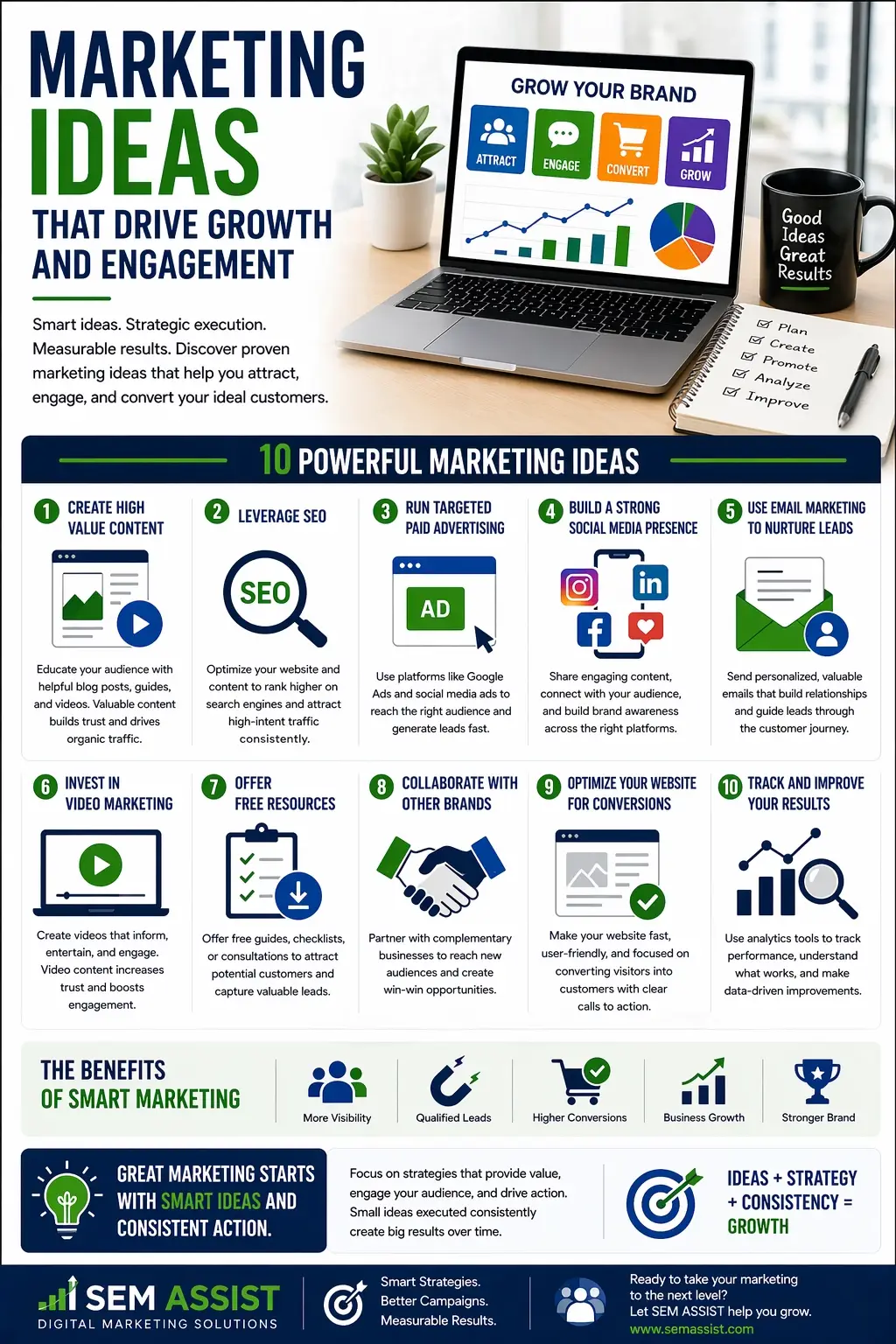
Every business needs a steady flow of fresh marketing ideas to stay competitive. As consumer behavior evolves and digital platforms continue to expand, companies must find creative ways to capture attention and build lasting relationships.

Effective marketing is not about doing everything. It is about choosing the right strategies that align with your audience and business goals.

Here are powerful marketing ideas that can help you increase visibility, generate leads, and grow your brand.


Create High Value Content

Content remains one of the most effective marketing tools.

Publishing blog posts, guides, and videos allows you to educate your audience and establish authority. High quality content also improves your visibility on search engines and drives organic traffic.

Focus on solving real problems and answering common questions to attract the right audience.


Leverage Search Engine Optimization

Search engine optimization helps your business get discovered online.

By optimizing your website and content, you can rank higher on platforms like Google. This brings in consistent traffic from users who are actively searching for your services.

SEO is a long term strategy that delivers ongoing results.


Run Targeted Paid Advertising

Paid advertising allows you to reach your audience quickly.

Using platforms like Google Ads and social media ads, you can target specific demographics and interests.

Well managed campaigns can generate leads and conversions almost immediately.


Build a Strong Social Media Presence

Social media is essential for connecting with your audience.

Platforms like Instagram and LinkedIn allow you to share content, engage with followers, and build brand awareness.

Consistency and authenticity are key to success on social media.


Use Email Marketing to Nurture Leads

Email marketing helps you stay connected with your audience.

By sending valuable and relevant content, you can build relationships and guide users through the buying process. Personalized emails tend to perform better and increase engagement.

Email remains one of the highest converting marketing channels.


Invest in Video Marketing

Video content continues to grow in popularity.

Creating videos allows you to communicate your message in a more engaging and visual way. Tutorials, behind the scenes content, and educational videos can help build trust and attract attention.

Video marketing is especially effective for increasing engagement.


Offer Free Resources

Providing free value can attract potential customers.

Resources such as guides, checklists, or consultations encourage users to engage with your brand. In exchange, you can capture contact information and continue nurturing the relationship.

This approach builds trust and creates opportunities for conversion.


Collaborate With Other Brands

Partnerships can expand your reach.

Working with complementary businesses allows you to tap into new audiences and create mutually beneficial opportunities. Collaborations can include joint campaigns, content, or events.

Strategic partnerships can accelerate growth.


Optimize Your Website for Conversions

Driving traffic is important, but converting that traffic is essential.

Ensure your website is easy to navigate, fast, and focused on guiding users toward action. Clear calls to action and strong messaging can significantly improve conversion rates.

A well optimized website turns visitors into customers.


Track and Improve Your Results

Marketing success depends on continuous improvement.

Use tools like Google Analytics to track performance and understand user behavior. Analyze your data to identify what is working and where adjustments are needed.

Data driven decisions lead to better outcomes.


Final Thoughts

Marketing ideas are only effective when they are executed with purpose and consistency. By focusing on strategies that provide value, engage your audience, and drive action, you can create a marketing approach that delivers real results.

At SEM ASSIST, we help businesses develop and implement marketing strategies that increase visibility, generate leads, and support long term growth.


Ready to Take Your Marketing to the Next Level

If you want to turn ideas into results and build a stronger marketing strategy, SEM ASSIST can help you create a plan that drives measurable success.

Hardest Things in Programming

Hardest Things in Programming

The Hardest Things in Programming and How to Overcome Them

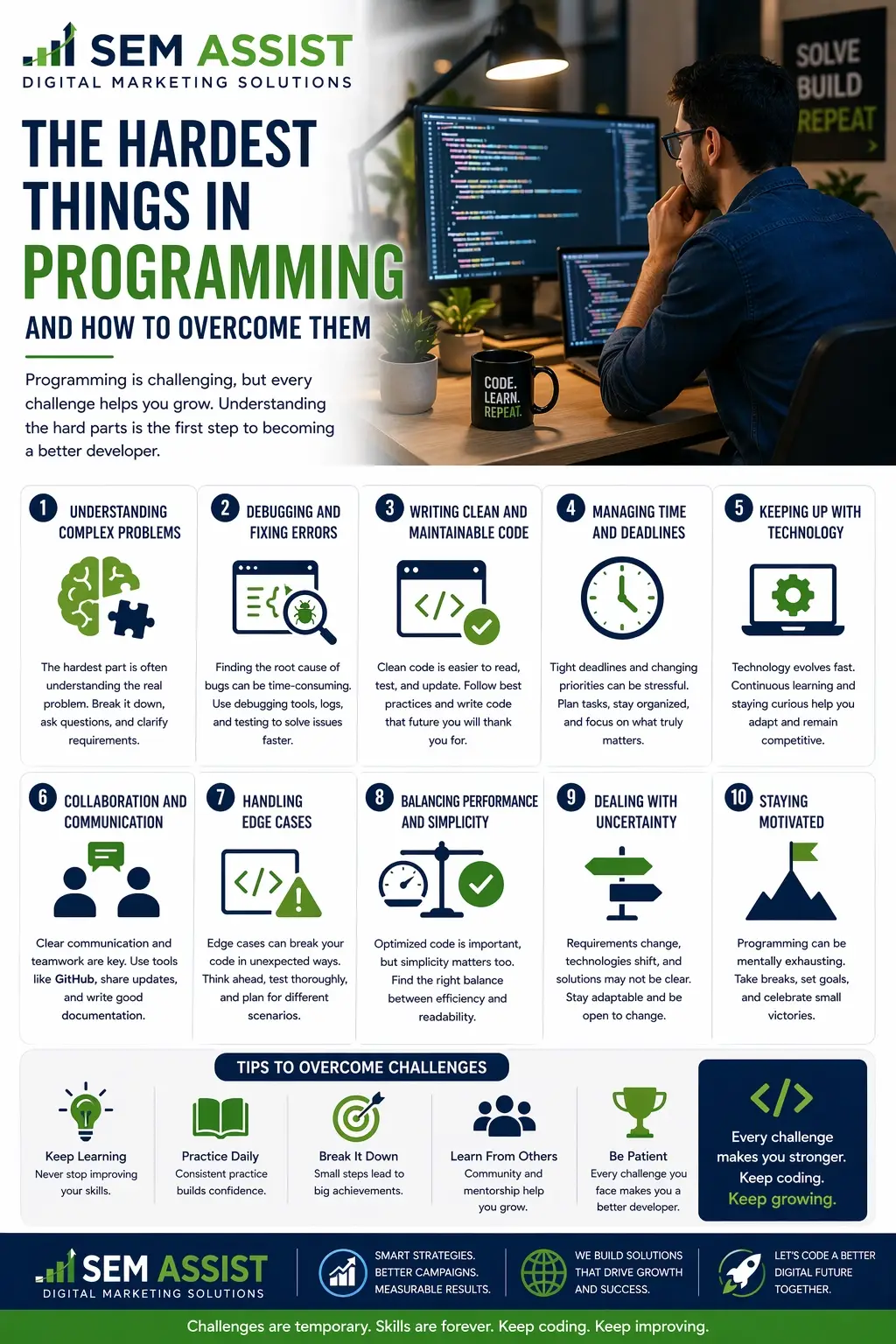
Programming is one of the most valuable skills in today’s digital world. It powers everything from websites and mobile apps to complex data systems and automation tools. While coding can be rewarding, it also comes with challenges that test both technical ability and problem solving skills.

Understanding these challenges can help developers grow faster and build stronger, more reliable solutions.

Here are some of the hardest things in programming and how to approach them effectively.


Understanding Complex Problems

One of the biggest challenges in programming is not writing code, but understanding the problem you are trying to solve.

Many issues arise from unclear requirements or incomplete understanding. Developers often spend more time analyzing the problem than actually coding the solution.

Breaking problems into smaller parts and asking the right questions can make complex tasks more manageable.


Debugging and Fixing Errors

Debugging is an essential part of programming.

Errors can come from small mistakes or deeper logical issues. Finding the root cause often requires patience and attention to detail.

Using debugging tools, logging, and systematic testing can help identify and resolve issues more efficiently.


Writing Clean and Maintainable Code

Writing code that works is only part of the job.

The real challenge is writing code that is easy to read, understand, and maintain. Poorly structured code can lead to confusion and make future updates difficult.

Following best practices, using clear naming conventions, and organizing code properly can improve maintainability.


Managing Time and Deadlines

Programming projects often come with tight deadlines.

Balancing quality and speed can be difficult, especially when unexpected challenges arise. Poor time management can lead to rushed work and increased errors.

Planning tasks, setting realistic timelines, and prioritizing effectively can help manage workloads.


Keeping Up With Technology

Technology evolves quickly.

New programming languages, frameworks, and tools are constantly being introduced. Staying up to date can feel overwhelming.

Continuous learning and focusing on core concepts can help developers adapt to changes more easily.


Collaboration and Communication

Programming is not always a solo activity.

Working with teams requires clear communication and collaboration. Misunderstandings can lead to delays and errors.

Using tools like GitHub and maintaining clear documentation can improve teamwork and efficiency.


Handling Edge Cases

Edge cases are scenarios that do not occur frequently but can cause problems if not handled properly.

Anticipating these situations requires careful thinking and testing. Overlooking edge cases can lead to unexpected failures.

Thorough testing and considering different user scenarios can help address these challenges.


Balancing Performance and Simplicity

Optimizing code for performance can be challenging.

Highly optimized code may become more complex and harder to maintain. On the other hand, simple code may not always deliver the best performance.

Finding the right balance between efficiency and readability is an important skill.


Dealing With Uncertainty

Programming often involves uncertainty.

Requirements can change, technologies can shift, and solutions may not always be clear. This uncertainty can be difficult to navigate.

Being adaptable and open to change helps developers handle evolving situations effectively.


Staying Motivated

Programming can be mentally demanding.

Long hours of problem solving can lead to frustration and burnout. Staying motivated requires a positive mindset and regular breaks.

Setting achievable goals and celebrating progress can help maintain motivation.


Final Thoughts

Programming is a challenging but rewarding field. The difficulties developers face are part of the learning process and contribute to growth and expertise.

By understanding these challenges and developing strategies to overcome them, programmers can improve their skills and build better solutions.

At SEM ASSIST, we recognize the importance of strong technical foundations in driving digital success. Whether building websites or managing digital strategies, overcoming challenges leads to better results.


Ready to Build Smarter Digital Solutions

If you want to improve your digital presence and leverage technology for growth, SEM ASSIST can help you create strategies that deliver real results.

How to Convert Blog Readers Into Customers

How To Convert Blog Readers Into Customers

How to Convert Blog Readers Into Customers

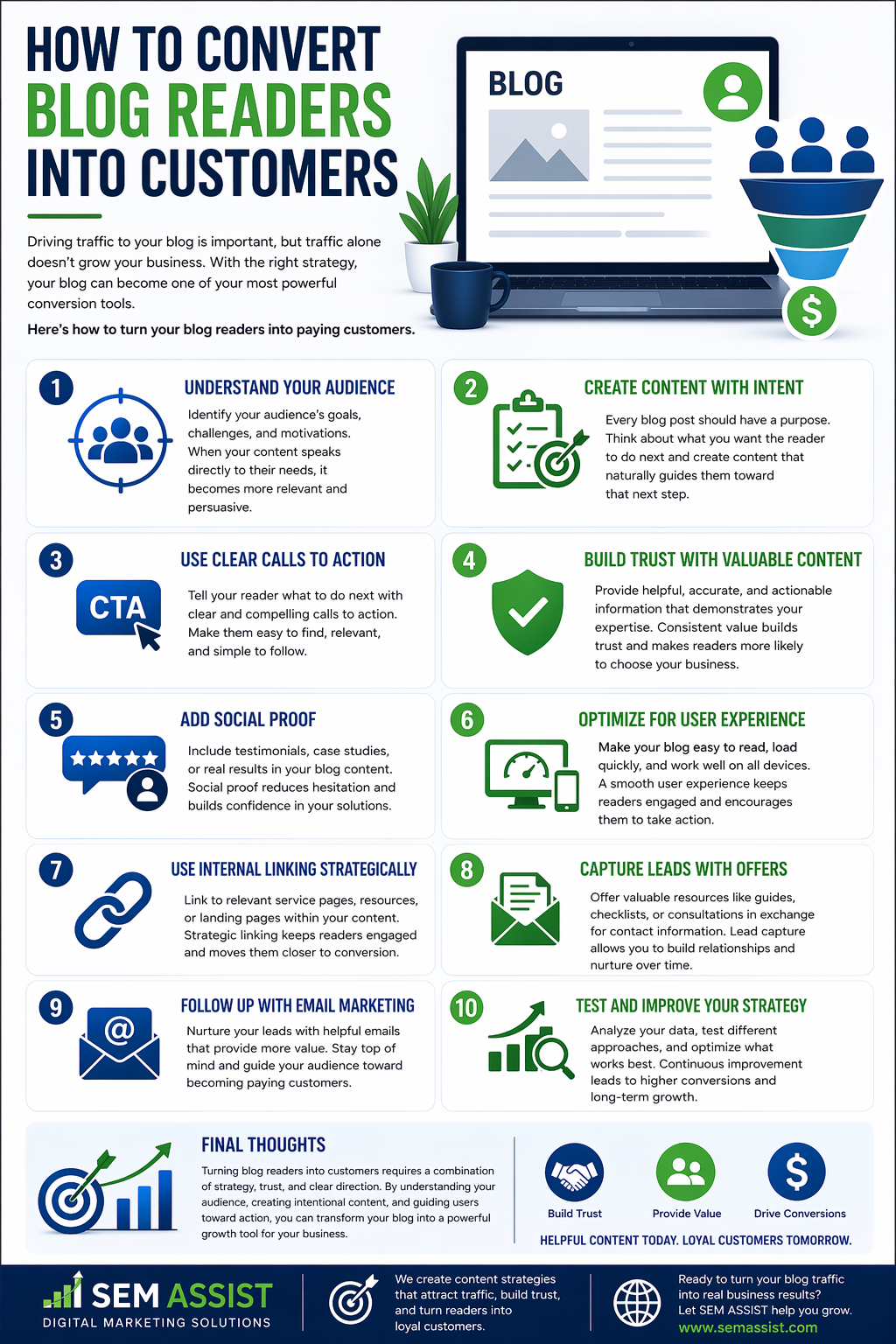
Driving traffic to your blog is important, but traffic alone does not grow your business. The real value comes from turning readers into customers.

Many businesses create high quality content but struggle to convert that attention into leads and sales. With the right strategy, your blog can become one of your most powerful conversion tools.

Here is how to turn your blog readers into paying customers.


Understand Your Audience

Conversion starts with understanding who you are speaking to.

Identify your audience’s goals, challenges, and motivations. When your content speaks directly to their needs, it becomes more persuasive and relevant.

The better you understand your audience, the easier it is to guide them toward taking action.


Create Content With Intent

Every blog post should have a purpose beyond just providing information.

Think about what you want the reader to do after they finish reading. Whether it is contacting your business, requesting a quote, or learning more about your services, your content should guide them toward that next step.

Intent driven content leads to stronger results.


Use Clear Calls to Action

A call to action tells your reader what to do next.

Place clear and compelling calls to action throughout your content. This can include inviting readers to schedule a consultation, download a resource, or explore your services.

Make your calls to action easy to find and simple to follow.


Build Trust With Valuable Content

Trust is a key factor in conversion.

Provide helpful, accurate, and actionable information that demonstrates your expertise. When readers see that you understand their needs and can deliver value, they are more likely to choose your business.

Consistent value builds long term trust.


Add Social Proof

Social proof reinforces credibility.

Include testimonials, case studies, or real results within your blog content. Seeing that others have had positive experiences reduces hesitation and builds confidence.

Trust signals can make a significant difference in conversion rates.


Optimize for User Experience

A poor user experience can prevent conversions.

Make sure your blog is easy to read, loads quickly, and works well on all devices. Clear formatting and simple navigation help keep readers engaged.

A smooth experience encourages users to stay longer and take action.


Use Internal Linking Strategically

Guide readers to the next step by linking to relevant pages.

Internal links can direct users to service pages, contact forms, or additional resources. This keeps them engaged and moves them closer to conversion.

Strategic linking creates a clear path through your website.


Capture Leads With Offers

Not every reader will be ready to buy immediately.

Offer something of value in exchange for their contact information. This could include guides, checklists, or consultations.

Lead capture allows you to continue building the relationship over time.


Follow Up With Email Marketing

Once you capture a lead, follow up consistently.

Email marketing helps nurture your audience by providing additional value and staying top of mind. Over time, this increases the likelihood of conversion.

A strong follow up strategy turns interest into action.


Test and Improve Your Strategy

Conversion optimization is an ongoing process.

Analyze your data and identify what is working. Test different calls to action, content formats, and layouts to improve performance.

Continuous improvement leads to better results over time.


Final Thoughts

Turning blog readers into customers requires a combination of strategy, trust, and clear direction. By understanding your audience, creating intentional content, and guiding users toward action, you can transform your blog into a powerful growth tool.

At SEM ASSIST, we help businesses create content strategies that not only attract traffic but also drive real results.


Ready to Turn Traffic Into Customers

If you want to improve your conversions and get more value from your content, SEM ASSIST can help you build a strategy that turns readers into loyal customers.