
How to Write Content For People and Optimize For Google

How To Write Content For People and Optimize For Google

How to Write Content for People and Optimize for Google

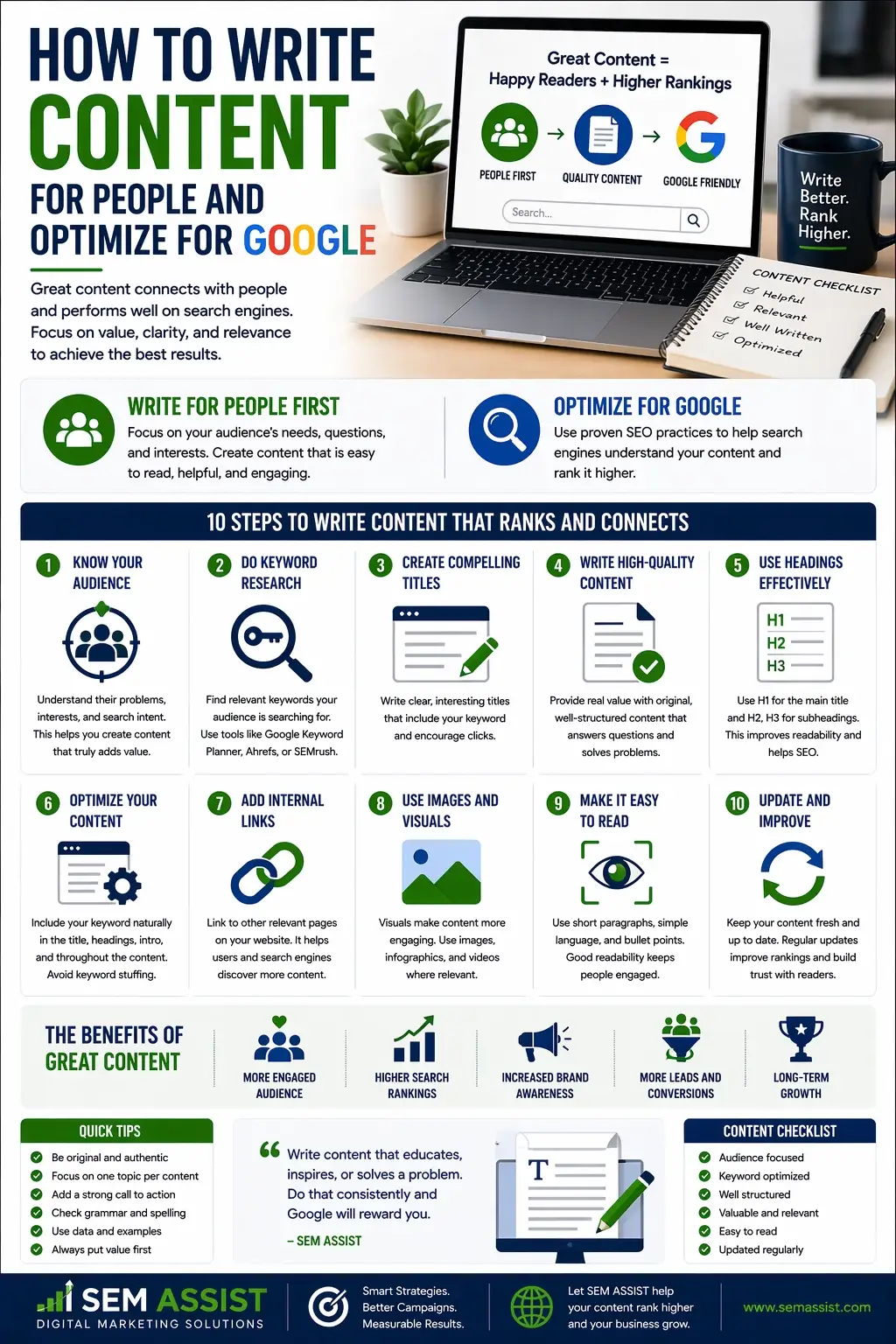
Creating content that ranks on Google and connects with real people is one of the biggest challenges businesses face today. Many websites either focus too heavily on keywords and lose readability, or they write engaging content that never gets found in search.

The good news is that you do not have to choose between the two.

When done correctly, your content can rank well, engage your audience, and turn visitors into customers. Here is how to do it the right way.


Start With Search Intent, Not Just Keywords

Before you begin writing, you need to understand why someone is searching.

Every search typically falls into one of three categories. Informational searches are for learning. Navigational searches are for finding a specific website. Transactional searches are for taking action or making a purchase.

Instead of focusing only on phrases like HVAC repair near me, think about the problem behind the search. Ask yourself what the user is trying to solve and what type of answer they expect.

When your content aligns with that intent, it becomes far more valuable to both the reader and Google.


Write Like a Human First

Search engines have become much smarter. Google now prioritizes content that is helpful, natural, and easy to read.

This means using clear language, writing conversationally, and avoiding robotic phrasing. Your content should feel like a real conversation with your audience.

Keep paragraphs short and make your points easy to understand. If it sounds unnatural when you read it out loud, it likely needs improvement.


Use Keywords Strategically

Keywords still play an important role, but they should be used with intention.

Focus on one primary keyword that represents your main topic. Then include supporting keywords that naturally relate to it.

Place these keywords in important areas such as your title, headings, opening paragraph, and meta description. You can also include them in image descriptions.

The key is to keep everything natural. Google understands context better than ever, so there is no need to force keywords into every sentence.


Structure Your Content for Readability

Even strong content can fail if it is difficult to read.

Use clear headings to organize your ideas. Break up text into short sections. Include bullet points when appropriate and highlight important ideas to guide the reader.

Most people scan content before they fully read it. A clean structure makes it easier for them to find what they need quickly.


Answer Questions Clearly

One of the most effective ways to rank higher is by answering common questions in your industry.

Think about what your customers ask most often. Provide direct and helpful answers early in your content.

Clear answers improve user experience and increase your chances of appearing in featured results on Google.


Optimize On Page Elements

In addition to writing great content, you need to help search engines understand it.

Make sure your page includes a strong title and description, proper heading structure, internal links to related pages, and links to trusted sources when relevant.

Images should be optimized with descriptive text and fast loading speeds.

These elements work together to improve both search visibility and user experience.


Focus on Value Instead of Length

Longer content is not always better.

Your goal should be to fully answer the topic without adding unnecessary filler. If you can provide value in fewer words, that is often more effective.

Quality content that solves a problem will always outperform content that is long but unfocused.


Keep Your Content Updated

Search engine optimization is not a one time effort.

Updating your content regularly keeps it relevant. This can include refreshing statistics, adding new insights, improving clarity, and expanding on useful sections.

Fresh content signals to Google that your page is still valuable.


Balance SEO With Conversion

Getting traffic is only part of the goal. Your content should also guide visitors toward taking action.

Include clear calls to action that encourage readers to contact you, request a quote, or learn more about your services.

Build trust through real results, testimonials, or case studies. Make it easy for users to move forward with confidence.


Final Thoughts

Writing content for people and optimizing for Google is about creating alignment. When your content is helpful, easy to read, and structured properly, it naturally performs better in search.

Focusing on real value will always lead to stronger results over time.

At SEM ASSIST, we create content strategies that not only rank but also drive measurable growth for your business.


Ready to Improve Your Content Strategy

If your current content is not delivering results, it may be time for a better approach. SEM ASSIST helps businesses create content that attracts the right audience and turns traffic into real revenue.
How to Use Instagram Story Highlights on a Brand Account

How To Use Instagram Story Highlights on a Brand Account

How to Use Instagram Story Highlights on a Brand Account

Instagram Story Highlights are one of the most underused tools on a brand account, yet they play a powerful role in building trust, showcasing services, and guiding potential customers toward taking action.

While Stories disappear after twenty four hours, Highlights allow you to keep your best content visible on your profile permanently. When used correctly, they can act as a mini website that helps visitors quickly understand your brand.

Here is how to use Instagram Story Highlights effectively for your business.


What Are Instagram Story Highlights

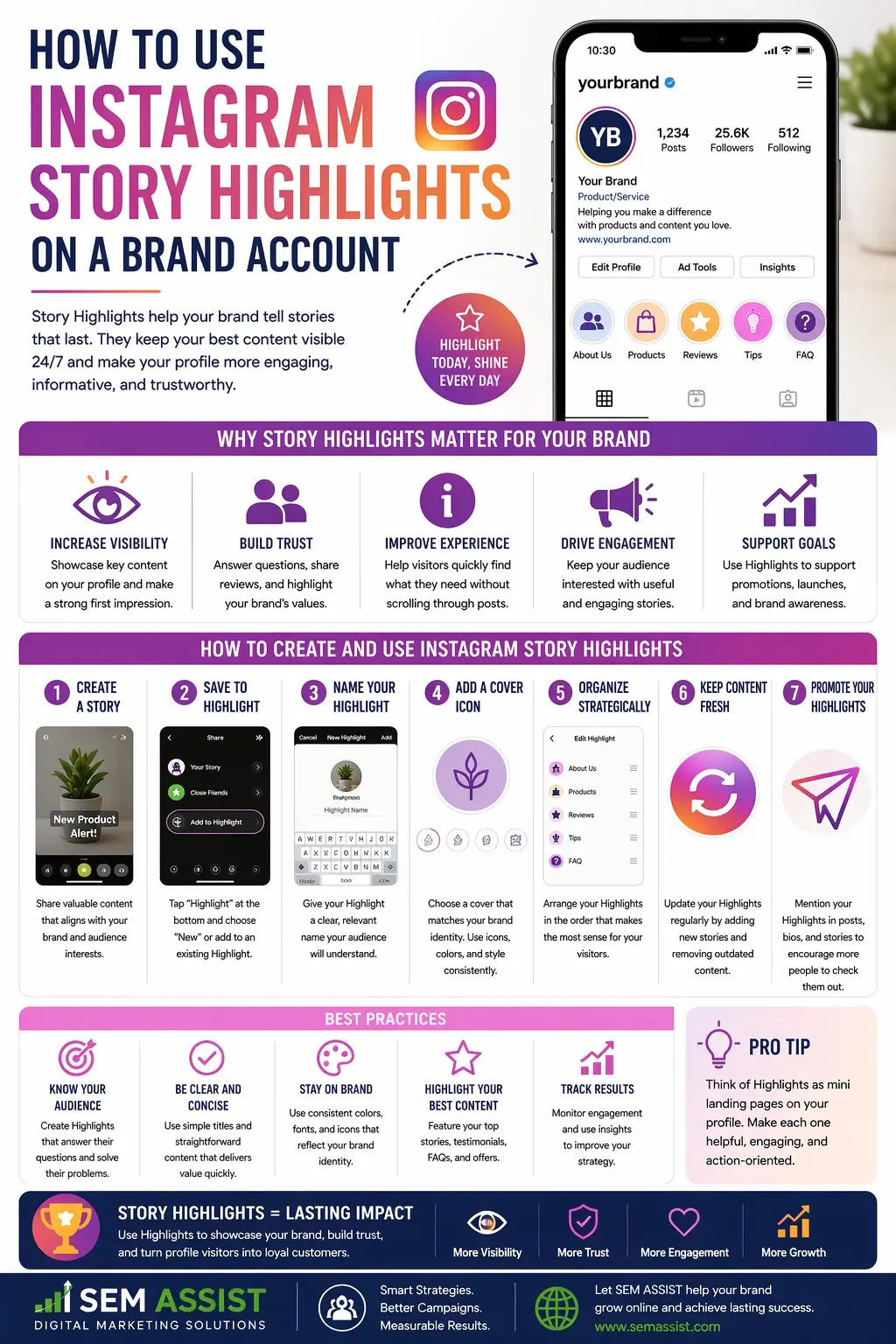
Instagram Story Highlights are curated collections of your past Stories that appear directly below your profile bio on Instagram. They give you the ability to organize important content into categories that your audience can access at any time.

Instead of letting valuable content disappear, Highlights allow you to keep key information front and center for new visitors.


Why Highlights Matter for Brand Accounts

When someone visits your profile, you only have a few seconds to make a strong impression. Your Highlights help you control that first impression by guiding users to the most important parts of your brand.

Highlights can help you:

  • Build credibility
  • Showcase services or products
  • Answer common questions
  • Display real customer results
  • Encourage conversions

Think of them as a visual extension of your website that lives directly on your profile.


Choose the Right Highlight Categories

The first step is organizing your content into clear and useful categories. Your Highlights should make it easy for someone to quickly understand what you offer.

Some effective categories include:

About Us

Introduce your brand, your story, and what makes you different

Services

Break down your core services so users know exactly what you provide

Results

Showcase before and after examples, case studies, or measurable success

Reviews

Share testimonials and customer feedback to build trust

FAQ

Answer common questions that potential customers often ask

Process

Explain how your service works from start to finish

Each category should serve a purpose and help move the user closer to taking action.


Design Clean and Consistent Covers

Your Highlight covers are the first thing people notice. A clean and consistent design makes your profile look more professional and easier to navigate.

Use simple icons, consistent colors, and branding that matches your overall identity. Avoid clutter and keep text minimal or nonexistent.

Consistency across all covers helps reinforce your brand and creates a polished look.


Keep Content Short and Valuable

Just like regular Stories, Highlight content should be quick and easy to consume.

Focus on:

  • Short video clips
  • Clear messaging
  • Strong visuals
  • Simple explanations

Each Story should deliver value quickly. Avoid overwhelming users with too much information in a single slide.


Use Highlights to Build Trust

Trust is one of the biggest factors in converting visitors into customers.

Use your Highlights to show real proof of your work.

This can include:

  • Client testimonials
  • Behind the scenes content
  • Completed projects
  • Real results and data

The more authentic your content feels, the more likely users are to trust your brand.


Guide Users Toward Action

Your Highlights should not just inform, they should guide users toward taking the next step.

Include clear calls to action within your Stories such as:

  • Visit our website
  • Send us a message
  • Request a quote
  • Book a consultation

Make it easy for users to know what to do next after viewing your content.


Update Highlights Regularly

Outdated content can hurt your brand image.

Make it a habit to review and update your Highlights regularly. Remove anything that no longer reflects your current services or results and replace it with fresh content.

Keeping your Highlights updated shows that your business is active and relevant.


Final Thoughts

Instagram Story Highlights are more than just saved Stories. They are a powerful tool that can help you communicate your brand, build trust, and convert profile visitors into customers.

When organized properly and filled with valuable content, your Highlights become a key part of your digital marketing strategy.

At SEM ASSIST, we help businesses turn social media profiles into high performing assets that drive real growth.


Ready to Elevate Your Brand on Instagram

If your Instagram profile is not converting visitors into leads, it may be time to optimize your strategy. SEM ASSIST can help you build a strong presence that attracts attention and drives results.

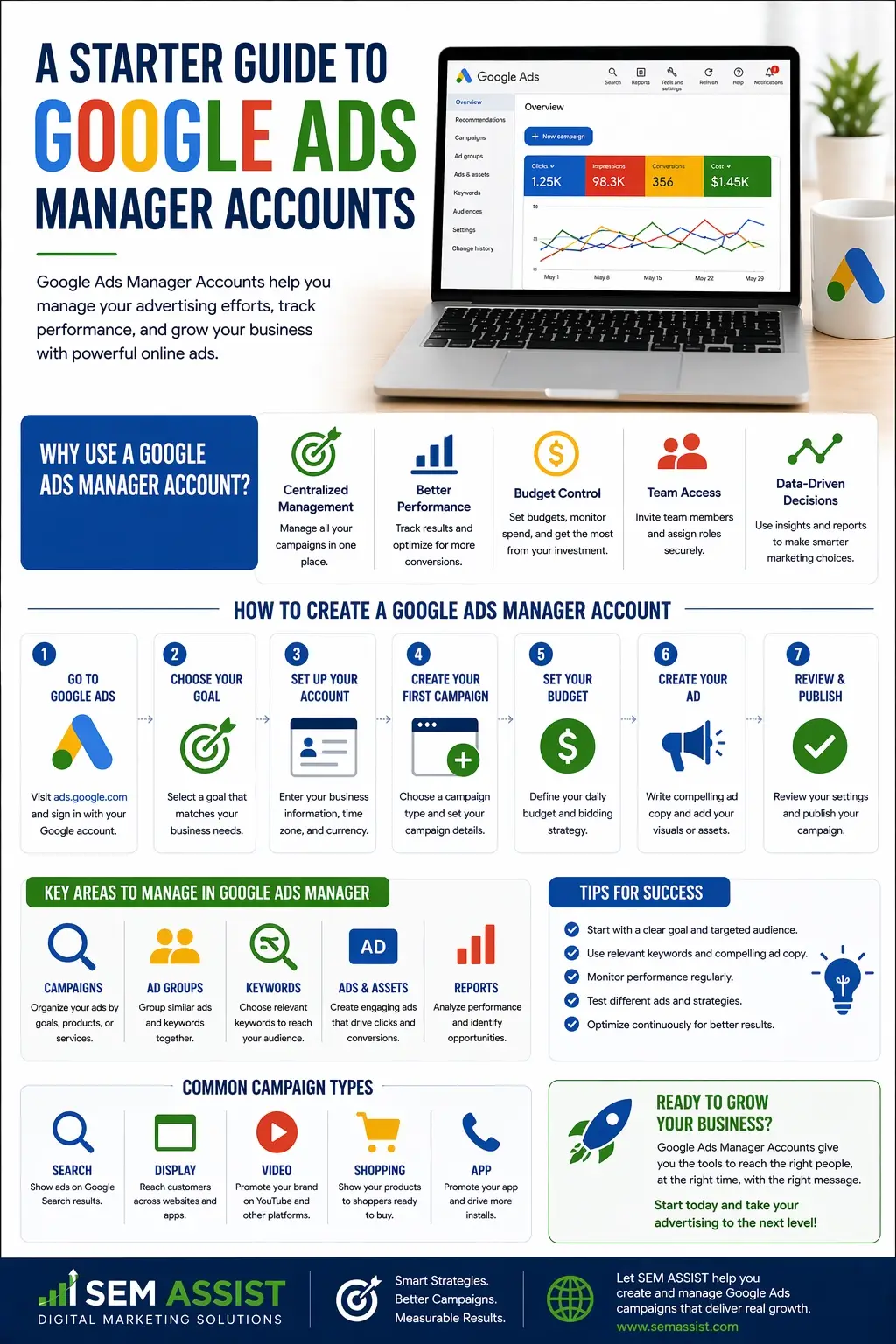
A Starter Guide to Google Ads Manager Accounts

A Starter Guide to Google Ads Manager Accounts

A Starter Guide to Google Ads Manager Accounts

Managing multiple advertising accounts can quickly become overwhelming, especially for agencies or businesses handling several brands. That is where Google Ads Manager Accounts come in.

Also known as MCC accounts, Manager Accounts allow you to manage multiple Google Ads accounts from a single dashboard. Whether you are running campaigns for clients or overseeing multiple locations, this tool simplifies your workflow and gives you better control.

Here is everything you need to know to get started.


What Is a Google Ads Manager Account

A Google Ads Manager Account is a central hub that allows you to access and manage multiple individual Google Ads accounts in one place. Instead of logging in and out of different accounts, you can view performance, make updates, and monitor campaigns from a single interface.

Manager Accounts are commonly used by marketing agencies, franchises, and businesses with multiple locations.

You can explore the platform through Google Ads, where Manager Accounts provide a higher level view of all linked accounts.


Who Should Use a Manager Account

Manager Accounts are ideal for anyone managing more than one advertising account.

This includes:

  • Marketing agencies handling multiple clients
  • Businesses with several locations or departments
  • Franchises that need centralized control
  • Teams that collaborate on advertising campaigns

If you are switching between accounts frequently, a Manager Account can save time and reduce errors.


Key Benefits of Using a Manager Account

Using a Manager Account offers several advantages that improve efficiency and performance.

Centralized Management

You can view and manage all accounts from one dashboard, which eliminates the need to log in separately.

Simplified Reporting

Performance data across multiple accounts can be analyzed in one place, making it easier to compare results and identify trends.

Access Control

You can grant different levels of access to team members without sharing individual account credentials.

Scalability

As your business grows, you can add more accounts without changing your workflow.

These benefits make Manager Accounts essential for scaling advertising efforts effectively.


How to Set Up a Manager Account

Getting started is a straightforward process.

First, create a Manager Account through Google Ads using a dedicated email address. This account will act as your main control center.

Next, link existing Google Ads accounts by sending access requests. Once approved, those accounts will appear in your dashboard.

You can also create new accounts directly within your Manager Account if needed.

Organizing your accounts into groups can help keep everything structured and easy to manage.


Navigating the Dashboard

The Manager Account dashboard provides a high level overview of all linked accounts.

From this interface, you can:

  • View performance metrics such as clicks, impressions, and conversions
  • Access individual accounts for detailed campaign management
  • Monitor account health and activity
  • Adjust settings across multiple accounts

Learning how to navigate this dashboard efficiently will save time and improve your overall campaign management.


Best Practices for Managing Multiple Accounts

To get the most out of your Manager Account, it is important to follow a few key practices.

Stay Organized

Group accounts by client, location, or service type to keep your dashboard clean and easy to navigate.

Standardize Naming Conventions

Use consistent naming for campaigns and accounts so you can quickly identify what each one represents.

Monitor Performance Regularly

Review performance data across all accounts to spot trends and opportunities for improvement.

Set Clear Permissions

Assign roles carefully to ensure team members have the right level of access without compromising security.

Keeping your accounts organized and structured will make management much more efficient.


Common Mistakes to Avoid

While Manager Accounts are powerful, there are a few common mistakes to watch out for.

One mistake is failing to organize accounts properly, which can lead to confusion as you scale. Another is giving too much access to users who do not need it, which can create security risks.

Some users also overlook performance tracking at the account level, focusing too much on individual campaigns instead of the bigger picture.

Avoiding these mistakes will help you maintain control and maximize results.


How Manager Accounts Support Growth

As your advertising efforts expand, managing everything manually becomes more difficult.

Manager Accounts allow you to scale efficiently by providing a structured system for handling multiple campaigns and accounts. They give you better visibility into performance and help you make data driven decisions.

For agencies, this means managing more clients without sacrificing quality. For businesses, it means maintaining consistency across locations and campaigns.


Final Thoughts

A Google Ads Manager Account is an essential tool for anyone managing multiple advertising accounts. It simplifies workflows, improves organization, and provides valuable insights across all campaigns.

By setting up your Manager Account correctly and following best practices, you can create a strong foundation for scalable and effective advertising.

At SEM ASSIST, we help businesses and agencies streamline their advertising strategies and maximize performance across every account.


Ready to Take Control of Your Google Ads

If managing multiple accounts feels overwhelming, SEM ASSIST can help you simplify your strategy and improve results. From account setup to ongoing optimization, we provide the support you need to grow with confidence.

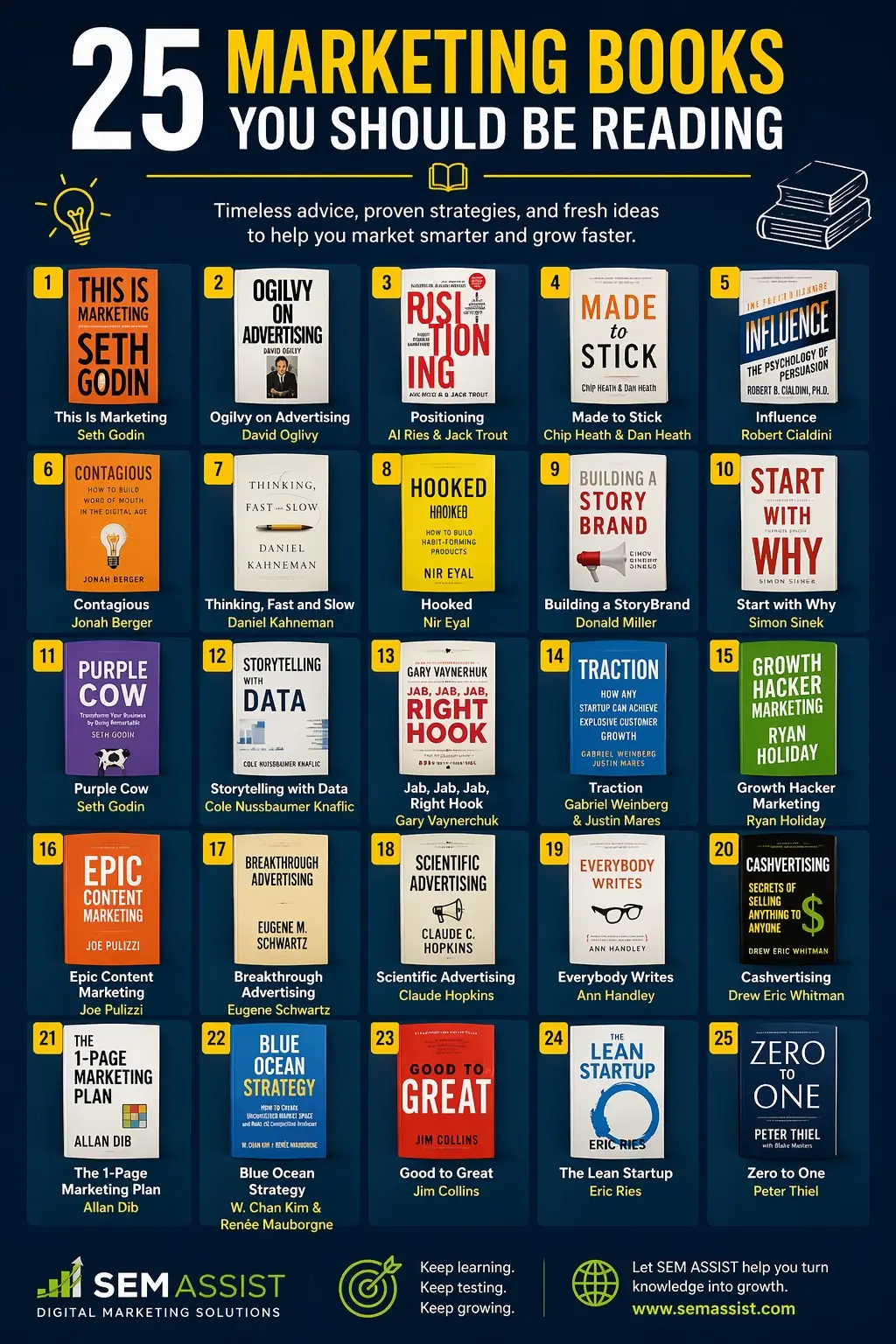
25 Marketing Books You Should Be Reading

25 Marketing Books

25 Marketing Books You Should Be Reading

Marketing is constantly evolving, but the principles behind great strategy, persuasion, and growth remain timeless. One of the best ways to stay ahead is by learning from the experts who have shaped the industry.

Whether you are building a brand, running campaigns, or scaling a business, the right books can sharpen your thinking and improve your results.

Here are 25 marketing books you should be reading.


Foundational Marketing & Strategy

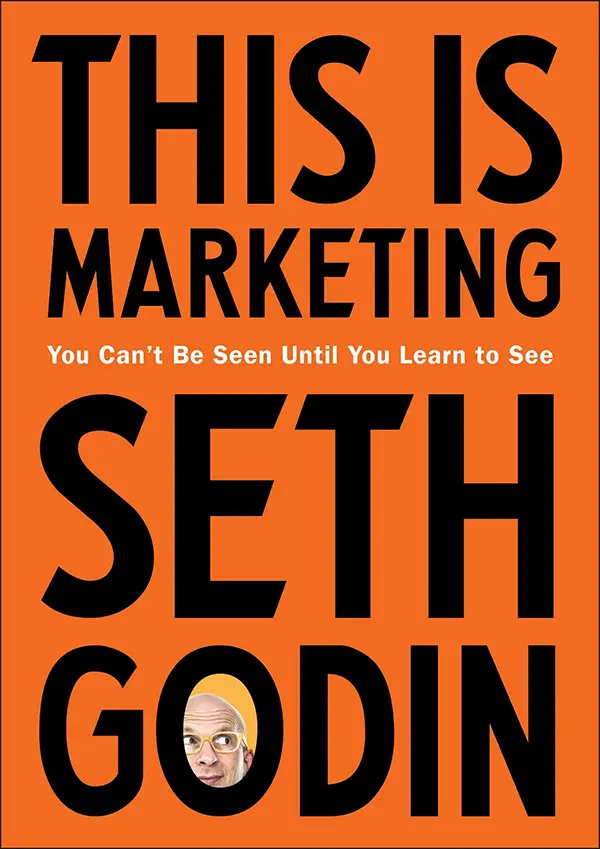
This Is Marketing by Seth Godin
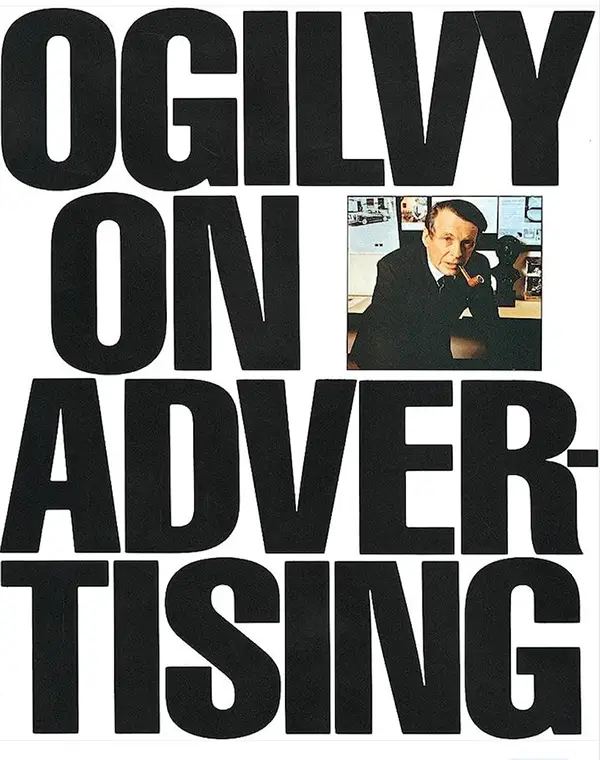
Ogilvy on Advertising
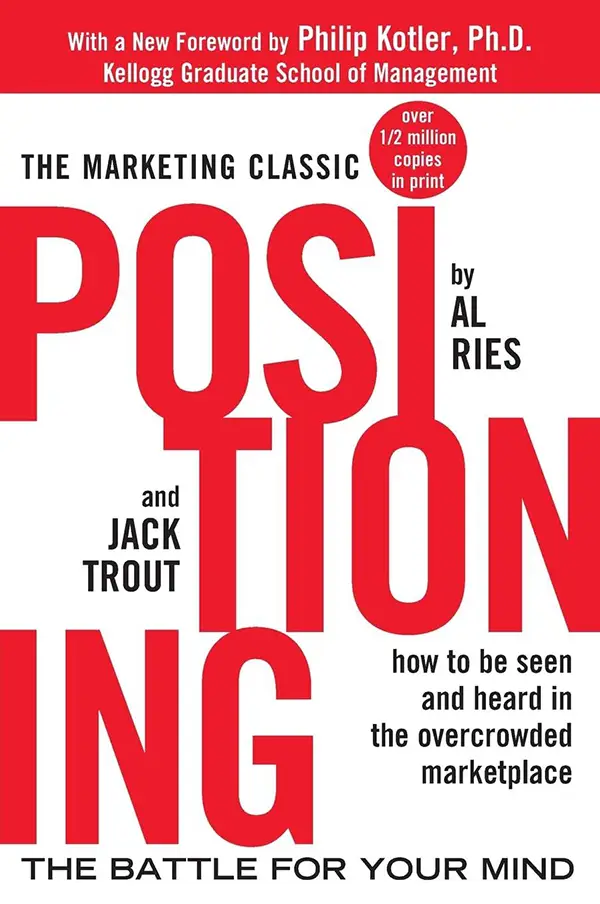
Positioning by Al Ries
  1. This Is Marketing by Seth Godin

    A modern take on creating meaningful marketing that connects with the right audience.
  2. Ogilvy on Advertising by David Ogilvy

    A classic guide to effective advertising from one of the industry’s legends.
  3. Positioning: The Battle for Your Mind by Al Ries and Jack Trout

    Explains how brands can stand out in a crowded marketplace.
  4. Made to Stick by Chip Heath and Dan Heath

    Breaks down why some ideas succeed while others are forgotten.

Psychology & Consumer Behavior

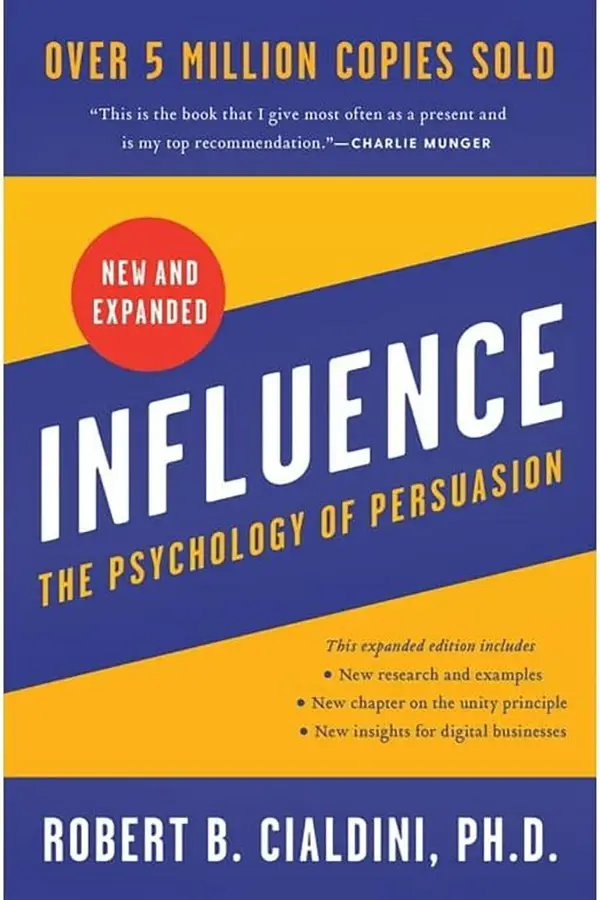
Influence The Psychology Of Persuasion by Robert B. Cialdini, PH.D.
Thinking Fast and Slow by Daniel Kahneman
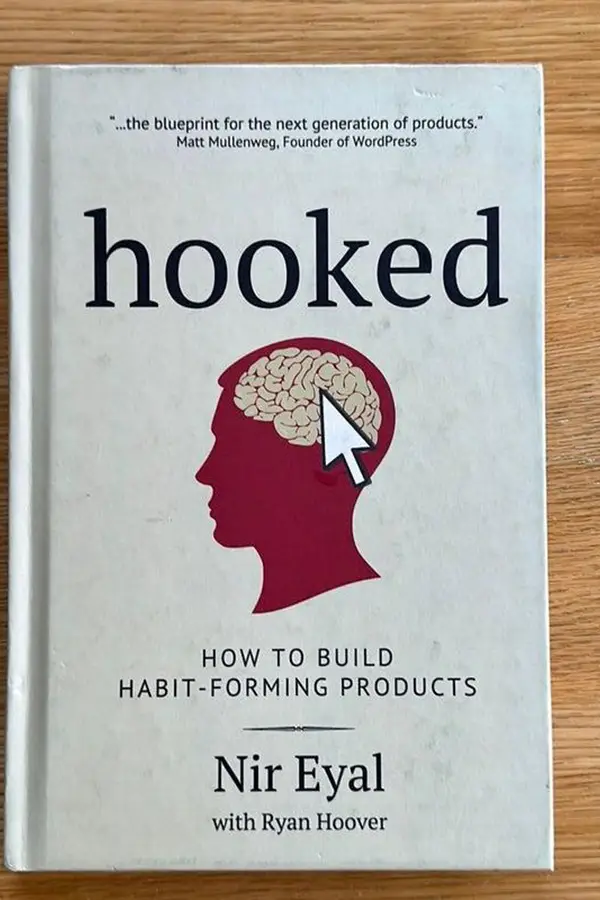
Hooked by Nir Eyal
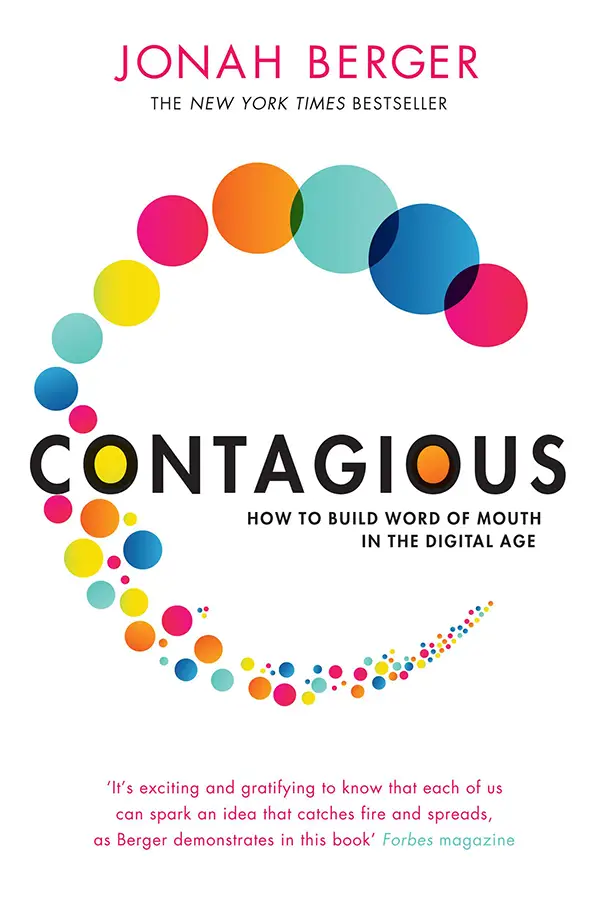
Contagious by Jonah Berger
  1. Influence: The Psychology of Persuasion by Robert Cialdini

    A must read for understanding what drives decision making.
  2. Contagious: How to Build Word of Mouth in the Digital Age by Jonah Berger

    Explains why certain ideas and products go viral.
  3. Thinking, Fast and Slow by Daniel Kahneman

    A deep dive into how people think and make choices.
  4. Hooked: How to Build Habit Forming Products by Nir Eyal

    Teaches how to create products that keep users engaged.

Branding and Storytelling

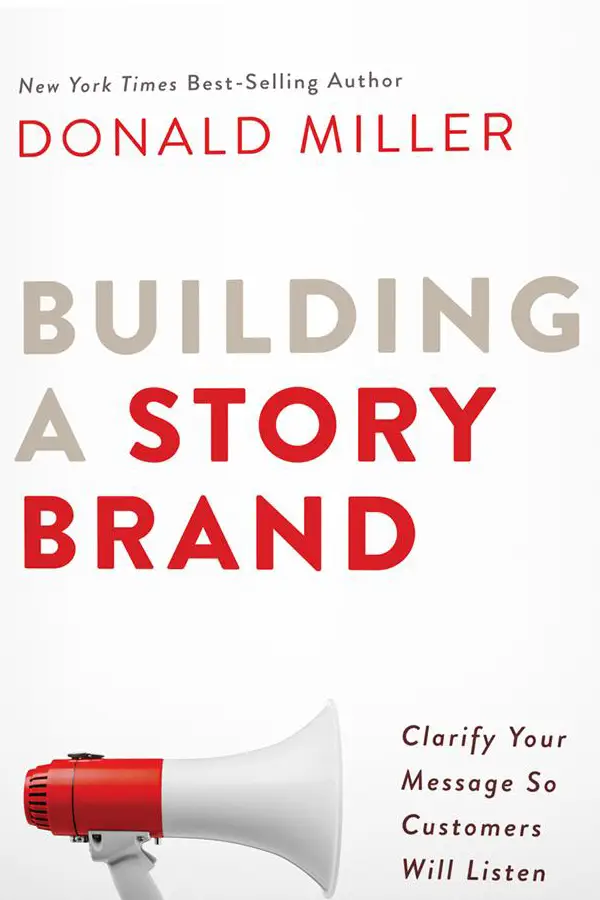
Building A Story Brand by Donald Miller
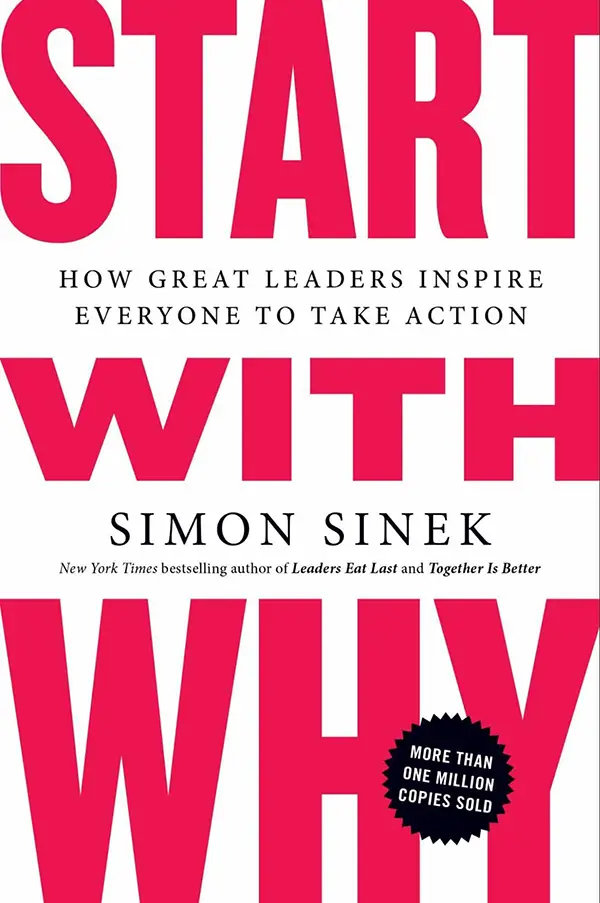
Start With Why by Simon Sinek
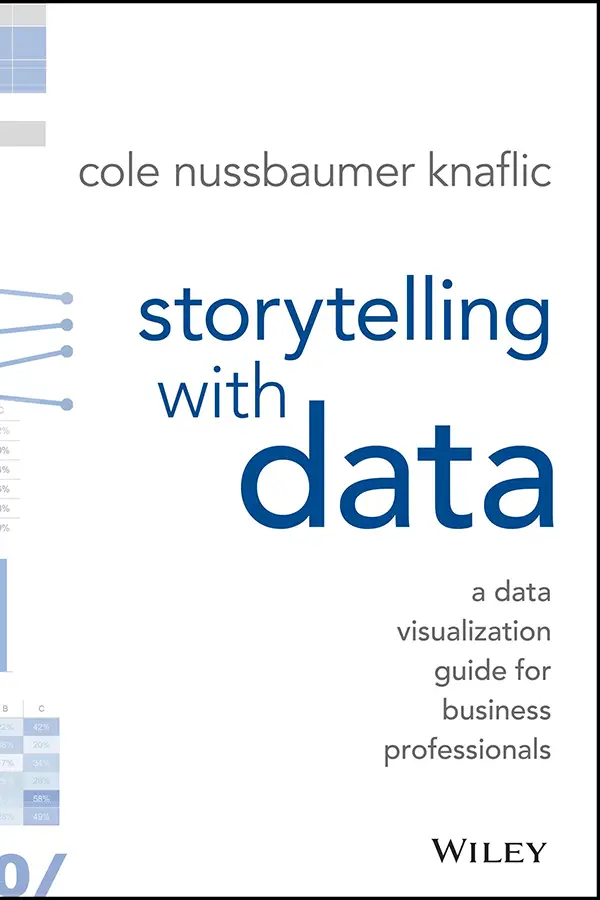
Story Telling with data
Purple Cow by Seth Godin
  1. Building a StoryBrand by Donald Miller

    Shows how to clarify your message so customers understand your value.
  2. Start with Why by Simon Sinek

    Focuses on the importance of purpose driven marketing.
  3. Purple Cow by Seth Godin

    Encourages brands to stand out instead of blending in.
  4. Storytelling with Data by Cole Nussbaumer Knaflic

    Teaches how to communicate insights clearly through data.

Digital Marketing and Growth

Jab, Jab, Jab, Right Hook by Gary Vaynerchuk
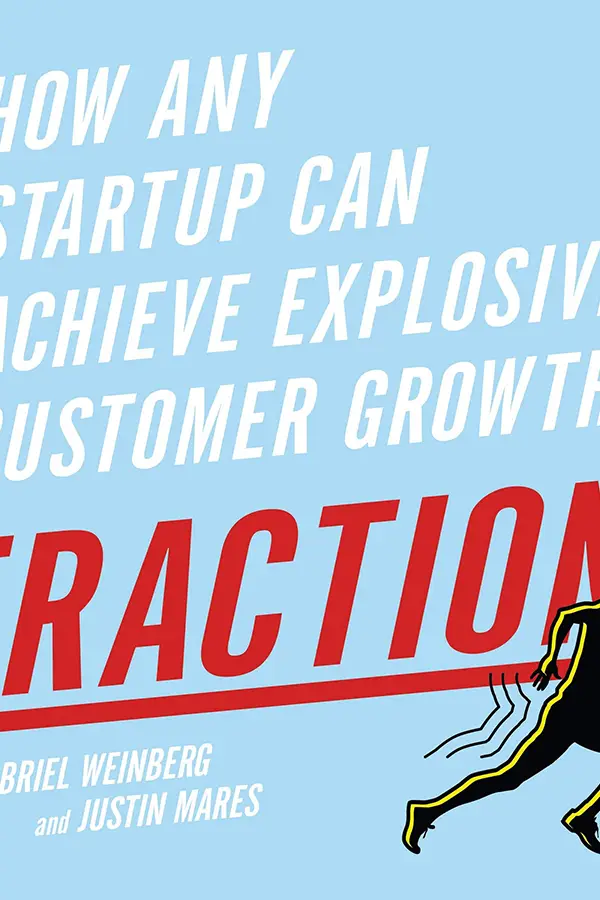
Traction by Gabriel Weinberg and Justin Mares
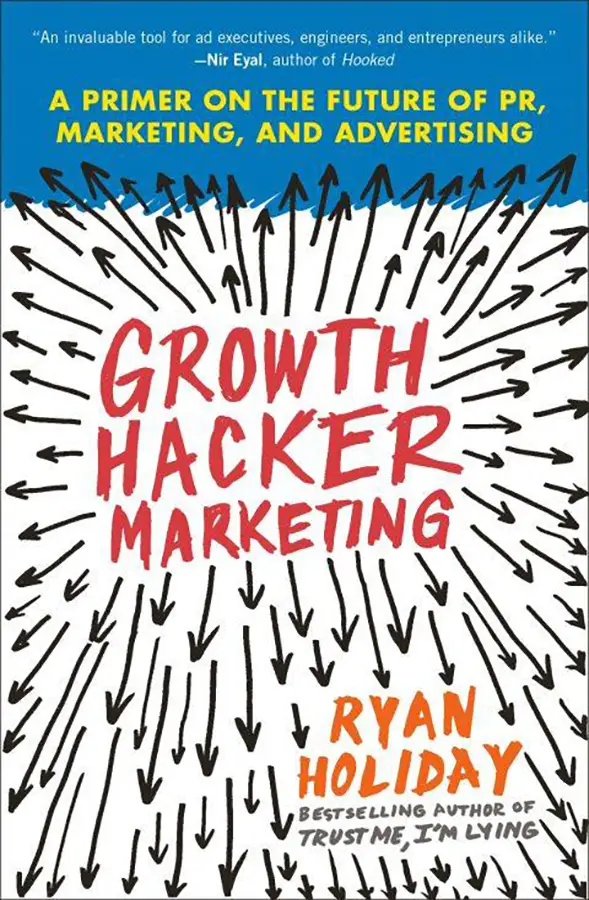
Growth Hacker Marketing by Ryan Holiday
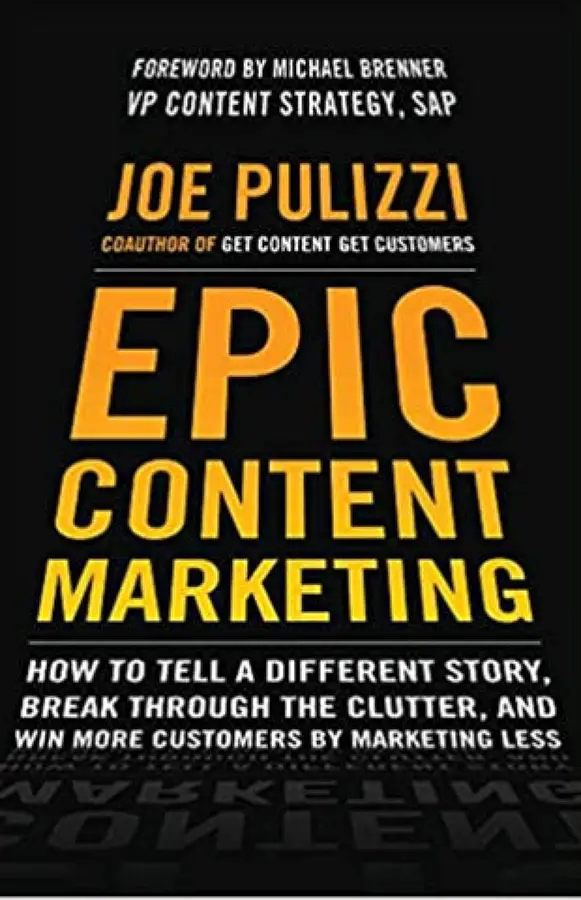
Epic Content Marketing by Joe Pulizzi
  1. Jab, Jab, Jab, Right Hook by Gary Vaynerchuk

    A guide to creating content that fits each social platform.
  2. Traction by Gabriel Weinberg and Justin Mares

    Outlines strategies for gaining consistent growth.
  3. Growth Hacker Marketing by Ryan Holiday

    Explores data driven marketing strategies for rapid growth.
  4. Epic Content Marketing by Joe Pulizzi

    Focuses on building an audience through valuable content.

Sales and Copywriting

Breakthrough Advertising by Eugene Schwartz
Everybody Writes by Ann Handley
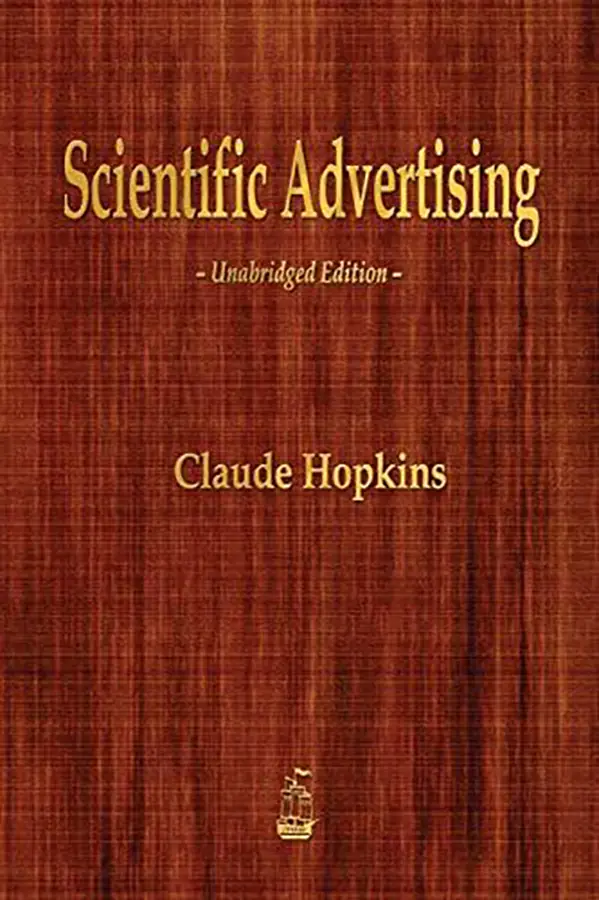
Scientific Advertising by Claude Hopkins
  1. Breakthrough Advertising by Eugene Schwartz

    A deep look into consumer awareness and persuasive copy.
  2. Scientific Advertising by Claude Hopkins

    A timeless guide to measurable marketing.
  3. Everybody Writes by Ann Handley

    Teaches how to write content that connects and converts.

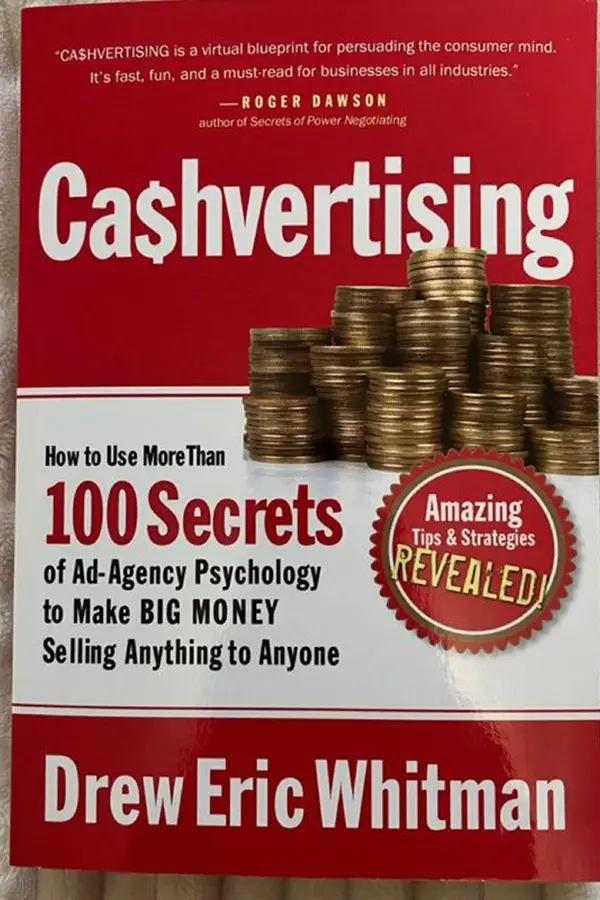
  4. Cashvertising by Drew Eric Whitman

    Focuses on psychological triggers that drive sales.

Business & Mindset Marketers

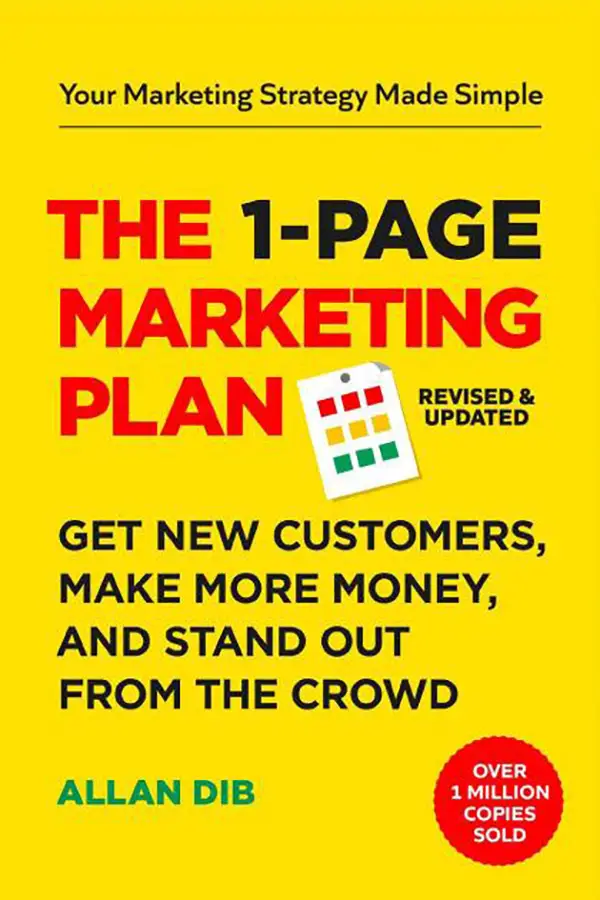
The 1-Page Marketing Plan by Alan Dib
Blue Ocean Strategy by W Chan Kim
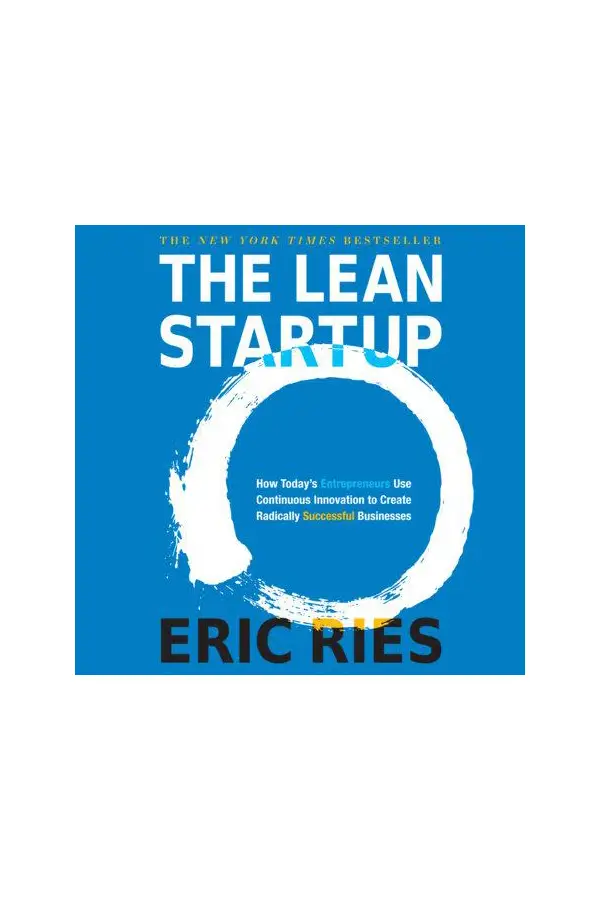
The Lean Startup by Eric Ries
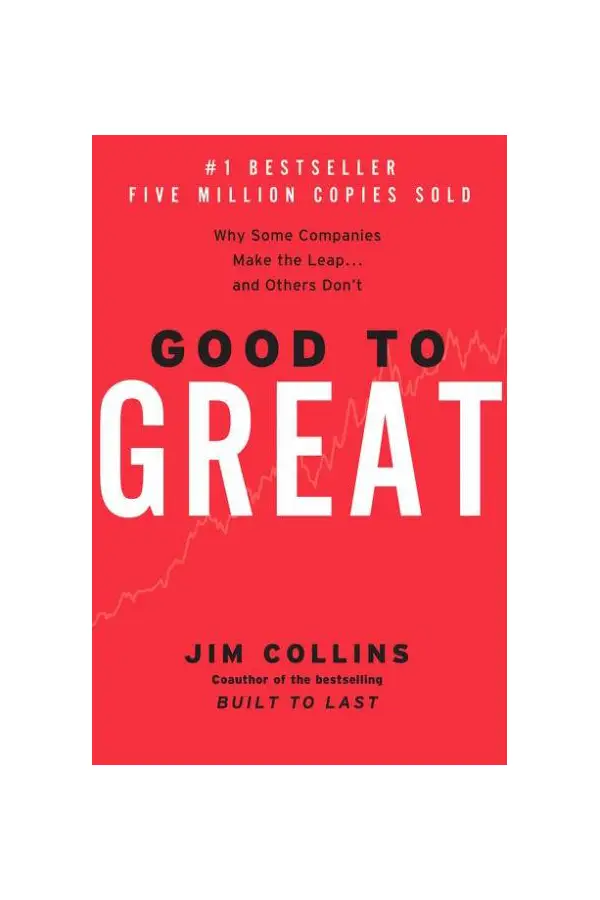
Good To Great by Jim Collins
  1. The 1 Page Marketing Plan by Allan Dib

    A simple framework for building a clear marketing strategy.
  2. Blue Ocean Strategy by W Chan Kim and Renee Mauborgne

    Shows how to create new market space instead of competing.
  3. Good to Great by Jim Collins

    Explains what separates successful companies from average ones.
  4. The Lean Startup by Eric Ries

    Focuses on building and scaling businesses efficiently.
  5. Zero to One by Peter Thiel

    Encourages innovation and creating something entirely new.

Final Thoughts

Marketing success comes from a combination of strategy, psychology, creativity, and execution. These books provide insights from some of the most influential thinkers in the industry and can help you refine your approach.

At SEM ASSIST, we believe that continuous learning leads to better results. The more you understand your audience and the principles behind effective marketing, the stronger your campaigns will become.


Ready To Level Up Your Marketing Strategy

If you are looking to turn knowledge into real growth, SEM ASSIST can help you implement strategies that drive measurable results. From SEO to paid advertising, we help businesses grow with confidence.

How to Use Thought Leadership Marketing With Paid Ads

How to Use Thought Leadership Marketing With Paid Ads

Thought leadership marketing has become one of the most effective ways to build authority, trust, and long term brand growth. When combined with paid advertising, it becomes a powerful strategy that not only drives traffic but positions your business as the go to expert in your industry.

Most brands focus their paid ads on direct offers and quick conversions. While that approach can work, it often misses a larger opportunity to build credibility and influence buying decisions before the sale ever happens.

Here is how to use thought leadership marketing with paid ads the right way.


What Is Thought Leadership Marketing

Thought leadership marketing is the process of sharing valuable insights, expertise, and perspectives that position your brand as an authority in your field.

Instead of pushing sales messages, you are educating your audience and helping them understand problems, trends, and solutions. Over time, this builds trust and makes your brand the obvious choice when they are ready to take action.


Why Paid Ads Amplify Thought Leadership

Organic reach alone can limit how far your content goes. Paid advertising allows you to put your best insights in front of the right audience at scale.

Platforms like Google Ads and Facebook allow you to target specific demographics, industries, and interests.

This means your thought leadership content is not just visible, it is reaching people who are most likely to benefit from it and engage with your brand.


Focus on Value First

The key to successful thought leadership ads is delivering value before asking for anything in return.

Instead of promoting a service immediately, start with content that teaches something useful. This could include insights, strategies, or explanations that help your audience better understand a topic.

When your content is genuinely helpful, people are more likely to trust your brand and continue engaging with it.


Create Content That Positions You as an Expert

Not all content qualifies as thought leadership. To stand out, your content should demonstrate real expertise.

Focus on:

  • Industry insights and trends
  • Data driven analysis
  • Unique perspectives or opinions
  • Practical strategies your audience can apply

The goal is to share knowledge that your audience cannot easily find elsewhere.


Use the Right Ad Formats

Different types of content perform better depending on the format you choose.

Video content is highly effective for explaining ideas and building a personal connection. Written content such as blog posts or guides works well for deeper education. Visual content can simplify complex topics and make them easier to understand.

Test multiple formats to see what resonates most with your audience.


Build a Funnel Around Your Content

Thought leadership works best when it is part of a larger strategy.

Start by using paid ads to promote valuable content that attracts attention. Once users engage, guide them to the next step such as downloading a resource, signing up for a consultation, or visiting your website.

This creates a natural progression from awareness to conversion without feeling overly sales driven.


Retarget Engaged Audiences

One of the biggest advantages of paid ads is the ability to retarget users who have already interacted with your content.

If someone watches your video, reads your article, or visits your site, you can show them additional content that moves them closer to becoming a customer.

Retargeting helps reinforce your authority and keeps your brand top of mind.


Measure Performance Beyond Clicks

Success with thought leadership marketing is not just about clicks or immediate conversions.

Pay attention to metrics such as:

  • Engagement rates
  • Time spent on content
  • Video watch time
  • Return visits

These indicators show how well your content is building trust and interest over time.


Stay Consistent

Thought leadership is not built overnight. Consistency is what turns occasional content into a recognizable and trusted voice.

Regularly publish and promote high quality insights. Over time, your audience will begin to associate your brand with expertise and reliability.


Final Thoughts

Combining thought leadership marketing with paid ads allows you to do more than generate leads. It helps you build authority, earn trust, and create long term relationships with your audience.

When you focus on delivering real value and use paid advertising to amplify your message, your brand becomes more than just another option. It becomes the trusted choice.

At SEM ASSIST, we help businesses create strategies that not only drive traffic but position them as leaders in their industry.


Ready to Build Authority With Paid Ads

If you want to turn your paid advertising into a long term growth engine, SEM ASSIST can help you develop a strategy that combines expertise, visibility, and measurable results.

How to Use LinkedIn Insights in an Actionable Way

How To Use LinkedIn Insights in An Actionable Way

How to Use LinkedIn Insights in an Actionable Way

LinkedIn has become one of the most powerful platforms for B2B marketing, networking, and brand positioning. While many businesses focus on posting content, far fewer take full advantage of the insights available to guide smarter decisions.

Understanding and using LinkedIn insights in an actionable way can help you refine your strategy, reach the right audience, and generate higher quality leads.

Here is how to turn LinkedIn data into real results.


What Are LinkedIn Insights

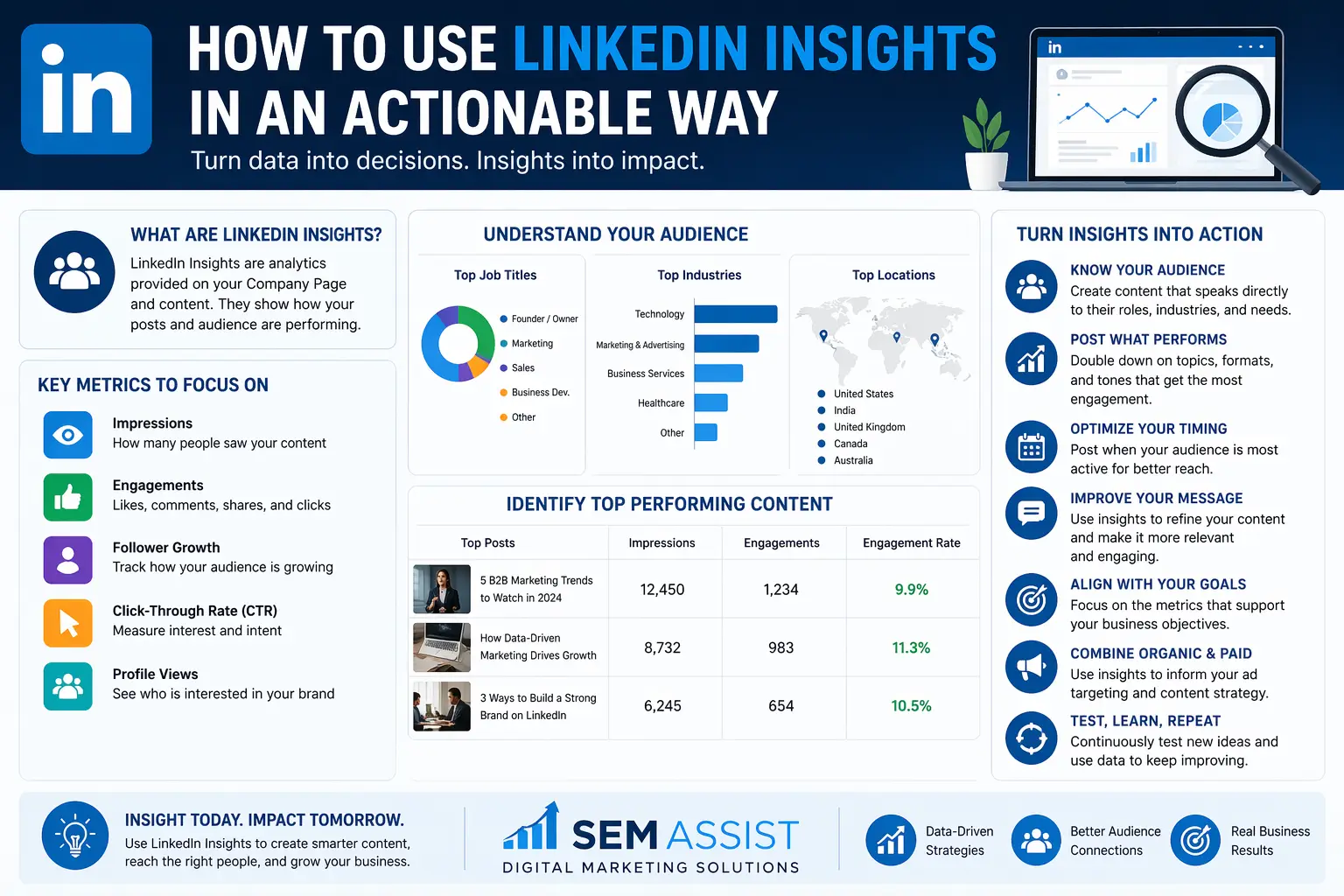
LinkedIn insights are data points provided within LinkedIn that show how your content, profile, and company page are performing.

These insights include information about your audience, engagement levels, content performance, and follower growth.

Instead of guessing what works, you can use this data to make informed marketing decisions.


Focus on the Metrics That Matter

Not all metrics carry the same value. To use LinkedIn insights effectively, you need to focus on the data that directly impacts your goals.

Pay close attention to engagement metrics such as likes, comments, and shares. These indicate how well your content resonates with your audience.

Follower growth shows whether your brand is attracting new attention. Click through rates and profile views can help you understand interest and intent.

By focusing on meaningful metrics, you avoid getting distracted by vanity numbers.


Understand Your Audience

One of the most valuable features of LinkedIn insights is audience data.

You can see information such as job titles, industries, company sizes, and locations of your followers and viewers.

This allows you to answer important questions. Are you reaching decision makers or entry level employees. Are your posts attracting the right industries. Is your messaging aligned with your ideal client.

When you understand your audience, you can create content that speaks directly to their needs.


Identify Top Performing Content

Your past content provides a roadmap for future success.

Review your posts to identify which ones generated the most engagement. Look for patterns in topics, formats, and messaging.

For example, you may find that educational posts perform better than promotional ones, or that certain industries respond more actively to your insights.

Once you identify what works, you can double down on similar content.


Optimize Your Posting Strategy

LinkedIn insights can help you determine when and how often to post.

Analyze when your audience is most active and which days generate the highest engagement. This allows you to schedule content at times when it is more likely to be seen.

Consistency also plays a key role. Posting regularly keeps your brand visible and helps build momentum over time.


Use Insights to Improve Your Messaging

If your content is not performing as expected, your insights can help you understand why.

Low engagement may indicate that your message is unclear or not relevant to your audience. High impressions with low interaction may suggest that your content is not compelling enough to drive action.

Use this feedback to refine your messaging and make it more engaging and valuable.


Align Insights With Business Goals

Data becomes truly actionable when it is tied to your business objectives.

If your goal is lead generation, focus on metrics that show interest and conversion such as clicks and inquiries. If your goal is brand awareness, impressions and reach may be more important.

By aligning your insights with your goals, you can measure success more accurately and adjust your strategy accordingly.


Combine Organic and Paid Strategies

LinkedIn insights are not just useful for organic content. They can also improve your paid advertising strategy.

Use data from your best performing posts to inform your ad campaigns. Target audiences that have already shown interest in your content.

This approach increases the likelihood of engagement and improves the return on your advertising investment.


Continuously Test and Improve

Marketing on LinkedIn is not a one time effort.

Use your insights to test different types of content, formats, and messaging. Track the results and refine your approach over time.

Small improvements can lead to significant gains when applied consistently.


Final Thoughts

LinkedIn insights provide a powerful advantage for businesses that know how to use them. Instead of relying on guesswork, you can make data driven decisions that improve your content, reach, and results.

By focusing on the right metrics, understanding your audience, and continuously refining your strategy, you can turn LinkedIn into a valuable growth channel.

At SEM ASSIST, we help businesses turn data into actionable strategies that drive real outcomes.


Ready to Turn Insights Into Growth

If you want to get more from your LinkedIn marketing, SEM ASSIST can help you develop a strategy that uses real data to attract the right audience and generate meaningful results.

10 Key Strategies That You Must Learn From Apple’s Marketing

10 Key Strategies That You Must Learn From Apple's Marketing.

10 Key Strategies That You Must Learn From Apple’s Marketing

Few brands have influenced modern marketing as much as Apple. Known for its simplicity, innovation, and strong brand identity, Apple has built a loyal customer base and consistently sets the standard for how products are marketed.

What makes Apple’s approach so effective is not just the quality of its products, but how those products are positioned, presented, and communicated.

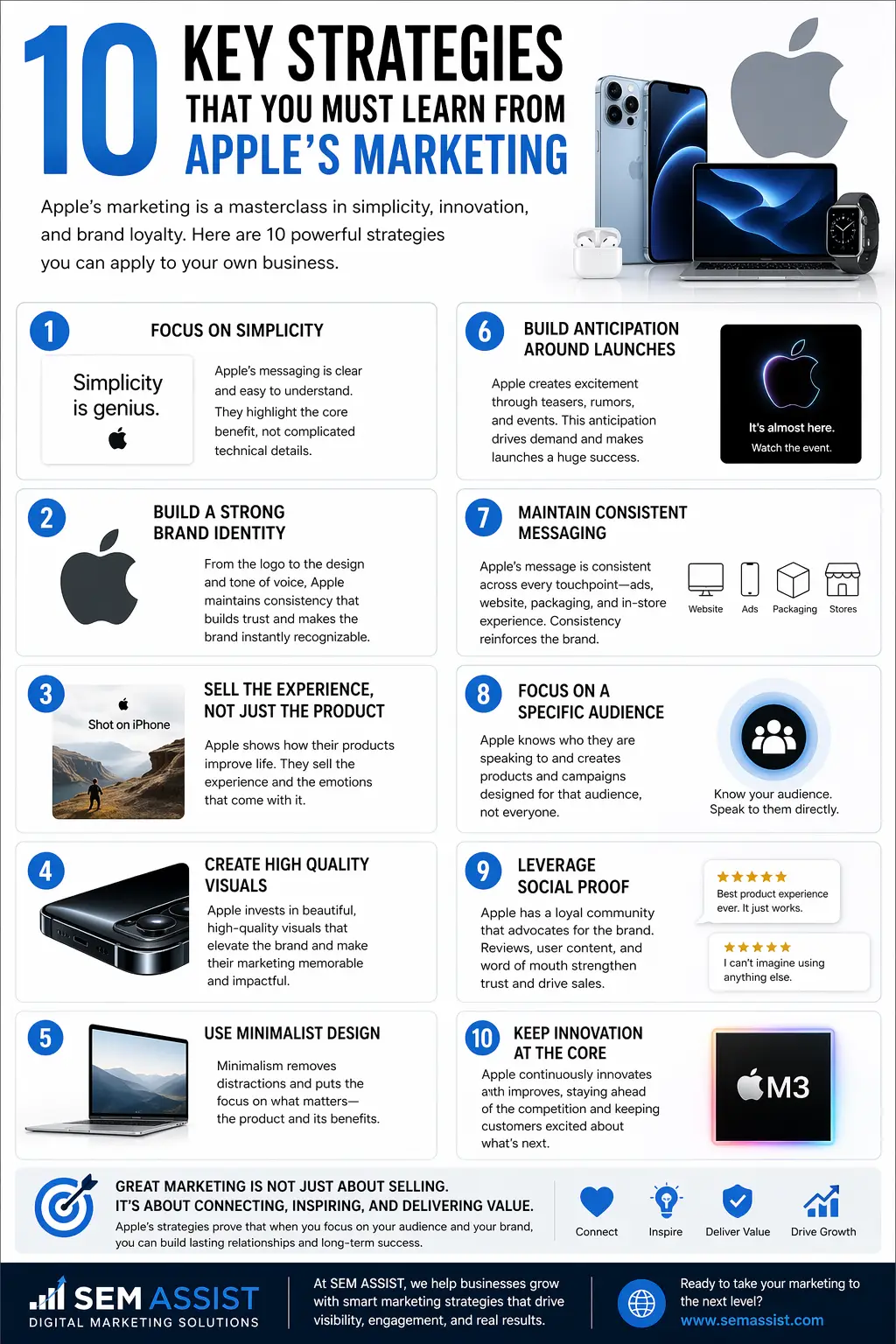
Here are ten key strategies you can learn from Apple’s marketing success.


1. Focus on Simplicity

Apple’s messaging is clear and easy to understand.

Instead of overwhelming customers with technical details, Apple highlights the core benefit of each product. This makes their marketing more accessible and easier to connect with.

Simple messaging cuts through noise and keeps the audience focused on what matters most.


2. Build a Strong Brand Identity

Apple has created a brand that is instantly recognizable.

From its logo to its product design and marketing visuals, everything feels consistent. This level of consistency builds trust and makes the brand memorable.

A strong identity helps your business stand out in a crowded market.


3. Sell the Experience, Not Just the Product

Apple does not just sell devices. It sells an experience.

Instead of focusing only on features, Apple shows how its products improve everyday life. This emotional connection makes customers more likely to choose the brand.

People buy based on how something makes them feel, not just what it does.


4. Create High Quality Visuals

Apple invests heavily in visuals.

Its ads, website, and product imagery are clean, modern, and visually appealing. This reinforces the perception of quality and innovation.

Strong visuals can elevate your brand and make your marketing more impactful.


5. Use Minimalist Design

Apple embraces minimalism in both product design and marketing.

By removing unnecessary elements, the focus stays on the product and its benefits. This creates a premium and uncluttered experience.

Less distraction leads to clearer communication.


6. Build Anticipation Around Launches

Apple has mastered the art of product launches.

Before releasing a new product, the company builds excitement through teasers and announcements. This creates anticipation and drives demand.

Creating hype before a launch can significantly increase engagement and sales.


7. Maintain Consistent Messaging

Consistency is a key part of Apple’s strategy.

Whether you see an ad, visit the website, or walk into a store, the messaging feels aligned. This reinforces the brand and builds credibility.

Consistency across all channels strengthens your marketing efforts.


8. Focus on a Specific Audience

Apple understands its audience and speaks directly to them.

Instead of trying to appeal to everyone, the brand targets users who value design, innovation, and simplicity. This focused approach makes its messaging more effective.

Knowing your audience allows you to create more relevant content.


9. Leverage Social Proof

Apple benefits from a strong community of loyal customers.

User generated content, reviews, and word of mouth all contribute to its success. Seeing others use and recommend Apple products builds trust.

Social proof can influence purchasing decisions and strengthen your reputation.


10. Keep Innovation at the Core

Innovation is central to Apple’s brand.

Each new product or update reinforces the idea that Apple is pushing boundaries. This keeps customers engaged and excited about what comes next.

Continuous improvement helps maintain relevance in a competitive market.


Final Thoughts

Apple’s marketing success is built on clarity, consistency, and a deep understanding of its audience. By focusing on simplicity, strong branding, and meaningful experiences, the company has created a powerful and lasting impact.

You do not need Apple’s budget to apply these strategies. By incorporating these principles into your own marketing, you can create stronger connections with your audience and drive better results.

At SEM ASSIST, we help businesses develop strategies that combine creativity and performance to achieve measurable growth.


Ready to Strengthen Your Marketing Strategy

If you want to apply proven strategies to your business and stand out in your market, SEM ASSIST can help you build a marketing approach that delivers real results.

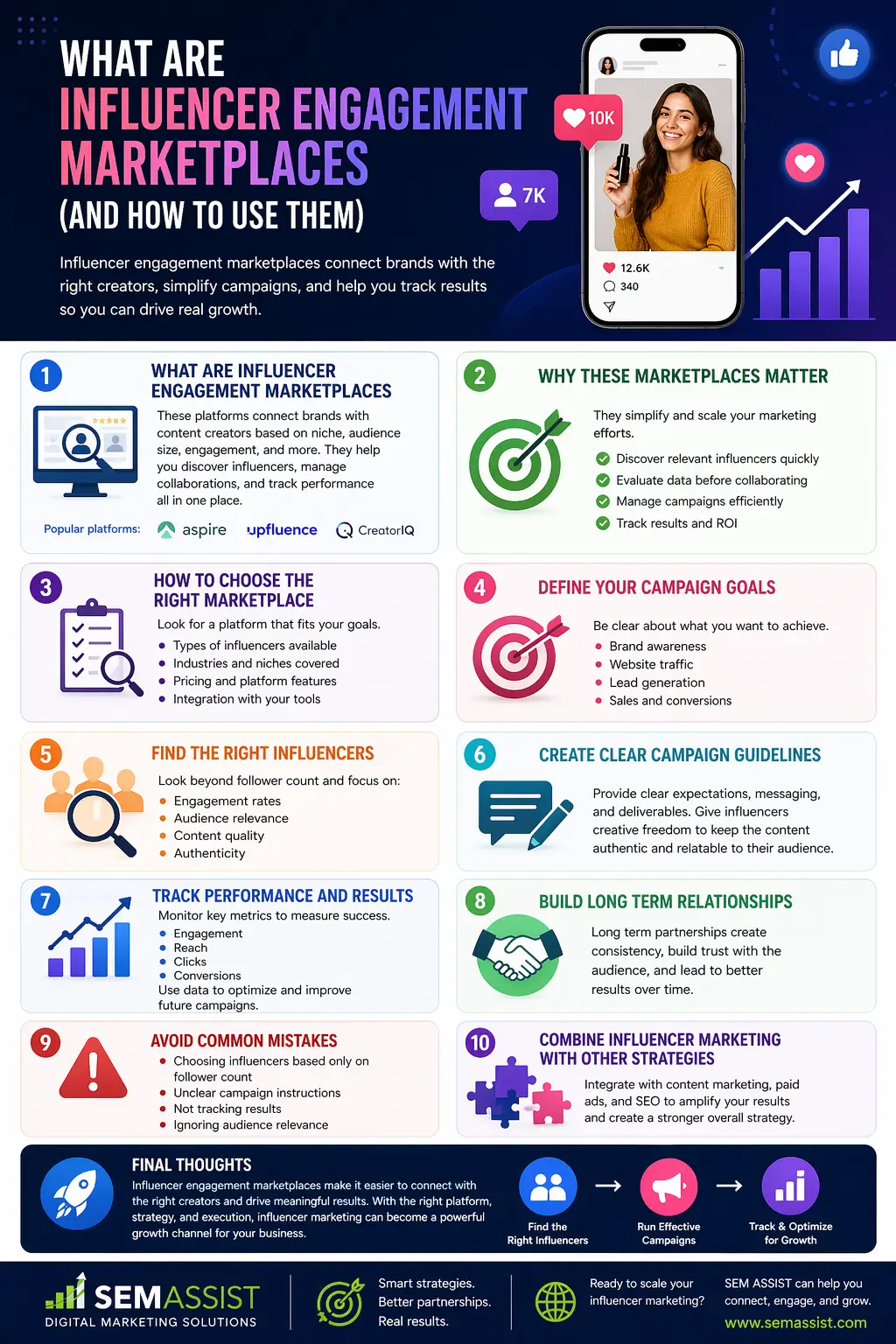
What Are Influencer Engagement Marketplaces (and How to Use)

What Are Influencer Engagement Marketplaces and How to Use Them

Influencer marketing has become a powerful way for brands to reach new audiences and build trust quickly. However, finding the right influencers and managing campaigns can be time consuming and difficult to scale.

This is where influencer engagement marketplaces come in. These platforms connect brands with influencers, making it easier to discover talent, manage collaborations, and track results.

Here is what you need to know and how to use them effectively.


What Are Influencer Engagement Marketplaces

Influencer engagement marketplaces are platforms that connect businesses with content creators who have established audiences on social media.

These marketplaces allow brands to search for influencers based on niche, audience size, engagement rates, and location. Instead of manually reaching out to creators, you can manage the entire process in one place.

Popular platforms in this space include Aspire, Upfluence, and CreatorIQ.


Why These Marketplaces Matter

Influencer engagement marketplaces simplify and scale your marketing efforts.

They help you:

  • Discover relevant influencers quickly
  • Evaluate performance data before collaborating
  • Manage campaigns more efficiently
  • Track results and return on investment

Instead of guessing which influencers will perform well, you can use data to make informed decisions.


How to Choose the Right Marketplace

Not all platforms are the same, so it is important to choose one that fits your goals.

Consider factors such as:

  • The types of influencers available
  • The industries and niches covered
  • Pricing and platform features
  • Integration with your existing marketing tools

The right platform should align with your target audience and campaign objectives.


Define Your Campaign Goals

Before using a marketplace, you need to be clear about what you want to achieve.

Your goals may include increasing brand awareness, driving website traffic, generating leads, or boosting sales.

Having a clear objective will guide your influencer selection and campaign strategy.


Find the Right Influencers

Choosing the right influencers is one of the most important steps.

Look beyond follower count and focus on:

  • Engagement rates
  • Audience relevance
  • Content quality
  • Authenticity

An influencer with a smaller but highly engaged audience can often deliver better results than one with a large but inactive following.


Create Clear Campaign Guidelines

Once you have selected your influencers, provide clear direction.

Outline your expectations, messaging, and deliverables. At the same time, allow influencers the creative freedom to present your brand in a way that feels natural to their audience.

Authenticity is key to successful influencer marketing.


Track Performance and Results

Most influencer marketplaces provide built in analytics tools.

Monitor metrics such as engagement, reach, clicks, and conversions. This data helps you understand what is working and where improvements can be made.

Tracking performance ensures your campaigns are aligned with your goals.


Build Long Term Relationships

Instead of working with influencers on a one time basis, focus on building long term partnerships.

Ongoing collaborations create consistency and strengthen trust with the audience. Over time, this can lead to better results and stronger brand recognition.


Avoid Common Mistakes

While influencer marketplaces are powerful, there are some common mistakes to avoid.

Do not choose influencers based solely on follower count. Avoid unclear campaign instructions that can lead to inconsistent messaging. Make sure to track results and adjust your strategy as needed.

Avoiding these pitfalls will help you maximize your success.


Combine Influencer Marketing With Other Strategies

Influencer marketing works best when it is part of a broader digital strategy.

Combine it with content marketing, paid advertising, and SEO to amplify your results. This creates a more cohesive approach that drives stronger outcomes.


Final Thoughts

Influencer engagement marketplaces have transformed how brands connect with creators. They provide a scalable and efficient way to run influencer campaigns while using data to guide decisions.

By choosing the right platform, selecting the right influencers, and tracking your results, you can turn influencer marketing into a powerful growth channel.

At SEM ASSIST, we help businesses build integrated marketing strategies that combine influencer marketing with proven digital tactics to drive real results.


Ready to Scale Your Influencer Marketing

If you want to leverage influencer engagement marketplaces to grow your brand, SEM ASSIST can help you develop a strategy that connects you with the right audience and delivers measurable success.

The 10-Step Guide to Creating a Profitable AdWords Campaign

The 10 Step Guide to Creating a Profitable AdWords Campaign

Running a profitable advertising campaign requires more than just setting up ads and hoping for results. Success comes from strategy, structure, and continuous optimization.

With the right approach, businesses can turn paid advertising into a consistent source of leads and revenue. Platforms like Google Ads provide powerful tools, but knowing how to use them effectively is what makes the difference.
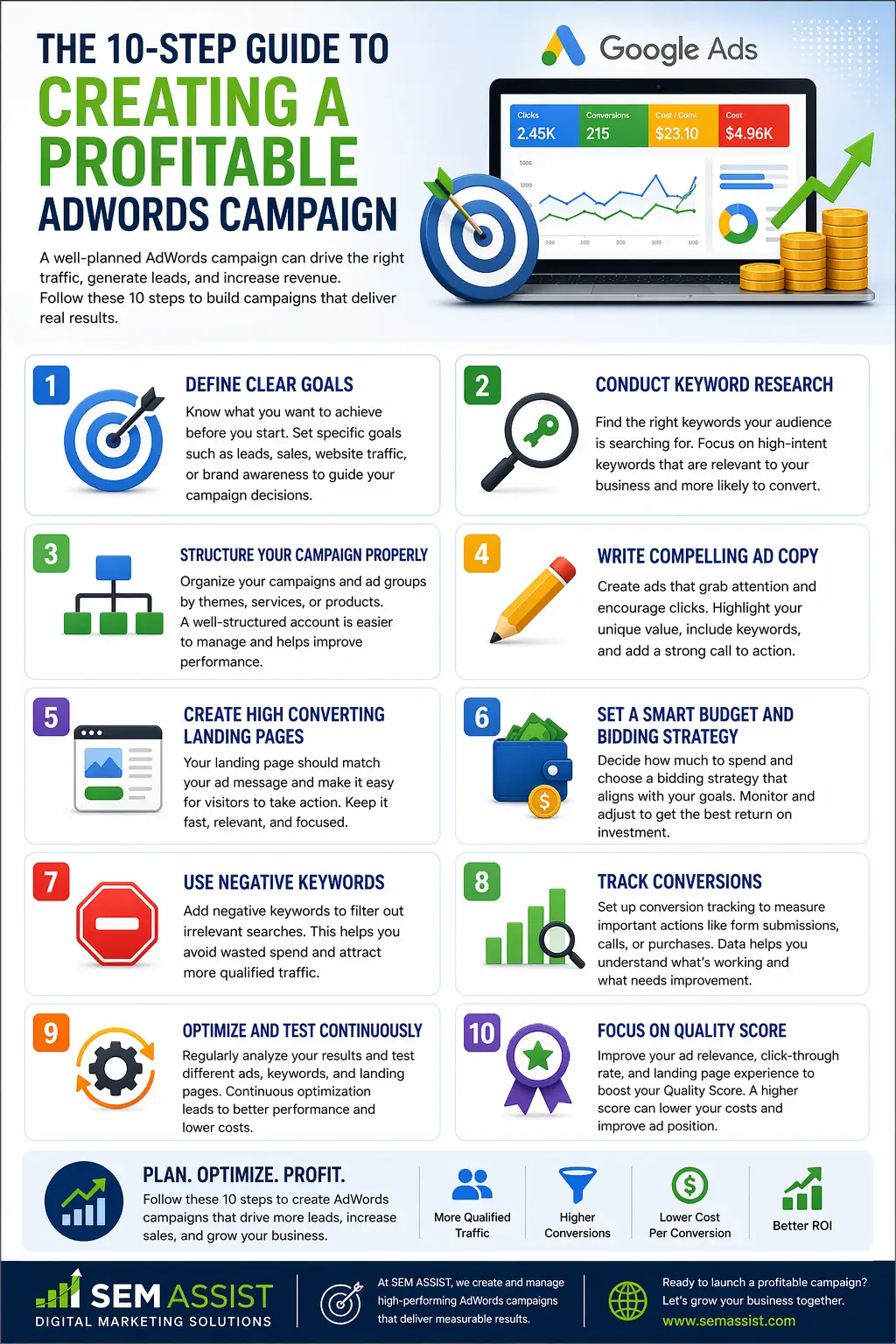
Here is a complete ten step guide to building a profitable AdWords campaign.


Step 1 Define Clear Goals

Before launching any campaign, you need to know what you want to achieve.

Your goals may include generating leads, increasing sales, driving website traffic, or building brand awareness. Clear objectives will guide every decision you make throughout your campaign.


Step 2 Conduct Keyword Research

Keywords are the foundation of your campaign.

Identify the search terms your audience is using and focus on those with strong intent. Target keywords that align with your services and are likely to convert.

A well researched keyword list helps ensure your ads reach the right people.


Step 3 Structure Your Campaign Properly

Campaign structure plays a major role in performance.

Organize your account into campaigns and ad groups based on themes, services, or products. Each ad group should focus on a specific set of keywords.

A clean structure makes it easier to manage and optimize your campaigns.


Step 4 Write Compelling Ad Copy

Your ad copy needs to capture attention and encourage action.

Highlight your value, include relevant keywords, and make your message clear. Focus on what makes your business different and why users should choose you.

Strong ad copy improves click through rates and overall performance.


Step 5 Create High Converting Landing Pages

Your landing page is where conversions happen.

Make sure it aligns with your ad message and provides a clear path for users to take action. The page should be fast, easy to navigate, and focused on one goal.

A well optimized landing page can significantly improve your conversion rate.


Step 6 Set a Smart Budget and Bidding Strategy

Budgeting is critical for profitability.

Determine how much you are willing to spend and choose a bidding strategy that aligns with your goals. Monitor your spending and adjust as needed to maximize return on investment.

Smart budgeting helps you control costs while driving results.


Step 7 Use Negative Keywords

Not every search is relevant to your business.

Negative keywords help you filter out unwanted traffic and prevent wasted spend. By excluding irrelevant searches, you can improve the quality of your traffic and increase conversions.


Step 8 Track Conversions

Without tracking, you cannot measure success.

Set up conversion tracking to monitor actions such as form submissions, calls, or purchases. This data helps you understand what is working and where improvements are needed.

Accurate tracking is essential for optimization.


Step 9 Optimize and Test Continuously

Successful campaigns are never set and forgotten.

Regularly review your performance and test different elements such as ad copy, keywords, and landing pages. Small improvements over time can lead to significant gains.

Continuous optimization keeps your campaign competitive.


Step 10 Focus on Quality Score

Quality Score is a key factor in your campaign performance.

It is influenced by your ad relevance, click through rate, and landing page experience. A higher Quality Score can lower your costs and improve your ad position.

Focusing on quality helps you get more value from your budget.


Final Thoughts

Creating a profitable AdWords campaign requires a combination of planning, execution, and ongoing improvement. By following these ten steps, you can build a strong foundation and turn your advertising into a reliable growth channel.

At SEM ASSIST, we help businesses develop and manage campaigns that deliver measurable results and long term success.


Ready to Launch a Profitable Campaign

If you want to maximize your advertising performance and drive real revenue, SEM ASSIST can help you create a strategy that turns clicks into customers.

Best Business Process Management Software

Best Business Process Management Software

Best Business Process Management Software

Efficiency and organization are essential for business growth. As companies scale, managing workflows, tasks, and internal processes becomes more complex. This is where business process management software plays a critical role.

Business process management software helps companies streamline operations, improve productivity, and maintain consistency across teams. Choosing the right platform can transform how your business operates.

Here is a guide to understanding and selecting the best solutions available today.


What Is Business Process Management Software

Business process management software is designed to help organizations create, manage, and optimize workflows.

These platforms allow businesses to map out processes, automate repetitive tasks, track performance, and improve collaboration. Instead of relying on manual systems, teams can operate more efficiently with structured workflows.


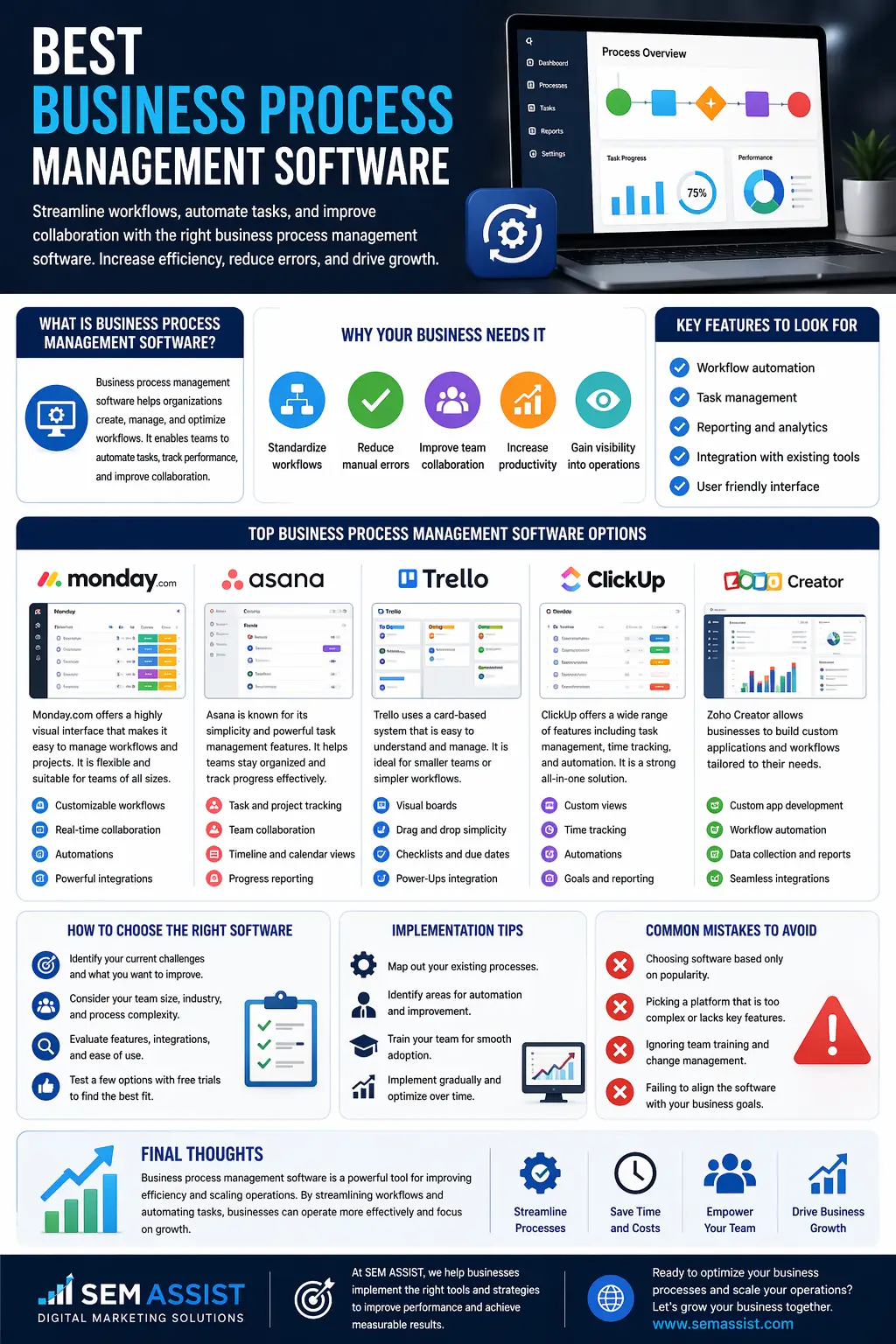
Why Your Business Needs It

As your business grows, processes can become disorganized and inefficient.

Business process management software helps you:

  • Standardize workflows
  • Reduce manual errors
  • Improve team collaboration
  • Increase productivity
  • Gain visibility into operations

By improving how work gets done, businesses can save time and focus on growth.


Key Features to Look For

Not all platforms offer the same capabilities, so it is important to evaluate key features.

Look for:

  • Workflow automation
  • Task management
  • Reporting and analytics
  • Integration with existing tools
  • User friendly interface

The right combination of features will depend on your specific business needs.


Top Business Process Management Software Options

Here are some of the best platforms to consider.

Monday.com

Monday.com offers a highly visual interface that makes it easy to manage workflows and projects. It is flexible and suitable for teams of all sizes.

Asana

Asana is known for its simplicity and powerful task management features. It helps teams stay organized and track progress effectively.

Trello

Trello uses a card based system that is easy to understand and manage. It is ideal for smaller teams or simpler workflows.

ClickUp

ClickUp offers a wide range of features including task management, time tracking, and automation. It is a strong all in one solution.

Zoho Creator

Zoho Creator allows businesses to build custom applications and workflows tailored to their needs.


How to Choose the Right Software

Selecting the right platform depends on your business size, goals, and complexity of processes.

Start by identifying your current challenges and what you want to improve. Consider how your team works and which features will have the biggest impact.

Testing a few options through free trials can help you determine the best fit.


Implementation Tips

Adopting new software requires planning and execution.

Start by mapping out your existing processes. Identify areas where automation can save time. Train your team to ensure smooth adoption.

Gradual implementation can help avoid disruptions and improve long term success.


Common Mistakes to Avoid

Some businesses choose software based only on popularity rather than fit.

Avoid selecting a platform that is too complex or lacks essential features. Do not overlook team training and support.

Proper planning and alignment with your goals will help you get the most value from your investment.


Final Thoughts

Business process management software is a powerful tool for improving efficiency and scaling operations. By streamlining workflows and automating tasks, businesses can operate more effectively and focus on growth.

At SEM ASSIST, we help businesses implement systems and strategies that improve performance and drive measurable results.


Ready to Optimize Your Business Processes

If you want to improve efficiency and scale your operations, SEM ASSIST can help you choose and implement the right solutions for your business.