
10 Key Strategies That You Must Learn From Apple’s Marketing

10 Key Strategies That You Must Learn From Apple's Marketing.

10 Key Strategies That You Must Learn From Apple’s Marketing

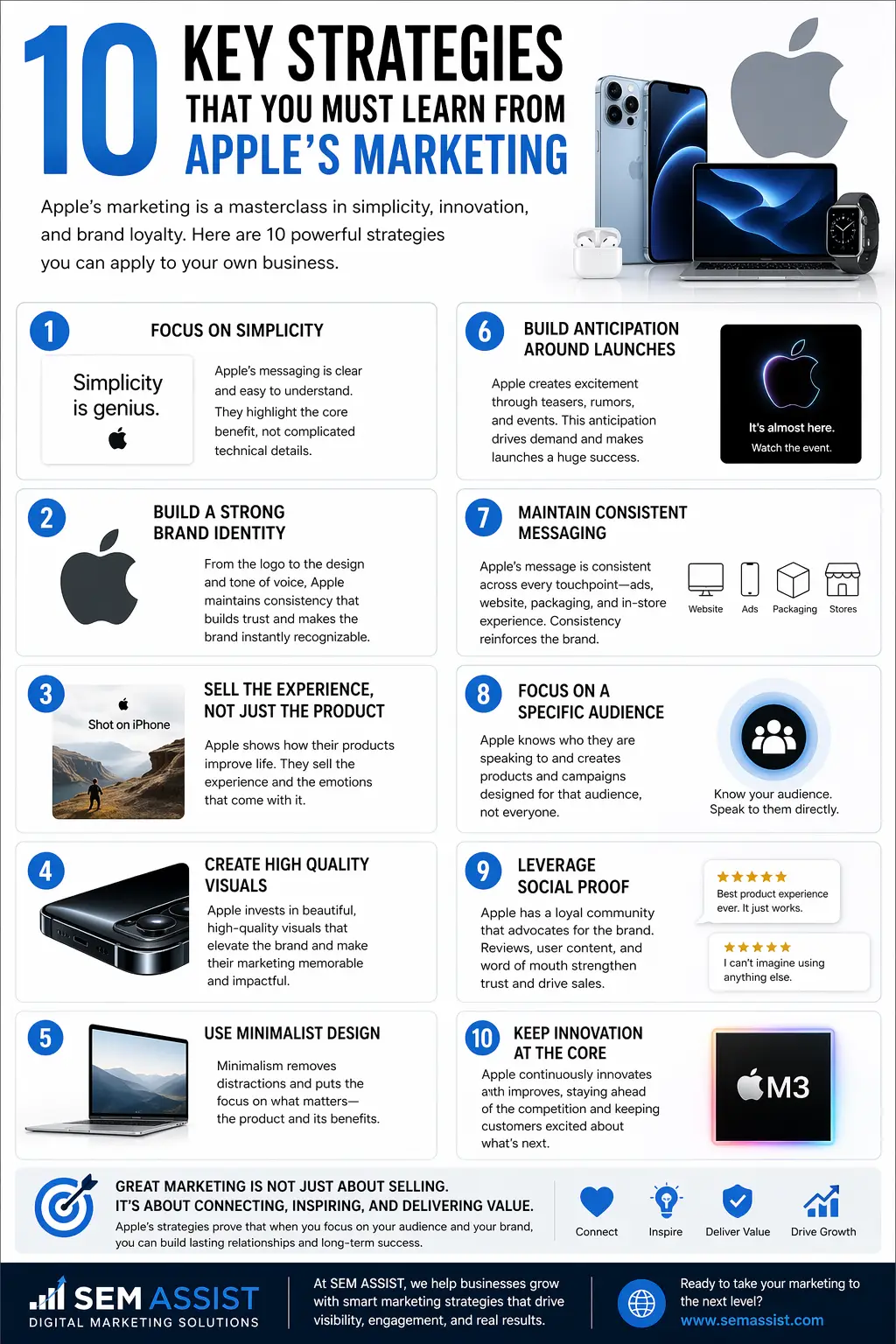
Few brands have influenced modern marketing as much as Apple. Known for its simplicity, innovation, and strong brand identity, Apple has built a loyal customer base and consistently sets the standard for how products are marketed.

What makes Apple’s approach so effective is not just the quality of its products, but how those products are positioned, presented, and communicated.

Here are ten key strategies you can learn from Apple’s marketing success.


1. Focus on Simplicity

Apple’s messaging is clear and easy to understand.

Instead of overwhelming customers with technical details, Apple highlights the core benefit of each product. This makes their marketing more accessible and easier to connect with.

Simple messaging cuts through noise and keeps the audience focused on what matters most.


2. Build a Strong Brand Identity

Apple has created a brand that is instantly recognizable.

From its logo to its product design and marketing visuals, everything feels consistent. This level of consistency builds trust and makes the brand memorable.

A strong identity helps your business stand out in a crowded market.


3. Sell the Experience, Not Just the Product

Apple does not just sell devices. It sells an experience.

Instead of focusing only on features, Apple shows how its products improve everyday life. This emotional connection makes customers more likely to choose the brand.

People buy based on how something makes them feel, not just what it does.


4. Create High Quality Visuals

Apple invests heavily in visuals.

Its ads, website, and product imagery are clean, modern, and visually appealing. This reinforces the perception of quality and innovation.

Strong visuals can elevate your brand and make your marketing more impactful.


5. Use Minimalist Design

Apple embraces minimalism in both product design and marketing.

By removing unnecessary elements, the focus stays on the product and its benefits. This creates a premium and uncluttered experience.

Less distraction leads to clearer communication.


6. Build Anticipation Around Launches

Apple has mastered the art of product launches.

Before releasing a new product, the company builds excitement through teasers and announcements. This creates anticipation and drives demand.

Creating hype before a launch can significantly increase engagement and sales.


7. Maintain Consistent Messaging

Consistency is a key part of Apple’s strategy.

Whether you see an ad, visit the website, or walk into a store, the messaging feels aligned. This reinforces the brand and builds credibility.

Consistency across all channels strengthens your marketing efforts.


8. Focus on a Specific Audience

Apple understands its audience and speaks directly to them.

Instead of trying to appeal to everyone, the brand targets users who value design, innovation, and simplicity. This focused approach makes its messaging more effective.

Knowing your audience allows you to create more relevant content.


9. Leverage Social Proof

Apple benefits from a strong community of loyal customers.

User generated content, reviews, and word of mouth all contribute to its success. Seeing others use and recommend Apple products builds trust.

Social proof can influence purchasing decisions and strengthen your reputation.


10. Keep Innovation at the Core

Innovation is central to Apple’s brand.

Each new product or update reinforces the idea that Apple is pushing boundaries. This keeps customers engaged and excited about what comes next.

Continuous improvement helps maintain relevance in a competitive market.


Final Thoughts

Apple’s marketing success is built on clarity, consistency, and a deep understanding of its audience. By focusing on simplicity, strong branding, and meaningful experiences, the company has created a powerful and lasting impact.

You do not need Apple’s budget to apply these strategies. By incorporating these principles into your own marketing, you can create stronger connections with your audience and drive better results.

At SEM ASSIST, we help businesses develop strategies that combine creativity and performance to achieve measurable growth.


Ready to Strengthen Your Marketing Strategy

If you want to apply proven strategies to your business and stand out in your market, SEM ASSIST can help you build a marketing approach that delivers real results.
YouTube SEO: 25 Tactics for Getting More Views, Subscribers, and Traffic

YouTube SEO: 25 Tactics for Getting More Views, Subscribers, and Traffic

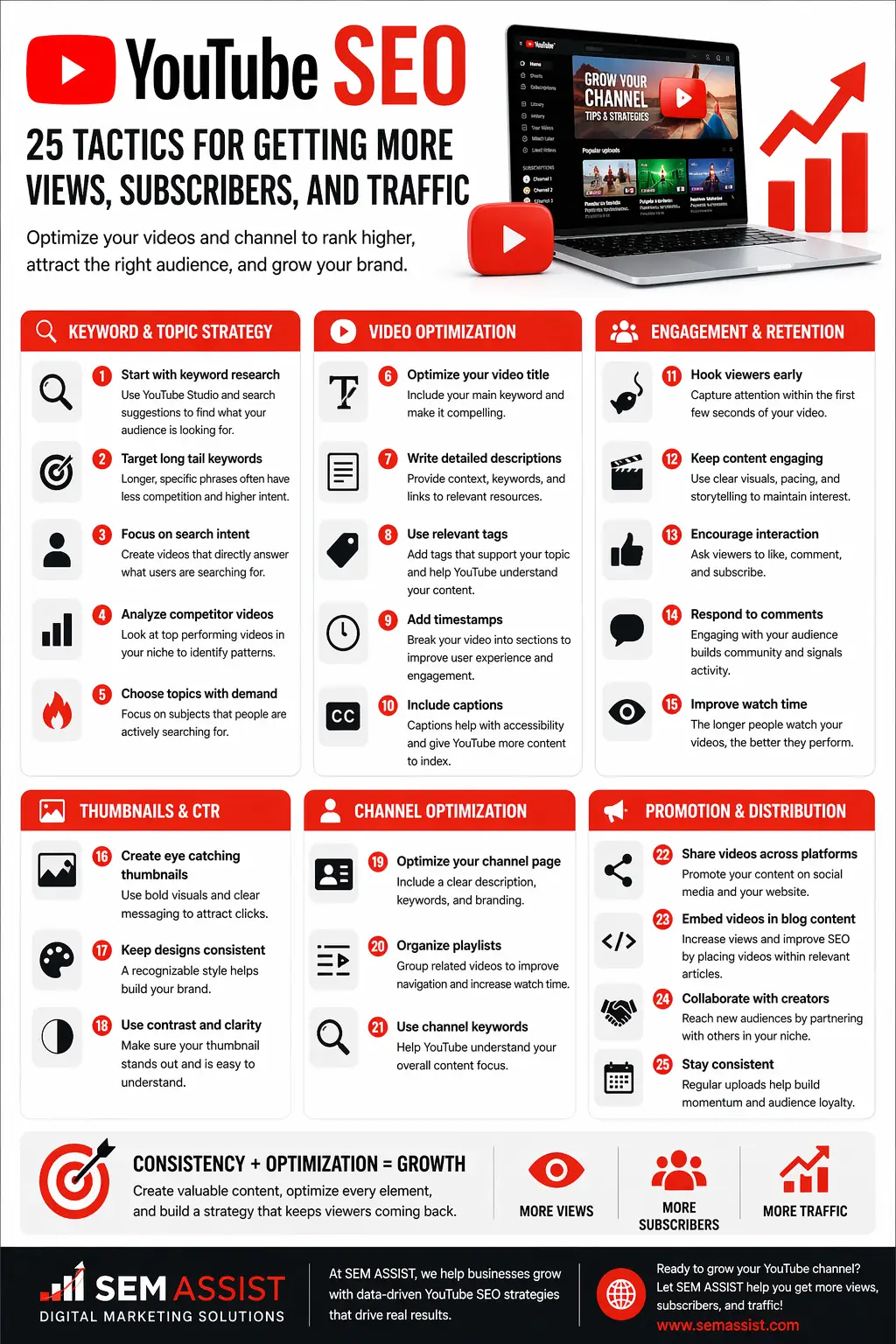
YouTube SEO 25 Tactics for Getting More Views Subscribers and Traffic

YouTube is one of the most powerful search engines in the world and a major driver of traffic, brand awareness, and lead generation. Simply uploading videos is not enough. To succeed, your content needs to be optimized so it can be discovered by the right audience.

YouTube SEO is the process of improving your videos, channel, and content strategy to increase visibility and performance on YouTube.

Here are 25 proven tactics to help you get more views, subscribers, and traffic.


Keyword and Topic Strategy

  1. Start with keyword research
    Use tools like YouTube Studio and search suggestions to find what your audience is looking for.

  2. Target long tail keywords
    Longer and more specific phrases often have less competition and higher intent.

  3. Focus on search intentCreate videos that directly answer what users are searching for.

  4. Analyze competitor videos
    Look at top performing videos in your niche to identify patterns.

  5. Choose topics with demand
    Focus on subjects that people are actively searching for.


Video Optimization

  1. Optimize your video title
    Include your main keyword and make it compelling.

  2. Write detailed descriptions
    Provide context, keywords, and links to relevant resources.

  3. Use relevant tags
    Add tags that support your topic and help YouTube understand your content.

  4. Add timestamps
    Break your video into sections to improve user experience and engagement.

  5. Include captions
    Captions help with accessibility and give YouTube more content to index.


Engagement and Retention

  1. Hook viewers early
    Capture attention within the first few seconds of your video.

  2. Keep content engaging
    Use clear visuals, pacing, and storytelling to maintain interest.

  3. Encourage interaction
    Ask viewers to like, comment, and subscribe.

  4. Respond to comments
    Engaging with your audience builds community and signals activity.

  5. Improve watch time
    The longer people watch your videos, the better they perform.


Thumbnails and Click Through Rate

  1. Create eye catching thumbnails
    Use bold visuals and clear messaging to attract clicks.

  2. Keep designs consistent
    A recognizable style helps build your brand.

  3. Use contrast and clarity
    Make sure your thumbnail stands out and is easy to understand.


Channel Optimization

  1. Optimize your channel page
    Include a clear description, keywords, and branding.

  2. Organize playlists
    Group related videos to improve navigation and increase watch time.

  3. Use channel keywords
    Help YouTube understand your overall content focus.


Promotion and Distribution

  1. Share videos across platforms
    Promote your content on social media and your website.

  2. Embed videos in blog content
    Increase views and improve SEO by placing videos within relevant articles.

  3. Collaborate with other creators
    Reach new audiences by partnering with others in your niche.

  4. Stay consistent
    Regular uploads help build momentum and audience loyalty.


Final Thoughts

YouTube SEO is about more than just ranking videos. It is about creating valuable content, optimizing every element, and building a strategy that keeps viewers engaged.

By applying these tactics consistently, you can increase your visibility, grow your audience, and drive meaningful traffic to your business.

At SEM ASSIST, we help businesses develop video marketing strategies that turn content into real growth.


Ready to Grow Your YouTube Channel

If you want to increase your views, subscribers, and traffic, SEM ASSIST can help you build a strategy that delivers measurable results.


What Are Influencer Engagement Marketplaces (and How to Use)

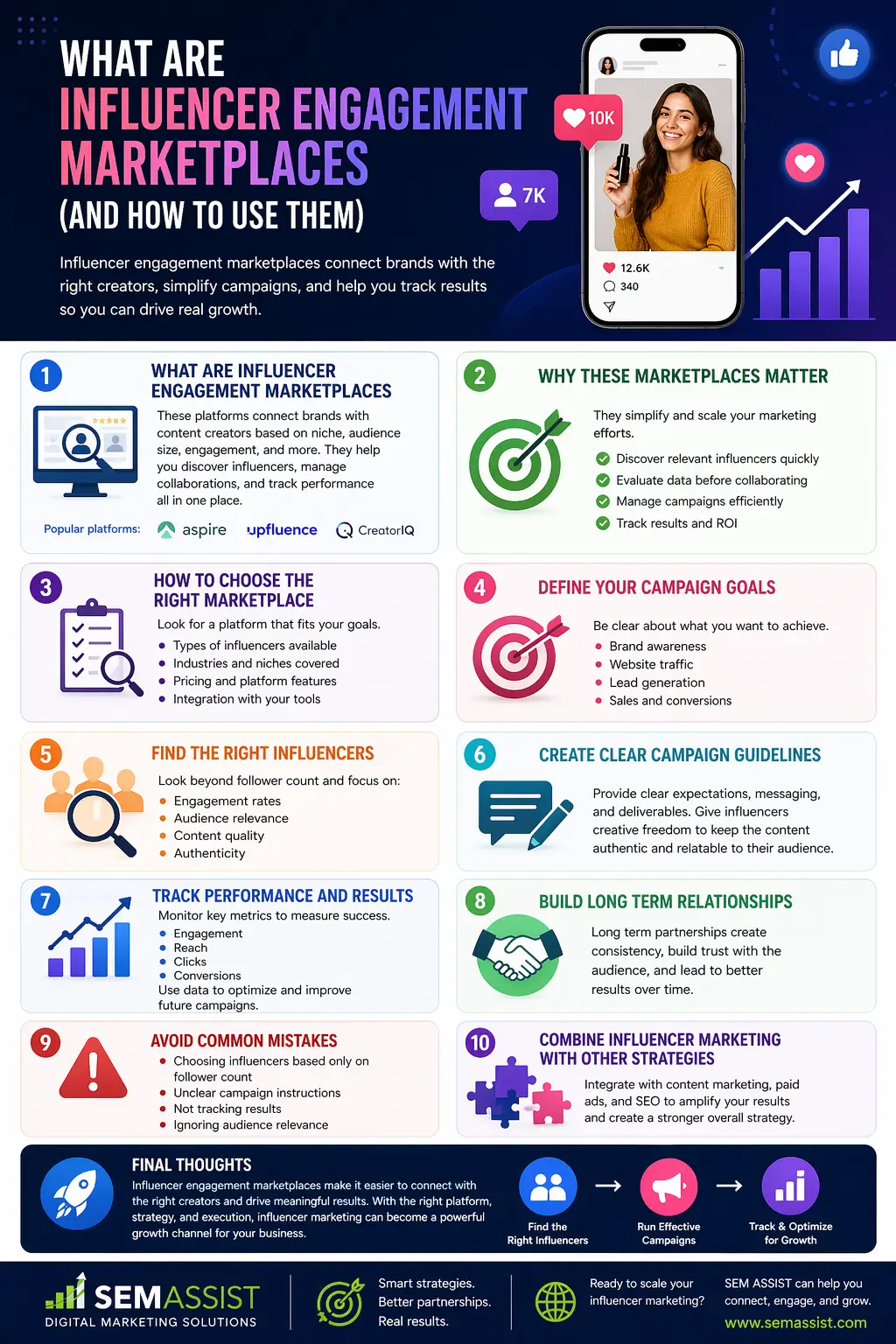
What Are Influencer Engagement Marketplaces and How to Use Them

Influencer marketing has become a powerful way for brands to reach new audiences and build trust quickly. However, finding the right influencers and managing campaigns can be time consuming and difficult to scale.

This is where influencer engagement marketplaces come in. These platforms connect brands with influencers, making it easier to discover talent, manage collaborations, and track results.

Here is what you need to know and how to use them effectively.


What Are Influencer Engagement Marketplaces

Influencer engagement marketplaces are platforms that connect businesses with content creators who have established audiences on social media.

These marketplaces allow brands to search for influencers based on niche, audience size, engagement rates, and location. Instead of manually reaching out to creators, you can manage the entire process in one place.

Popular platforms in this space include Aspire, Upfluence, and CreatorIQ.


Why These Marketplaces Matter

Influencer engagement marketplaces simplify and scale your marketing efforts.

They help you:

  • Discover relevant influencers quickly
  • Evaluate performance data before collaborating
  • Manage campaigns more efficiently
  • Track results and return on investment

Instead of guessing which influencers will perform well, you can use data to make informed decisions.


How to Choose the Right Marketplace

Not all platforms are the same, so it is important to choose one that fits your goals.

Consider factors such as:

  • The types of influencers available
  • The industries and niches covered
  • Pricing and platform features
  • Integration with your existing marketing tools

The right platform should align with your target audience and campaign objectives.


Define Your Campaign Goals

Before using a marketplace, you need to be clear about what you want to achieve.

Your goals may include increasing brand awareness, driving website traffic, generating leads, or boosting sales.

Having a clear objective will guide your influencer selection and campaign strategy.


Find the Right Influencers

Choosing the right influencers is one of the most important steps.

Look beyond follower count and focus on:

  • Engagement rates
  • Audience relevance
  • Content quality
  • Authenticity

An influencer with a smaller but highly engaged audience can often deliver better results than one with a large but inactive following.


Create Clear Campaign Guidelines

Once you have selected your influencers, provide clear direction.

Outline your expectations, messaging, and deliverables. At the same time, allow influencers the creative freedom to present your brand in a way that feels natural to their audience.

Authenticity is key to successful influencer marketing.


Track Performance and Results

Most influencer marketplaces provide built in analytics tools.

Monitor metrics such as engagement, reach, clicks, and conversions. This data helps you understand what is working and where improvements can be made.

Tracking performance ensures your campaigns are aligned with your goals.


Build Long Term Relationships

Instead of working with influencers on a one time basis, focus on building long term partnerships.

Ongoing collaborations create consistency and strengthen trust with the audience. Over time, this can lead to better results and stronger brand recognition.


Avoid Common Mistakes

While influencer marketplaces are powerful, there are some common mistakes to avoid.

Do not choose influencers based solely on follower count. Avoid unclear campaign instructions that can lead to inconsistent messaging. Make sure to track results and adjust your strategy as needed.

Avoiding these pitfalls will help you maximize your success.


Combine Influencer Marketing With Other Strategies

Influencer marketing works best when it is part of a broader digital strategy.

Combine it with content marketing, paid advertising, and SEO to amplify your results. This creates a more cohesive approach that drives stronger outcomes.


Final Thoughts

Influencer engagement marketplaces have transformed how brands connect with creators. They provide a scalable and efficient way to run influencer campaigns while using data to guide decisions.

By choosing the right platform, selecting the right influencers, and tracking your results, you can turn influencer marketing into a powerful growth channel.

At SEM ASSIST, we help businesses build integrated marketing strategies that combine influencer marketing with proven digital tactics to drive real results.


Ready to Scale Your Influencer Marketing

If you want to leverage influencer engagement marketplaces to grow your brand, SEM ASSIST can help you develop a strategy that connects you with the right audience and delivers measurable success.

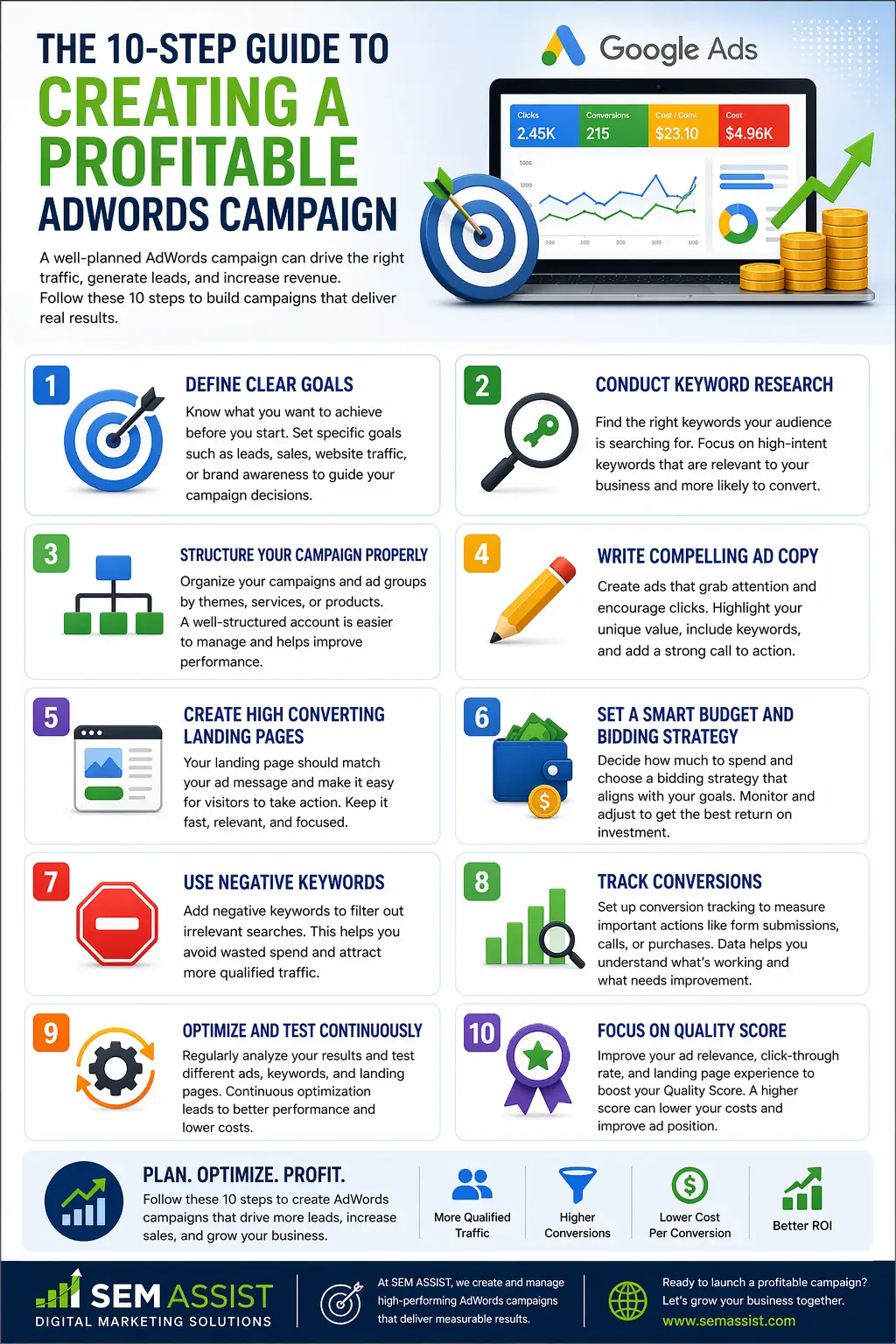
The 10-Step Guide to Creating a Profitable AdWords Campaign

The 10 Step Guide to Creating a Profitable AdWords Campaign

Running a profitable advertising campaign requires more than just setting up ads and hoping for results. Success comes from strategy, structure, and continuous optimization.

With the right approach, businesses can turn paid advertising into a consistent source of leads and revenue. Platforms like Google Ads provide powerful tools, but knowing how to use them effectively is what makes the difference.

Here is a complete ten step guide to building a profitable AdWords campaign.


Step 1 Define Clear Goals

Before launching any campaign, you need to know what you want to achieve.

Your goals may include generating leads, increasing sales, driving website traffic, or building brand awareness. Clear objectives will guide every decision you make throughout your campaign.


Step 2 Conduct Keyword Research

Keywords are the foundation of your campaign.

Identify the search terms your audience is using and focus on those with strong intent. Target keywords that align with your services and are likely to convert.

A well researched keyword list helps ensure your ads reach the right people.


Step 3 Structure Your Campaign Properly

Campaign structure plays a major role in performance.

Organize your account into campaigns and ad groups based on themes, services, or products. Each ad group should focus on a specific set of keywords.

A clean structure makes it easier to manage and optimize your campaigns.


Step 4 Write Compelling Ad Copy

Your ad copy needs to capture attention and encourage action.

Highlight your value, include relevant keywords, and make your message clear. Focus on what makes your business different and why users should choose you.

Strong ad copy improves click through rates and overall performance.


Step 5 Create High Converting Landing Pages

Your landing page is where conversions happen.

Make sure it aligns with your ad message and provides a clear path for users to take action. The page should be fast, easy to navigate, and focused on one goal.

A well optimized landing page can significantly improve your conversion rate.


Step 6 Set a Smart Budget and Bidding Strategy

Budgeting is critical for profitability.

Determine how much you are willing to spend and choose a bidding strategy that aligns with your goals. Monitor your spending and adjust as needed to maximize return on investment.

Smart budgeting helps you control costs while driving results.


Step 7 Use Negative Keywords

Not every search is relevant to your business.

Negative keywords help you filter out unwanted traffic and prevent wasted spend. By excluding irrelevant searches, you can improve the quality of your traffic and increase conversions.


Step 8 Track Conversions

Without tracking, you cannot measure success.

Set up conversion tracking to monitor actions such as form submissions, calls, or purchases. This data helps you understand what is working and where improvements are needed.

Accurate tracking is essential for optimization.


Step 9 Optimize and Test Continuously

Successful campaigns are never set and forgotten.

Regularly review your performance and test different elements such as ad copy, keywords, and landing pages. Small improvements over time can lead to significant gains.

Continuous optimization keeps your campaign competitive.


Step 10 Focus on Quality Score

Quality Score is a key factor in your campaign performance.

It is influenced by your ad relevance, click through rate, and landing page experience. A higher Quality Score can lower your costs and improve your ad position.

Focusing on quality helps you get more value from your budget.


Final Thoughts

Creating a profitable AdWords campaign requires a combination of planning, execution, and ongoing improvement. By following these ten steps, you can build a strong foundation and turn your advertising into a reliable growth channel.

At SEM ASSIST, we help businesses develop and manage campaigns that deliver measurable results and long term success.


Ready to Launch a Profitable Campaign

If you want to maximize your advertising performance and drive real revenue, SEM ASSIST can help you create a strategy that turns clicks into customers.

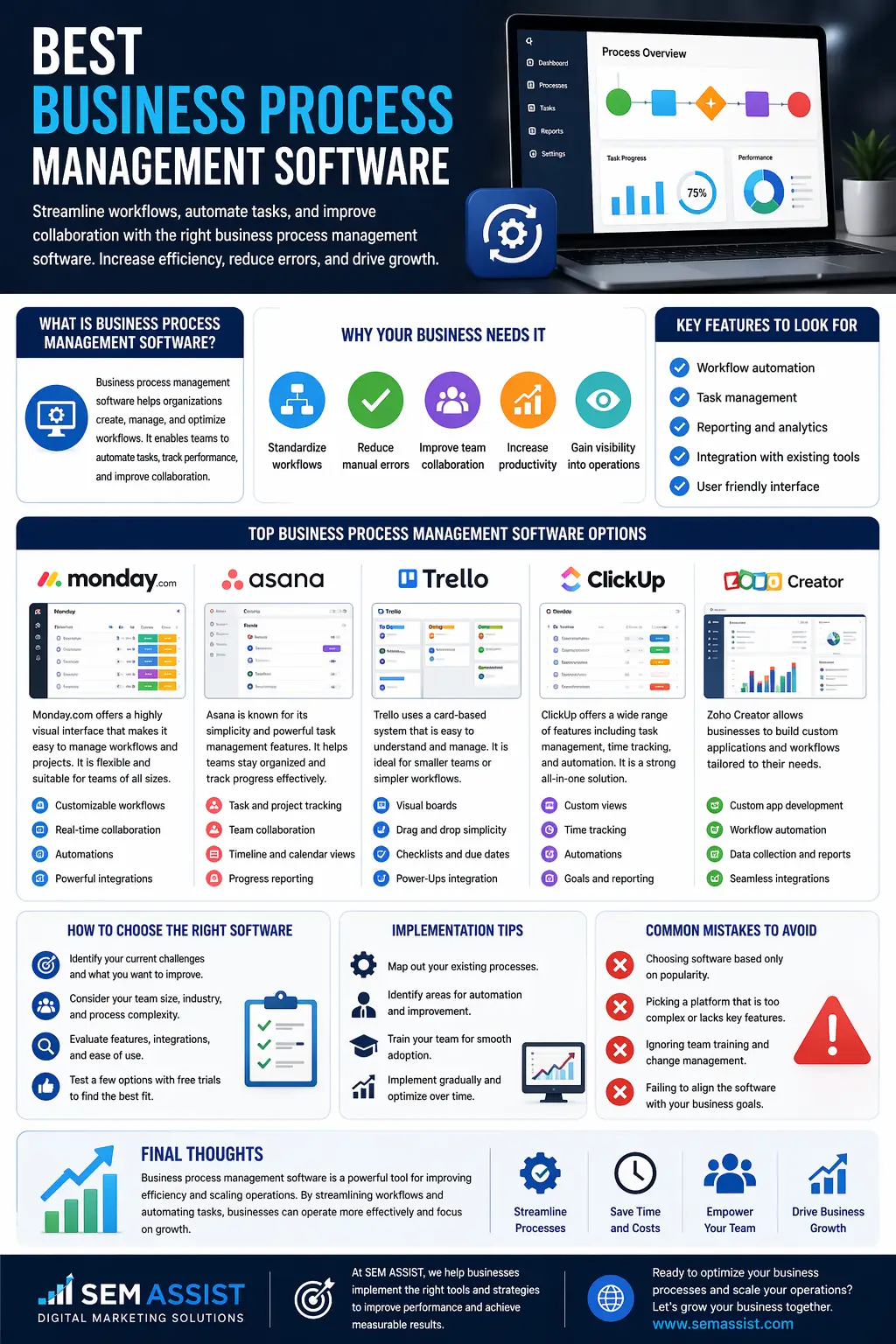
Best Business Process Management Software

Best Business Process Management Software

Best Business Process Management Software

Efficiency and organization are essential for business growth. As companies scale, managing workflows, tasks, and internal processes becomes more complex. This is where business process management software plays a critical role.

Business process management software helps companies streamline operations, improve productivity, and maintain consistency across teams. Choosing the right platform can transform how your business operates.

Here is a guide to understanding and selecting the best solutions available today.


What Is Business Process Management Software

Business process management software is designed to help organizations create, manage, and optimize workflows.

These platforms allow businesses to map out processes, automate repetitive tasks, track performance, and improve collaboration. Instead of relying on manual systems, teams can operate more efficiently with structured workflows.


Why Your Business Needs It

As your business grows, processes can become disorganized and inefficient.

Business process management software helps you:

  • Standardize workflows
  • Reduce manual errors
  • Improve team collaboration
  • Increase productivity
  • Gain visibility into operations

By improving how work gets done, businesses can save time and focus on growth.


Key Features to Look For

Not all platforms offer the same capabilities, so it is important to evaluate key features.

Look for:

  • Workflow automation
  • Task management
  • Reporting and analytics
  • Integration with existing tools
  • User friendly interface

The right combination of features will depend on your specific business needs.


Top Business Process Management Software Options

Here are some of the best platforms to consider.

Monday.com

Monday.com offers a highly visual interface that makes it easy to manage workflows and projects. It is flexible and suitable for teams of all sizes.

Asana

Asana is known for its simplicity and powerful task management features. It helps teams stay organized and track progress effectively.

Trello

Trello uses a card based system that is easy to understand and manage. It is ideal for smaller teams or simpler workflows.

ClickUp

ClickUp offers a wide range of features including task management, time tracking, and automation. It is a strong all in one solution.

Zoho Creator

Zoho Creator allows businesses to build custom applications and workflows tailored to their needs.


How to Choose the Right Software

Selecting the right platform depends on your business size, goals, and complexity of processes.

Start by identifying your current challenges and what you want to improve. Consider how your team works and which features will have the biggest impact.

Testing a few options through free trials can help you determine the best fit.


Implementation Tips

Adopting new software requires planning and execution.

Start by mapping out your existing processes. Identify areas where automation can save time. Train your team to ensure smooth adoption.

Gradual implementation can help avoid disruptions and improve long term success.


Common Mistakes to Avoid

Some businesses choose software based only on popularity rather than fit.

Avoid selecting a platform that is too complex or lacks essential features. Do not overlook team training and support.

Proper planning and alignment with your goals will help you get the most value from your investment.


Final Thoughts

Business process management software is a powerful tool for improving efficiency and scaling operations. By streamlining workflows and automating tasks, businesses can operate more effectively and focus on growth.

At SEM ASSIST, we help businesses implement systems and strategies that improve performance and drive measurable results.


Ready to Optimize Your Business Processes

If you want to improve efficiency and scale your operations, SEM ASSIST can help you choose and implement the right solutions for your business.

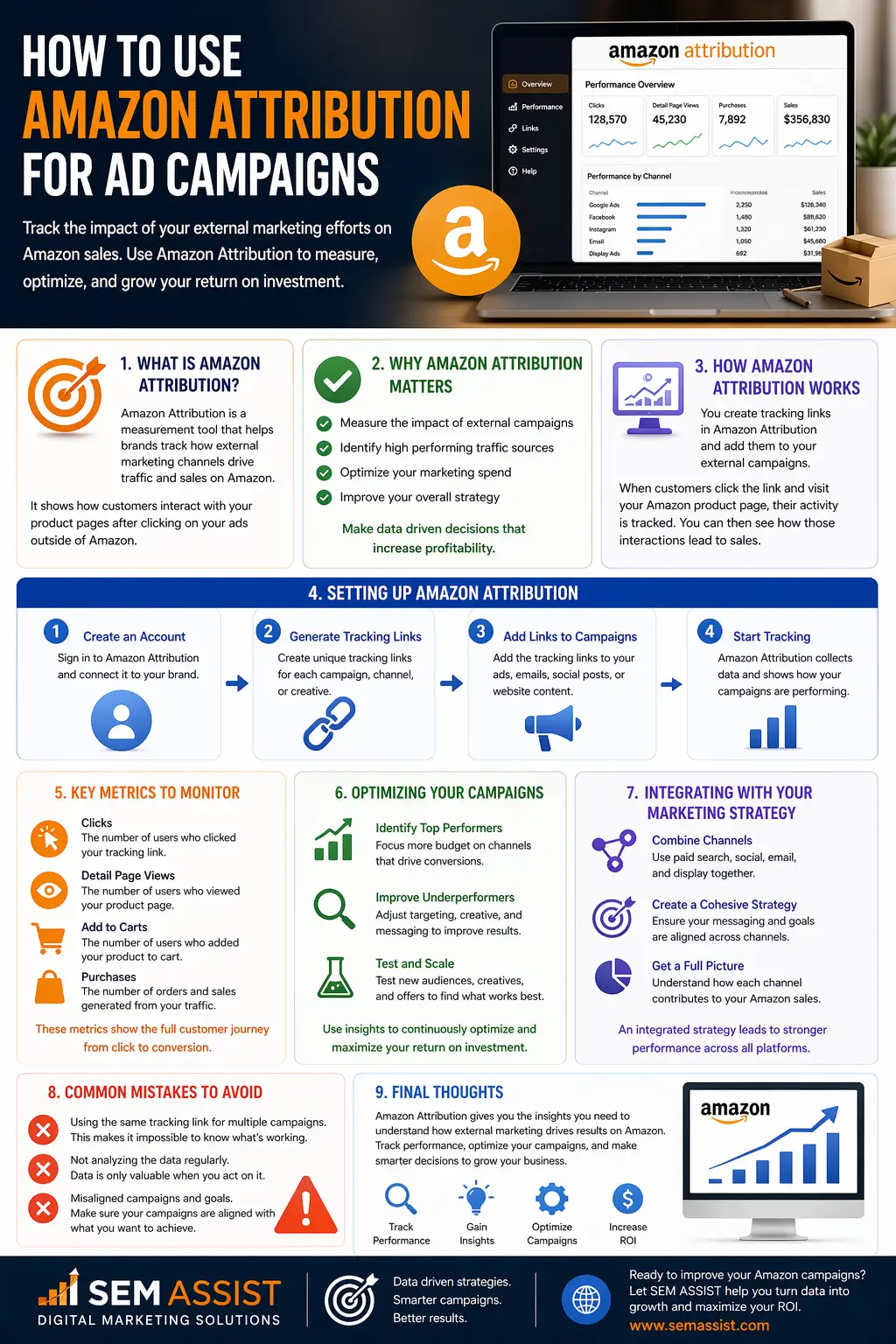
How to Use Amazon Attribution For Ad Campaigns

How to Use Amazon Attribution For Ad Campaigns

Measuring the true impact of your advertising efforts is essential for making smarter marketing decisions. For brands selling on Amazon, understanding what happens outside the platform is just as important as what happens within it.

Amazon Attribution gives advertisers the ability to track how external marketing channels contribute to sales and performance on Amazon. When used correctly, it can unlock valuable insights that improve your return on investment.

Here is how to use Amazon Attribution effectively for your ad campaigns.


What Is Amazon Attribution

Amazon Attribution is a measurement tool that allows brands to track the performance of external traffic sources that lead to Amazon product pages.

It provides data on how campaigns from platforms like social media, search engines, email marketing, and display advertising influence customer behavior on Amazon.

Instead of guessing which channels are driving results, you can use real data to guide your strategy.


Why Amazon Attribution Matters

Without proper tracking, it is difficult to understand which marketing efforts are actually driving sales.

Amazon Attribution helps you:

  • Measure the impact of external campaigns
  • Identify high performing traffic sources
  • Optimize your marketing spend
  • Improve your overall strategy

This level of visibility allows you to make data driven decisions that increase profitability.


How Amazon Attribution Works

Amazon Attribution uses tracking links that you generate within the platform.

These links are added to your external campaigns. When users click on them and visit your Amazon product page, their activity is tracked and recorded.

You can then view metrics such as clicks, page views, add to carts, and purchases.


Setting Up Amazon Attribution

Getting started involves a few key steps.

First, create an Amazon Attribution account and connect it to your brand.

Next, generate tracking links for each campaign you want to measure. Be sure to create unique links for different channels and campaigns so you can track performance accurately.

Finally, add these links to your ads, emails, or social media posts.


Key Metrics to Monitor

To get the most value from Amazon Attribution, focus on the metrics that matter most.

Clicks show how many users are visiting your product page. Detail page views indicate interest in your product. Add to carts show intent to purchase. Conversions reveal actual sales.

By analyzing these metrics, you can understand how users move through the buying process.


Optimizing Your Campaigns

Amazon Attribution is not just about tracking. It is about improving performance.

Identify which channels are driving the most conversions and allocate more budget to those areas. Adjust campaigns that are underperforming and test new strategies.

Continuous optimization helps you maximize your return on investment.


Integrating With Your Marketing Strategy

Amazon Attribution works best when it is part of a broader marketing approach.

Combine it with paid search, social media advertising, and email campaigns to create a cohesive strategy. This allows you to see how different channels work together to drive results.

A well integrated strategy leads to stronger performance across all platforms.


Common Mistakes to Avoid

Some brands fail to use Amazon Attribution effectively due to simple mistakes.

Avoid using the same tracking link across multiple campaigns. This makes it difficult to identify what is working. Do not ignore the data once it is collected. Regular analysis is essential for improvement.

Also, ensure your campaigns are aligned with your goals so the data you collect is meaningful.


Final Thoughts

Amazon Attribution provides valuable insight into how your external marketing efforts impact your Amazon sales. By tracking performance and optimizing your campaigns, you can make smarter decisions and improve your results.

At SEM ASSIST, we help businesses use data driven strategies to maximize their advertising performance and drive measurable growth.


Ready to Improve Your Amazon Campaigns

If you want to better understand your marketing performance and increase your return on investment, SEM ASSIST can help you implement strategies that turn data into real results.

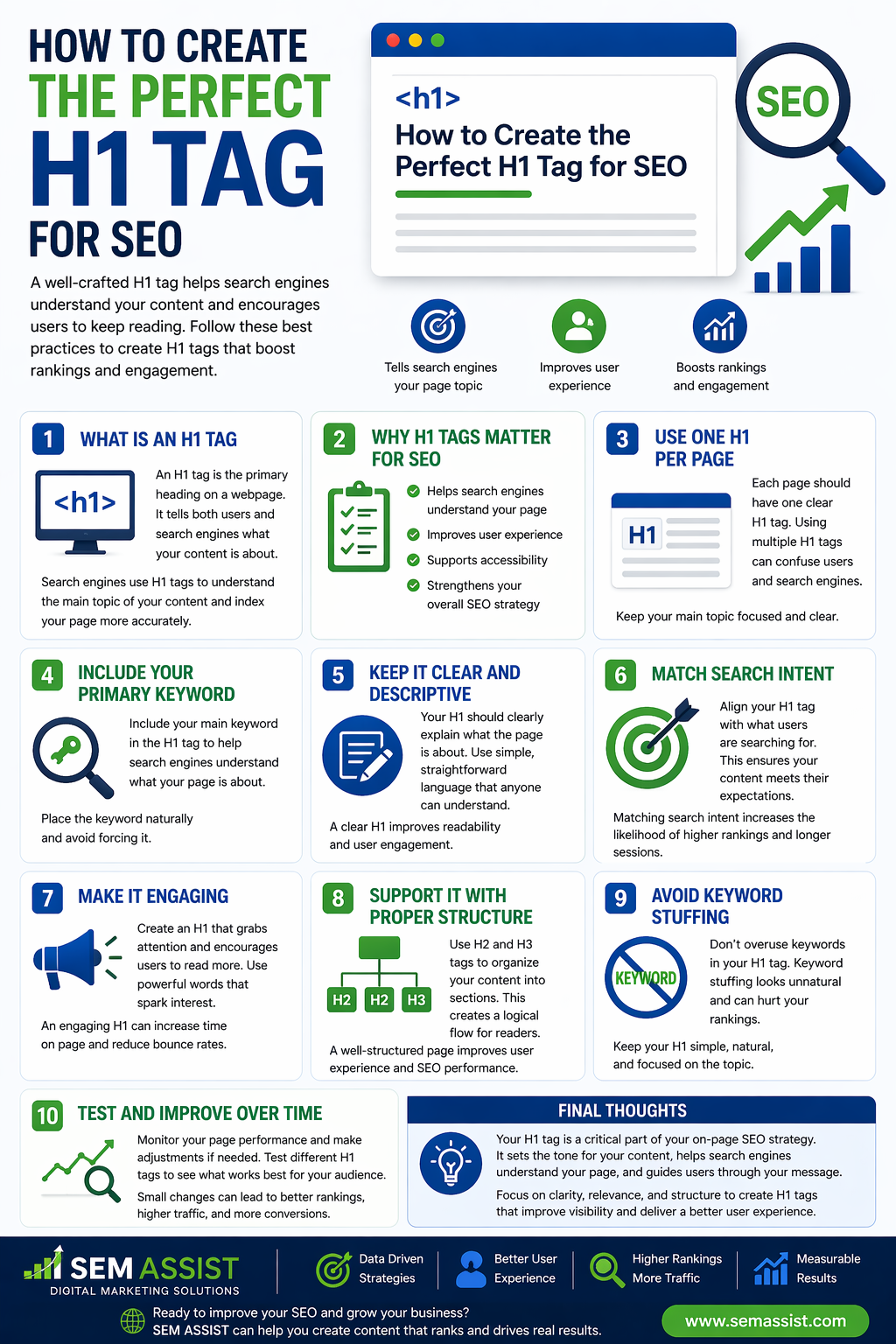
How to Create the Perfect H1 Tag for SEO

How to Create the Perfect H1 Tag for SEO

How to Create the Perfect H1 Tag for SEO

When it comes to search engine optimization, small details often make a big difference. One of the most important yet commonly overlooked elements is the H1 tag.

Your H1 tag is the main heading of your page. It tells both users and search engines what your content is about. When crafted correctly, it can improve rankings, increase engagement, and help guide visitors through your page.

Here is how to create the perfect H1 tag for SEO.


What Is an H1 Tag

An H1 tag is the primary heading on a webpage. It is typically the first thing users see when they land on your page and it plays a key role in content structure.

Search engines like Google use H1 tags to understand the main topic of your content. A clear and relevant H1 helps search engines index your page more accurately.


Why H1 Tags Matter for SEO

Your H1 tag serves multiple purposes.

It helps search engines determine the focus of your page. It improves user experience by clearly introducing the topic. It also supports accessibility by helping screen readers understand the structure of your content.

A well optimized H1 can strengthen your overall SEO strategy.


Use One H1 Per Page

Each page should have one clear H1 tag.

Using multiple H1 tags can create confusion for both users and search engines. A single, focused heading ensures that your main topic is clearly defined.

Think of your H1 as the title of your page. It should represent the core idea of your content.


Include Your Primary Keyword

Your H1 tag should include your main keyword.

This helps search engines understand what your page is about and improves your chances of ranking for that term. Place the keyword naturally within the heading rather than forcing it.

A keyword focused H1 strengthens your relevance in search results.


Keep It Clear and Descriptive

Clarity is essential when writing your H1 tag.

Your heading should immediately tell users what they can expect from your page. Avoid vague or overly complex wording.

A clear and descriptive H1 improves both readability and engagement.


Match Search Intent

Your H1 tag should align with what users are searching for.

If someone is looking for information, your H1 should reflect that. If they are looking for a solution, your heading should guide them in that direction.

Matching search intent increases the likelihood that users will stay on your page.


Make It Engaging

While your H1 should be optimized for SEO, it should also capture attention.

Use language that encourages users to continue reading. A compelling heading can increase time on page and reduce bounce rates.

Balance optimization with creativity to create a strong first impression.


Support It With Proper Structure

Your H1 tag should work alongside other headings on your page.

Use H2 and H3 tags to break down your content into sections. This creates a logical flow that is easy for users to follow.

A well structured page improves both user experience and SEO performance.


Avoid Keyword Stuffing

Including your keyword is important, but overusing it can hurt your results.

Keyword stuffing makes your content look unnatural and can reduce readability. Keep your H1 simple and focused.

Search engines understand context, so there is no need to repeat keywords excessively.


Test and Improve Over Time

Like other SEO elements, your H1 tag can be optimized over time.

Monitor your performance and make adjustments if needed. Small changes can lead to better rankings and higher engagement.

Continuous improvement helps you stay competitive.


Final Thoughts

Your H1 tag is a critical part of your on page SEO strategy. It sets the tone for your content, helps search engines understand your page, and guides users through your message.

By focusing on clarity, relevance, and structure, you can create H1 tags that improve both visibility and user experience.

At SEM ASSIST, we help businesses optimize every element of their content to drive better results and long term growth.


Ready to Improve Your SEO Strategy

If you want to enhance your website performance and create content that ranks, SEM ASSIST can help you build a strategy that delivers measurable results.

Digital Marketing Guide

Digital Marketing - A Complete Guide For Business Growth

Digital Marketing A Complete Guide for Business Growth

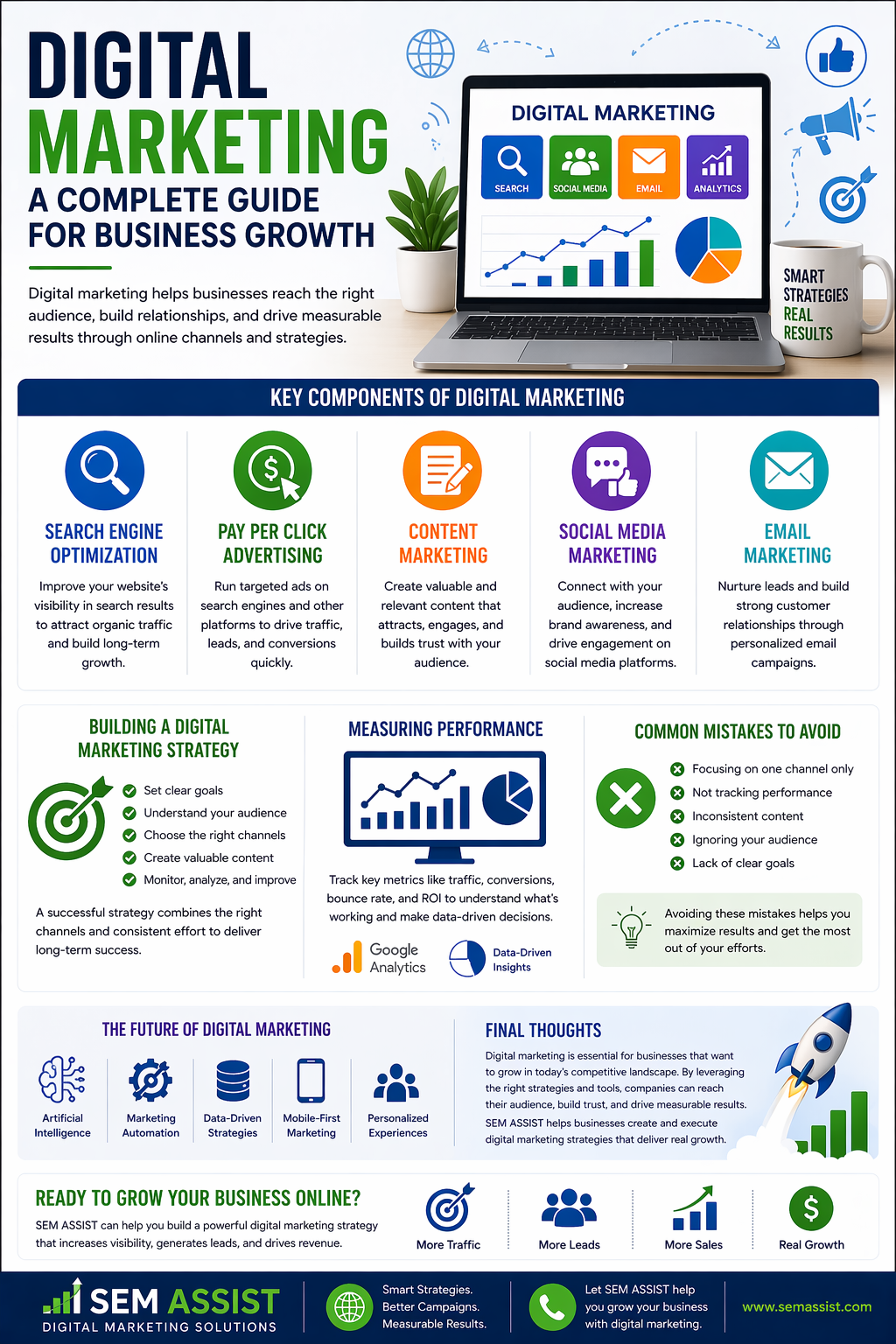
Digital marketing has become the foundation of modern business growth. As consumers spend more time online, companies must adapt their strategies to meet customers where they are.

From search engines to social media, digital marketing allows businesses to reach targeted audiences, build relationships, and drive measurable results.

Here is a complete guide to understanding digital marketing and how it can help your business grow.


What Is Digital Marketing

Digital marketing refers to all marketing efforts that use online channels to promote products or services.

This includes search engines, social media platforms, email marketing, content marketing, and paid advertising. Platforms like Google and Facebook play a major role in connecting businesses with their audiences.

Digital marketing focuses on reaching the right people at the right time with the right message.


Why Digital Marketing Matters

Traditional marketing methods still have value, but digital marketing offers advantages that are difficult to match.

It allows for precise targeting, real time tracking, and measurable performance. Businesses can see exactly what is working and make adjustments quickly.

Digital marketing also provides opportunities for businesses of all sizes to compete in the same space.


Key Components of Digital Marketing

Search Engine Optimization

Search engine optimization focuses on improving your website’s visibility in search results.

By optimizing your content and technical structure, you can attract organic traffic from search engines. This is one of the most cost effective ways to generate long term results.


Pay Per Click Advertising

Paid advertising allows you to appear at the top of search results and across various platforms.

Using tools like Google Ads, businesses can target specific keywords and audiences to drive traffic and conversions.

Paid campaigns can deliver fast results when managed effectively.


Content Marketing

Content marketing involves creating valuable and relevant content to attract and engage your audience.

Blog posts, videos, and guides help establish authority and build trust. High quality content also supports SEO and improves overall marketing performance.


Social Media Marketing

Social media platforms allow businesses to connect directly with their audience.

By sharing content, engaging with followers, and running targeted campaigns, brands can build relationships and increase visibility.

Platforms like Instagram and LinkedIn play a key role in modern marketing strategies.


Email Marketing

Email marketing is one of the most effective ways to nurture leads and maintain customer relationships.

By delivering personalized and relevant messages, businesses can guide users through the buying journey and encourage repeat engagement.


Building a Digital Marketing Strategy

A successful digital marketing strategy starts with clear goals.

Identify what you want to achieve, whether it is increasing traffic, generating leads, or boosting sales. Understand your target audience and create content that meets their needs.

Choose the right channels based on where your audience spends time. Combine multiple strategies to create a cohesive approach.

Consistency and continuous improvement are key to long term success.


Measuring Performance

One of the biggest advantages of digital marketing is the ability to track results.

Tools like Google Analytics provide insights into traffic, user behavior, and conversions.

By analyzing data, you can identify what is working and refine your strategy to improve performance.


Common Mistakes to Avoid

Many businesses make the mistake of focusing on one channel while ignoring others.

Digital marketing works best when multiple strategies are combined. Another common mistake is failing to track performance, which makes it difficult to improve results.

Inconsistent content and lack of clear goals can also limit success.


The Future of Digital Marketing

Digital marketing continues to evolve as technology and consumer behavior change.

Artificial intelligence, automation, and data driven strategies are shaping the future of marketing. Businesses that stay adaptable and continue learning will have a competitive advantage.


Final Thoughts

Digital marketing is essential for businesses that want to grow in today’s competitive landscape. By leveraging the right strategies and tools, companies can reach their audience, build trust, and drive measurable results.

At SEM ASSIST, we help businesses create and execute digital marketing strategies that deliver real growth.


Ready to Grow Your Business Online

If you want to improve your online presence and generate more leads, SEM ASSIST can help you build a strategy that turns your digital marketing into a powerful growth engine.

Workplace Distractions

Workplace Distraction How to Stay Focused and Productive

Workplace Distraction How to Stay Focused and Productive

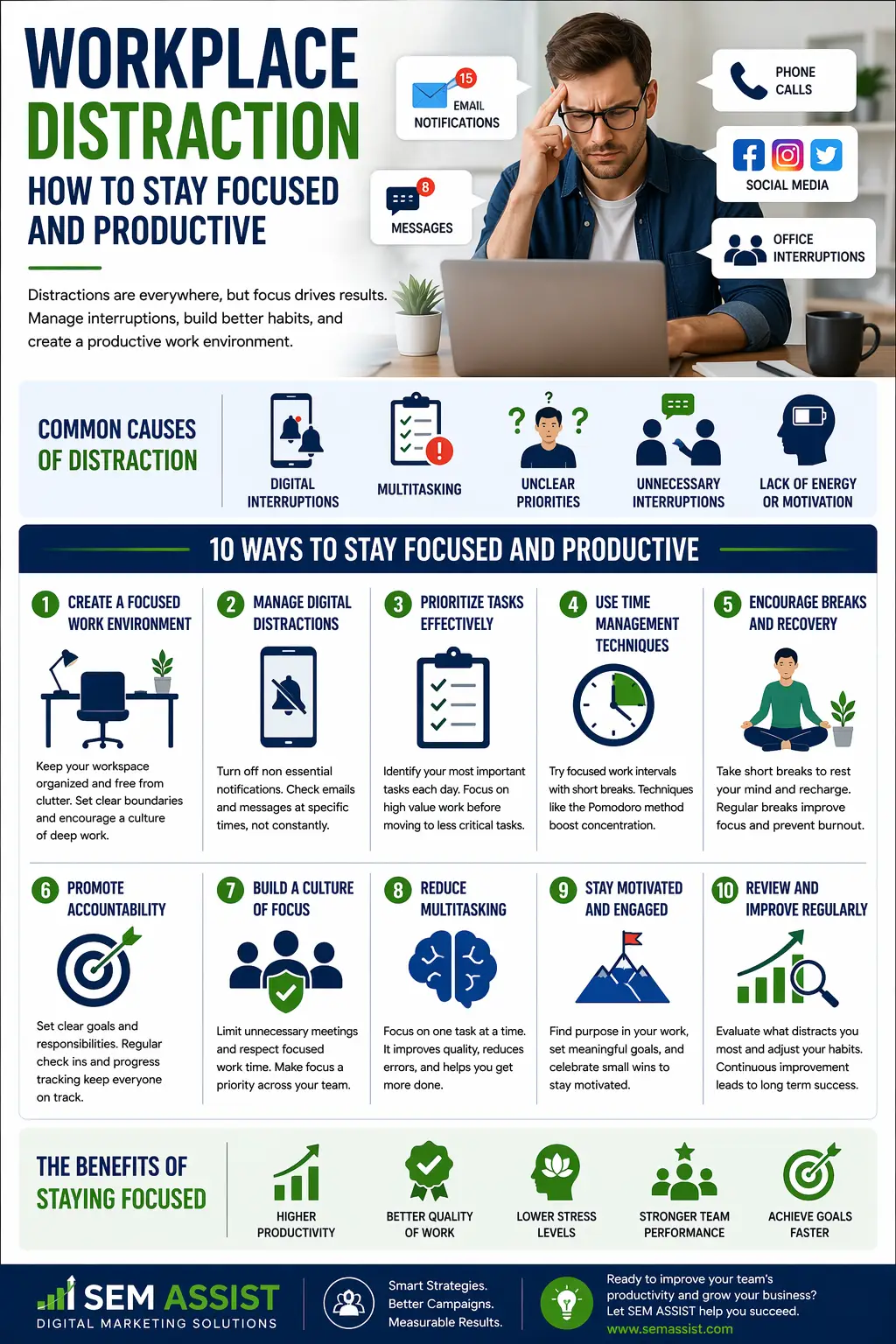
Workplace distraction is one of the biggest challenges facing modern businesses. With constant notifications, multitasking demands, and endless streams of information, staying focused has become more difficult than ever.

While some distractions are unavoidable, many can be managed with the right strategies. Improving focus not only increases productivity but also enhances the quality of work and overall business performance.

Here is how workplace distraction affects your business and what you can do to stay focused.


What Is Workplace Distraction

Workplace distraction refers to anything that takes your attention away from your primary task.

This can include external interruptions such as emails, phone calls, or conversations, as well as internal distractions like lack of motivation or difficulty concentrating.

Understanding the source of distraction is the first step toward improving focus.


Common Causes of Distraction

There are several factors that contribute to distraction in the workplace.

Digital interruptions are one of the most common causes. Frequent notifications from apps and platforms can break concentration and reduce efficiency.

Multitasking is another major issue. Trying to handle multiple tasks at once often leads to lower quality work and longer completion times.

Unclear priorities can also create distraction. When employees are unsure of what to focus on, their attention becomes scattered.


The Impact on Productivity

Distraction has a direct impact on performance.

Frequent interruptions can reduce productivity and increase the time it takes to complete tasks. It can also lead to more errors and lower quality output.

Over time, constant distraction can contribute to stress and burnout, affecting both individual performance and team morale.


Create a Focused Work Environment

A well structured environment can reduce distractions significantly.

Organize your workspace to minimize clutter and unnecessary interruptions. Establish clear boundaries for focused work time.

Encourage a culture where deep work is valued and respected. When employees have dedicated time to focus, productivity improves.


Manage Digital Distractions

Technology is a major source of interruption.

Limit unnecessary notifications and set specific times to check emails and messages. Tools like Slack can be managed effectively by adjusting notification settings.

Reducing digital noise allows for better concentration and more efficient work.


Prioritize Tasks Effectively

Clear priorities help reduce distraction.

Start each day by identifying the most important tasks. Focus on completing high value work before moving on to less critical activities.

Having a clear plan keeps your attention directed and prevents unnecessary task switching.


Use Time Management Techniques

Time management strategies can improve focus.

Techniques such as working in focused intervals followed by short breaks can help maintain concentration. This approach prevents mental fatigue and keeps productivity consistent.

Structured time management creates a rhythm that supports deep work.


Encourage Breaks and Recovery

Taking breaks is essential for maintaining focus.

Short breaks allow your mind to reset and improve overall performance. Without breaks, productivity tends to decline over time.

Encouraging regular rest periods helps sustain energy and concentration throughout the day.


Promote Accountability

Accountability can reduce distractions and improve performance.

When team members have clear goals and responsibilities, they are more likely to stay focused. Regular check ins and progress tracking can reinforce accountability.

A structured approach keeps everyone aligned and productive.


Build a Culture of Focus

Workplace culture plays a significant role in managing distraction.

Encourage practices that support focus, such as limiting unnecessary meetings and respecting dedicated work time.

When focus becomes part of your company culture, productivity naturally improves.


Final Thoughts

Workplace distraction is a common challenge, but it can be managed with the right strategies. By creating a focused environment, managing digital interruptions, and prioritizing effectively, businesses can improve productivity and performance.

At SEM ASSIST, we understand that productivity is a key driver of success. By implementing smart strategies, businesses can create an environment where teams can perform at their best.


Ready to Improve Your Team’s Productivity

If you want to create a more focused and efficient workplace, SEM ASSIST can help you develop strategies that improve performance and support long term growth.

Working Together as a Team

Working Together As A Team

Working Together as a Team

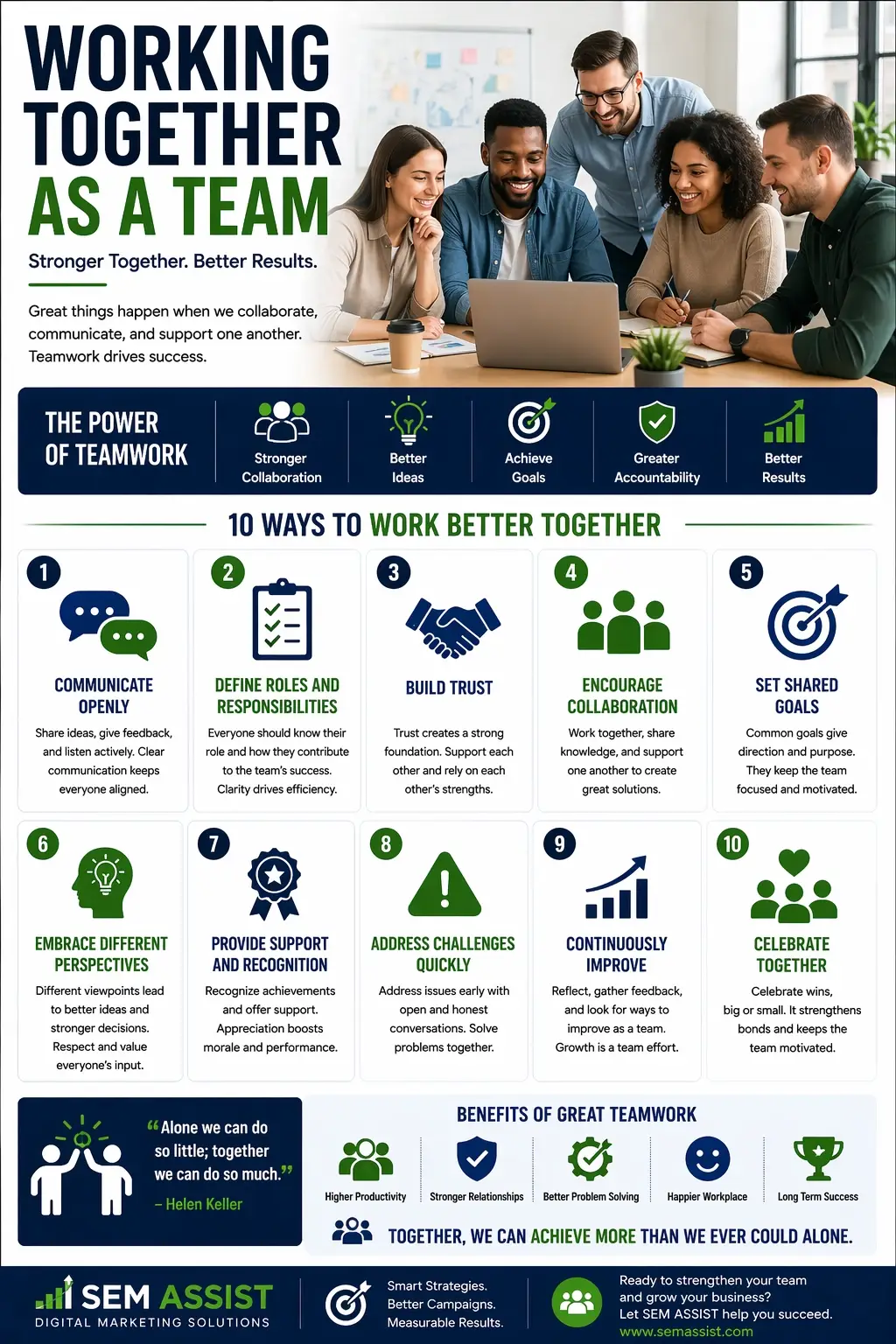
Success in any business is rarely the result of individual effort alone. It is built on collaboration, communication, and a shared commitment to achieving common goals. Working together as a team allows organizations to combine strengths, solve problems more effectively, and create better outcomes.

In today’s fast paced business environment, teamwork is not just valuable, it is essential.


Why Teamwork Matters

Teamwork brings together diverse skills, perspectives, and experiences.

When individuals collaborate, they can approach challenges from different angles and develop more creative solutions. This leads to better decision making and improved performance.

Strong teams also create a sense of accountability and support. When everyone is aligned, it becomes easier to stay focused and achieve results.


Clear Communication Is Key

Effective communication is the foundation of any successful team.

Team members need to share ideas, provide feedback, and stay informed about progress. Open communication reduces misunderstandings and keeps everyone on the same page.

Using tools like Slack can help streamline communication and improve collaboration across teams.


Define Roles and Responsibilities

Clarity is essential for teamwork.

Each team member should understand their role and how it contributes to the overall goal. Clearly defined responsibilities help prevent confusion and ensure that tasks are completed efficiently.

When everyone knows what is expected, productivity increases.


Build Trust Within the Team

Trust is a critical component of teamwork.

Team members need to feel confident in each other’s abilities and intentions. Trust encourages collaboration, reduces conflict, and creates a positive work environment.

Building trust takes time, but it is essential for long term success.


Encourage Collaboration

Collaboration allows teams to leverage their collective strengths.

Encourage team members to work together, share ideas, and support one another. This creates a culture where innovation can thrive.

Collaboration also helps break down silos and improves overall efficiency.


Set Shared Goals

A strong team is united by common objectives.

Setting clear and measurable goals gives the team direction and purpose. It also helps align individual efforts with the broader mission of the organization.

Shared goals keep everyone motivated and focused.


Embrace Different Perspectives

Diversity within a team is a strength.

Different perspectives lead to new ideas and better problem solving. Encouraging team members to share their viewpoints creates a more dynamic and innovative environment.

Respecting diverse opinions strengthens the team as a whole.


Provide Support and Recognition

Supporting your team is essential for maintaining morale and motivation.

Recognize achievements and celebrate successes, both big and small. This reinforces positive behavior and encourages continued effort.

A supportive environment helps team members perform at their best.


Address Challenges Quickly

No team is without challenges.

Conflicts and obstacles should be addressed promptly and constructively. Open discussion and problem solving can help resolve issues before they escalate.

Handling challenges effectively strengthens the team.


Continuously Improve

Teamwork is an ongoing process.

Regularly evaluate how your team works together and identify areas for improvement. Feedback and reflection can help refine processes and improve performance.

Continuous improvement keeps the team strong and adaptable.


Final Thoughts

Working together as a team is one of the most powerful ways to achieve success. By focusing on communication, trust, and shared goals, businesses can create an environment where collaboration thrives.

At SEM ASSIST, we believe that strong teams drive strong results. By fostering teamwork and alignment, businesses can unlock their full potential and achieve lasting growth.


Ready to Strengthen Your Team

If you want to improve collaboration and build a more effective team, SEM ASSIST can help you develop strategies that enhance communication, productivity, and performance.